Crucial Moment in Struggle for Justice in Middle East and North Africa

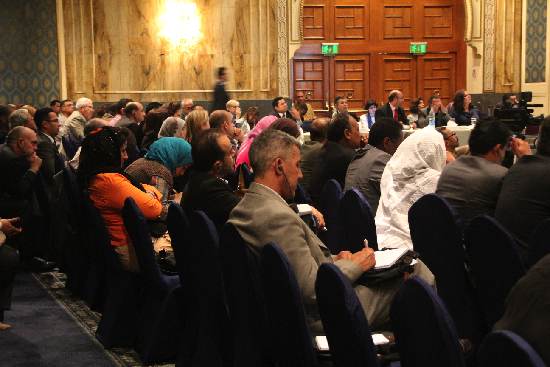
The international conference titled "Transitional Justice in the Middle East and North Africa: Opportunities and Challenges" began today in Cairo. Bahey eldin Hassan, director of Cairo Institute for Human Rights, opened the conference welcoming participants from Egypt, Tunisia, Libya, Syria, Sudan, Yemen, and other countries of the region and their guests from across the world.

A conference on Transitional Justice in Egypt and the MENA Region: Challenges and Opportunities

CAIRO/NEW YORK, October 29, 2011—The Cairo Institute for Human Rights Studies (CIHRS), in collaboration with the International Center for Transitional Justice (ICTJ), is holding a regional conference titled "Transitional Justice in Egypt and the Arab World: Challenges and Opportunities" from October 30-31, 2011.

A Hazy Legacy of Human Rights Abuse: Podcast with Moataz El Fegiery

In this podcast, ICTJ speaks with Moataz El Fegiery, deputy director of the MENA program, to understand the goals of the conference and the challenges facing Egypt's transition. Fegiery hopes the conference can both address the human rights violations that occurred during and before the revolution and provide an opportunity to discuss different transitional justice measures that can be used to strengthen Egypt’s transition.

Download | Duration:20 mins | File size: 19MB

After the Arab Spring: Challenges and Possibilities

The Middle East and North Africa (MENA) region has experienced drastic political shifts since the beginning of 2011. Unprecedented demonstrations calling for democratic change and social justice have confronted autocratic regimes responsible for decades of systematic violations of human rights, toppling of heads of state in Egypt, Tunisia, and Libya. Dozens of victims have been injured or killed daily in ongoing protests in Syria, Yemen, and Bahrain.

This time of transition raises questions of how to meaningfully address and establish accountability for past human rights violations, as well as restructure judicial and security institutions to prevent the recurrence of violations. Issues of justice, accountability, and rule of law are now key priorities in ongoing debates throughout the region.

Pages