

1521 results

This multimedia project brings together voices of five Sierra Leoneans of different backgrounds reflecting on the legacy of the court as it nears the completion of its mandate.

This briefing paper sets out the obligations of the state and international best practice with respect to the right to truth, both as a key element of a transitional justice strategy and as a critical component of providing effective remedy to victims of gross violations of human righ...

Six years after the conflict ended, the government of Nepal has failed to initiate a comprehensive investigation into the past. As a result, it has failed to uphold the rights of victims and Nepali society to know the truth about abuses. Inaction is particularly cruel regarding the relatives of the disappeared, for whom lack of information on the fate and whereabouts of their loved ones equates to permanent anguish and extreme suffering.

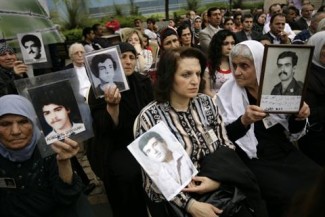
Lebanon has ruled that families of missing and disappeared persons would be allowed access to the investigation files and full report of the Commissions of Inquiry on the Missing and Forcibly Disappeared in Lebanon. In a new episode of our ICTJ Forum, we speak with lawyer Nizar Saghieh about what the ruling means for Lebanese families who continues to search for their missing loved ones.

The importance of an independent, representative, and competent truth and reconciliation commission (TRC) to guarantee the rights of victims to truth, justice, and reparations should not be underestimated. Key recommendations in this regard are included in this briefing.

Some habits die hard. This is especially true of ways of thinking. Despite significant changes in national and international law and practice in the last thirty years—the period that corresponds with the emergence of transitional justice as a field—the recent upheaval in the Middle East and Northern Africa region has provoked proposals that hearken back to a period that we may have thought long gone.

The purpose of this paper is to provide an overview of some of the major issues and recent developments in transitional justice in Serbia and Montenegro. In particular, it examines the International Criminal Tribunal for the former Yugoslavia (ICTY), local trials, the national Truth a...

Since the end of open armed conflict in the former Yugoslavia, there has been little progress in transitional justice. This particularly applies to Serbia and Montenegro, which has lurched from one political crisis to another. This paper provides an overview of some of the major issue...

The application of transitional justice mechanisms, such as war crimes trials and reparations, has significant flaws in Serbia. Lack of progress may be even greater in truth-seeking and vetting of public officials. Serbia must do much more in all areas of transitional justice, for its...

On March 31, 2010, the Serbian parliament adopted a declaration "condemning in strongest terms the crime committed in July 1995 against Bosniac population of Srebrenica" and apologizing to the families of the victims. The declaration is a step in the right direction and, potentially, an educational...