


1521 results

This report examines the preventive impact of transitional justice mechanisms in Colombia before the 2016 peace agreement. It finds that these measures have contributed to prevention by strengthening institutional responses to rights violations, shaping the public agenda, developing a...

As ArcelorMittal, the world’s largest steel company, invests 19.2 million pounds of steel to construct a monument marking London’s Olympic Games, a disturbing story is emerging about the refusal to memorialize a former concentration camp in Bosnia it owns today. Not only is ArcelorMittal unwilling to provide even a fraction of the cost of the London “Orbit” to commemorate the suffering of Bosnians in the notorious Omarska camp, but it has recently started denying victims access to the site.

On June 8, Colombia woke up to the grim news that Miguel Uribe Turbay, a 39-year-old senator and presidential hopeful for the right-wing Centro Democrático party, had been gravely wounded after being shot. More than three weeks have passed since the attack and Uribe remains in critical condition, while Colombians, concerned about renewed democratic instability, have found themselves haunted by ghosts from the past.

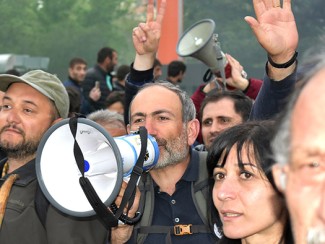
In July, ICTJ’s Program Director Anna Myriam Roccatello and Senior Transitional Justice Expert Ruben Carranza traveled to Yerevan to meet with civil society organizations, human rights and anti-corruption activists, and key government officials, to join them in exploring strategies for change.

On February 8, ICTJ held an event in The Hague on the missing and disappeared in Syria, in partnership with the Dutch Ministry of Foreign Affairs. The event brought together activists, journalists, artists, and policymakers to reflect on the critical humanitarian needs of victims and their families and the role of the newly established international body on the missing in Syria, which is mandated in part to address these needs.

Years after conflict, dictatorship, or historical injustice, victims throughout the world are still seeking redress and for their dignity to be affirmed. ICTJ has been standing alongside victims since 2001. We have worked in more than 50 different countries, helping to advance transitio...

On August 30, 2012, ICTJ joined government officials and civil society in Freetown to celebrate the launch of a new website for the Truth and Reconciliation Commission of Sierra Leone and welcome the prospects for revitalization of Sierra Leone’s reconciliation.

Sierra Leone has made tremendous progress in implementing transitional justice commitments incumbent on the authorities under the Lomé Peace Agreement (LPA) and international law.

This handbook explains the mandate, origins, purposes, and operating methods of the Truth and Reconciliation Commission (TRC) and Special Court in Sierra Leone. It discusses the differences and similarities between them, in clear, non-technical language. The TRC and Special Court can...

On International Justice Day, July 17th, ICTJ looks at the legacy of the Special Court for Sierra Leone through the voices of those to whom its work was most important: the citizens of Sierra Leone. Our new multimedia project, “Seeds of Justice: Sierra Leone,” presents five portraits of Sierra Leoneans whose lives were impacted by this court.