

1521 results

After periods of extended political conflict and of repression or state terrorism, there is an active political struggle about the meaning of what occurred. This paper illustrates some processes through which silenced or hidden ethnic, cultural or gender dimensions come to light ...

This paper explores political exclusion in Kenya and its consequences on the social fabric of the nation. It draws from past governmental reports and analysis to formulate new recommendations that can inform current discourse. It first provides an overview of ethnicity in Kenya. ...

Six years to the day after Ben Ali fled the country, Tunisians are gathering around televisions, radios and computers for more victim testimony hosted by the Truth and Dignity Commission. Watch the livesteam below and follow us on twitter at @theICTJ for live coverage.

In Congo over the past decade, demands for justice have been largely unmet in peace negotiations: impunity for the worst crimes is entrenched, and the root causes of the conflict remain unaddressed. As the European Union, often through the European Union Special Representatives (EUSRs...

Many experts—including development agencies—are trying to improve donor support to democratic governance in fragile and conflict-affected countries. Yet aid institutions tend to promote better governance by promoting capacity in executive government, representation and accountability ...

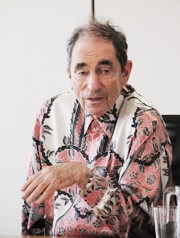
ICTJ Vice President Paul Seils interviewed South African judge and human rights activist Albie Sachs.

South African judge and human rights activist Albie Sachs is among the foremost transitional justice experts to have emerged from the anti-apartheid struggle and subsequent transition. In this interview with ICTJ Vice President Paul Seils, Sachs discusses the difficult balance of retribution and reconciliation, and offers possible lessons from the South African experience for other societies facing similar questions of truth and justice.

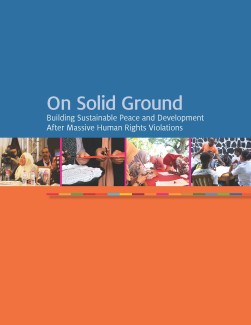
This report of the Working Group on Transitional Justice and SDG16+ articulates the contributions of transitional justice to the Sustainable Development Goals (SDGs), particularly SDG 16 on peace, justice, and inclusion, but also related goals on gender and inequality. The report...

New York, June 3, 2019—Today, with just over a month to go before the 2019 UN High-Level Political Forum (HLPF) on Sustainable Development, ICTJ and its partners have released the Report of the Working Group on Transitional Justice and SDG16+, entitled “On Solid Ground: Building Sustainable Peace and Development After Massive Human Rights Violations.”

Women played a crucially important role in brokering peace in Solomon Islands but they still face significant barriers to inclusion in transitional justice initiatives. ICTJ has been working closely with women groups to facilitate their formal contribution to the Truth and Reconciliation Commission (TRC).