

1521 results

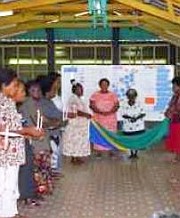
HONIARA, Oct. 30, 2011—Today women from Solomon Islands will come together to present their submission to the Solomon Islands Truth and Reconciliation Commission (TRC). More than 60 women from different regions of the country have collaborated in recording their experiences and sharing their vision for the future in this document.

Customary justice is the primary way in which most communities in South Sudan resolve disputes. Its ability, however, to deal with massive human rights violations is limited due to the complexity of intercommunal violence and a lack of clarity on its proper role. This report contends ...

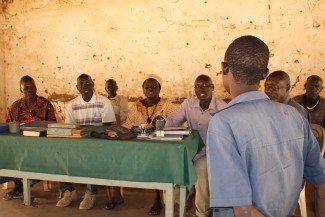
A man stands facing a table around which several men are seated.

Growing up in Ras el Nabeh, a lively neighborhood in the heart of Beirut, was tough and dangerous in the early 1980s, as it was part of the Green Line –a maze of abandoned streets inhabited by weeds turned into a frontline that vertically divided Christian East Beirut from Muslim West B...

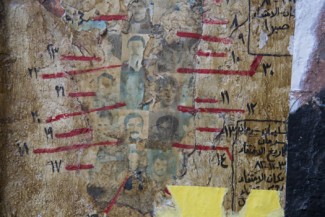
This year, to mark the International Day of the Disappeared, we bring the story of Ziad and Ghassan Halwani, two brothers in Lebanon whose father was kidnapped and disappeared when they were young. Their story is a powerful testament to the long-term impact of disappearances on the life course of those who are still growing up.

CAPE TOWN, April 8, 2011—In a landmark judgment handed down today the Constitutional Court upheld the rights of victims of apartheid era abuses, as well as the media and public, to speak the truth about crimes amnestied by the Truth and Reconciliation Commission (TRC). The court held that truth...

South Africa Parliament faces a historic moment. In this op-ed, ICTJ's Vice President Paul Seils remembers the great hope that marked the ICC’s emergence: "No country embodied that hope and that reality more powerfully and more inspiringly than South Africa."

Can education help right the wrongs of the past, especially when the majority of the population was affected by those wrongs? Teboho Moja examines that question in the context of South Africa, where efforts to reform a discriminatory educational system and redress its consequences have been met with mixed results.

Founding affidavit from Hugo van der Merwe of ICTJ regarding case before North Gauteng High Court of South Africa.

On May 11, the South African Department of Justice and Constitutional Development (DOJ) invited comments on new regulations governing the distribution of reparations to victims of the apartheid era in the form of medical and educational benefits. Civil society organizations and groups representing survivors’ interests have raised concerns regarding the scope of the regulations, as well as the DOJ’s overall failure to engage with survivors and consider their views when drafting reparations policies.

Applicants apply to the Supreme Court of Appeal against the judgment regarding North Gauteng High Court, Pretoria.