1521 results

While not seen as sufficient in and of themselves as a means of reparation, the concept of “collective reparations” has been one of the ways in which reparation advocates have respond to practical challenges and to the overall complexity of responding to massive violations of human...

Of the 26 countries in the lowest bracket of the UN Development Programme’s 2008 Human Development Index, six have large victim communities expecting reparations as a result of truthseeking and criminal justice measures.

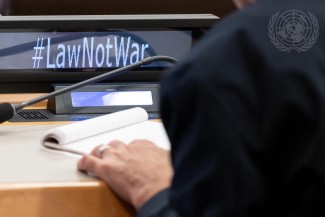
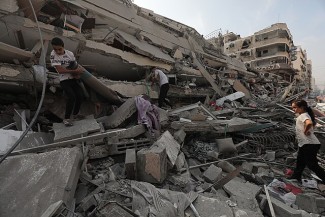
On October 15, the UN Secretary-General made two strong humanitarian appeals: for Hamas to release the hostages immediately and without conditions, and for Israel to allow humanitarian aid to enter into Gaza unimpeded so it can reach the civilians desperately in need of it. The UN Security Council has heard but not listened to his words, while governments with power to persuade the actors engaged in the hostilities to respect the rule of law have failed to do so. Yet, the moral imperative is clear and simple.

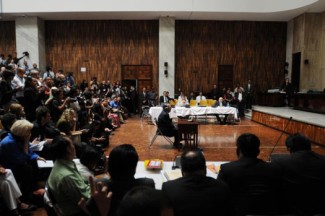
In this op-ed, ICTJ's Marcie Mersky argues that the significance of the genocide trial for José Efraín Ríos Montt stretches far beyond Guatemala: it is the first time that a former head of state is being tried for genocide in a credible national court, by the national authorities, in the country where the alleged crimes took place.

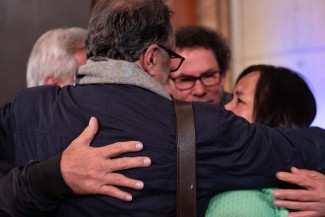
On June 21-23, Colombia’s Special Jurisdiction of Peace (JEP) held its first acknowledgment hearing on the taking hostages, serious deprivation of liberty, and other concurrent crimes (known as Case 01) in Bogotá. Seven former leaders of the guerrilla group Revolutionary Armed Forces of Colombia—People’s Army (FARC-EP) acknowledged their command responsibility for the kidnapping crimes that were the FARC-EP’s policy from 1993 to 2012 in the presence of victims, JEP officials, civil society representatives, and members of the press. This hearing marks the first time ever FARC-EP leaders publicly acknowledged their role in such systemic crimes. A decisive step in the country’s restorative justice process, it would not have been possible without years of preparation.

In response to past human rights violations, a variety of measures have been developed, including prosecutions at both international and domestic levels, truth commissions, and reparations for victims. All these options need strong institutions. In postconflict and post-authoritarian ...

On February 26, 2020, the International Center for Transitional Justice and NYU Law’s Center for Human Rights and Global Justice welcomed former President of Colombia and Nobel Peace Prize Laureate Juan Manuel Santos for a conversation on the role of transitional justice in peace negoti...

This briefing paper focuses on the role of victims of human rights violations in criminal proceedings. This paper will provide examples of recent developments in the advancement of victim participation in criminal proceedings in international criminal law and domestic jurisdictions.&n...

July 17, 2023, marked 25 years since the Rome Statute was adopted at a conference in Rome, Italy. The statute created the world’s first permanent international court, the International Criminal Court, which was probably the most significant milestone in international criminal justice since the Nuremburg and Tokyo trials of the mid-20th century. It signaled the firm intention of many nations to address ongoing impunity of the most serious crimes known to humankind. After 25 years, however, the ICC has not yet reached its full potential.

This report from the United Nations (UN) Security Council discusses the UN's increased focus on transitional justice and the rule of law in conflict and post-conflict societies. This focus will yield important lessons for future UN activities. Advancing justice, peace, and democracy i...