

1521 results

This journal article examines challenges to the legitimacy of the Special Tribunal for Lebanon (STL). These challenges include selective impunity, the highly selective nature of the jurisdiction of the STL, and the fears that the STL itself will act as an instrument for foreign powers...

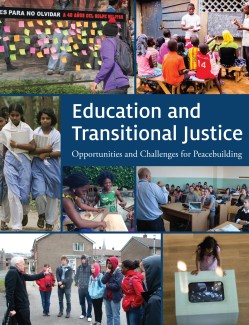
This report, part of a joint research project by ICTJ and UNICEF on the intersections of education, transitional justice, and peacebuilding, explores how a transitional justice framework can help to identify educational deficits relating to the logic of past conflict and/or repression...

The first piece in of our "Transitional Justice and Education" series examines the role of school systems in Bosnia and Northern Ireland.

Much of ICTJ’s work—and in fact much of the field of transitional justice—can be understood as the pursuit of effective remedies for victims of severe human rights violations. A remedy involves two elements: a victim’s access to the appropriate authorities to have his claim fairly hea...

ICTJ joins other international and national human rights groups from across the global calling for Egypt to protect the independence of non-governmental organizations.

NEW YORK, Feb. 14, 2011—As Egyptians redesign their constitution and political system, they should also consider meaningful ways to address legacies of human rights violations, the International Center for Transitional Justice (ICTJ) said today. "Egyptian officials should seize the opportunity to...

NEW YORK, Feb. 3, 2011—The Egyptian government should immediately order the release of human rights activists being held by security forces in Cairo, said the International Center for Transitional Justice (ICTJ) today following reports of activists from Hisham Mubarak Legal Centre, the Egyptian...

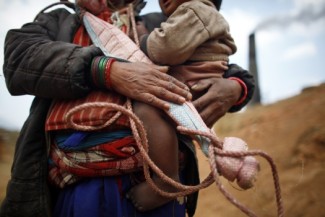
In recognition of International Women’s Day, our experts on Gender Justice have identified eight of the many ways in which women’s lives are affected by disappearances.

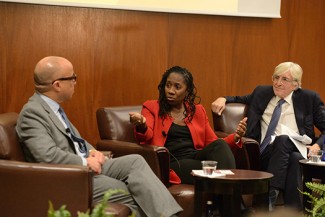
Do the concepts and strategies of transitional justice have a role to play in the United States? Our 2017 Emilio Mignone Lecture asked that question, with Darren Walker, President of the Ford Foundation, and Sherrilyn Ifill, President and Director-Counsel of the NAACP Legal Defense Fund, joining ICTJ's David Tolbert in conversation. Watch the full discussion here.

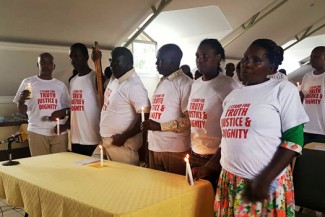
The right to the truth carries special resonance in Kenya, and so on March 24th Kenyan state agencies, survivors, civil society organizations, and international partners will join together in Nairobi to observe the International Day for the Right to the Truth. It provides an opportunity not just for remembrance, but also for greater dialogue between the government and victims about the implementation of reparations programs and of the findings presented in the Truth, Justice and Reconciliation Commission's final report.