1521 results

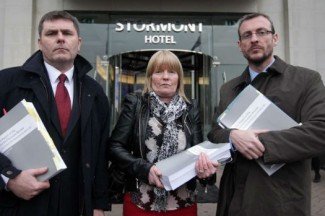
As ICTJ looks back on its 15 years of work, join us in celebrating our allies across the globe who struggle for human rights, against impunity. To honor their efforts in the trenches of this struggle, we will bring you their stories in the weeks and months to come. This is the story of Mark Thompson, CEO of Relatives for Justice, a group struggling for truth and justice in Northern Ireland.

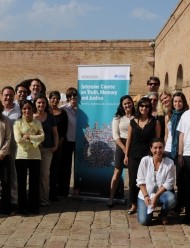
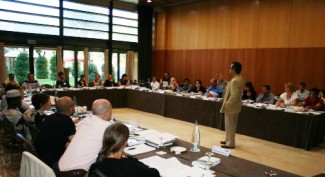
Under what conditions can truth commissions make a positive contribution to gender justice? How can they put in place a friendly process for children? Can they contribute to the rights of indigenous peoples? ICTJ, in partnership with the Barcelona International Peace Resource Center, is pleased to announce the 4th Intensive Course on Truth Commissions, focused this year on the challenge of recognizing the experiences of vulnerable populations in the work of truth commissions.

The Fourth Intensive Course on Truth Commissions, presented by ICTJ in partnership with the Barcelona International Peace Resource Center (BIPRC), focuses this year on the challenge of recognizing the experiences of vulnerable populations in the work of truth commissions. Practitioners and academics representing 17 countries will participate in the week-long course, including members of the Brazilian and Ivorian Truth Commissions, the Maine Wabanaki-State Child Welfare TRC Process, and ICTJ experts from around the world.

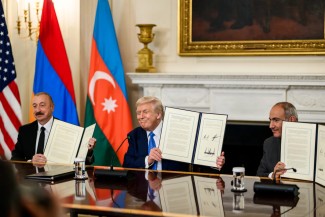
On August 8, Armenia and Azerbaijan signed the Joint Declaration on Future Relations. Hailed by some as a “historic peace deal,” it neither is a treaty nor ends the 37-year Nagorno-Karabakh conflict. Rather, it is a political framework that requires international support and attention.

For years the Lord’s Resistance Army (LRA) captured thousands of young girls in northern Uganda, forcing them to be not only soldiers, but wives and mothers too. When these women finally escaped their captors, children in tow, they hoped to be welcomed back into their com...

In Côte d’Ivoire, the state aims to restore victims’ rights and offer reparations to those affected by 2010’s post-election violence. A couple of years ago ICTJ came to the conclusion that discussions about how to provide reparations to victims had not sufficiently considered victi...

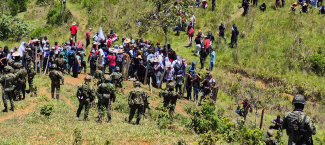
Colombia currently faces a transformed, fragmented form of violence centered on territorial and social control rather than the traditional insurgency. This briefing paper argues that state security strategies remain misaligned, relying on outdated military approaches and metrics. To a...

Image of first page of the briefing paper "From Combat to Territorial Control"

Colombia currently faces a transformed, fragmented form of violence centered on territorial and social control rather than the traditional insurgency. This report argues that state security strategies remain misaligned, relying on outdated military approaches and metrics. To avoid lon...

An aerial view of a group of soldiers interacting with a large civilian crowd in a rural setting

A new documentary produced by ICTJ highlights the need to reform Kenya's police force, and stresses the vital role civil society plays in conducting a thorough vetting process and the establishment of public trust in security forces.

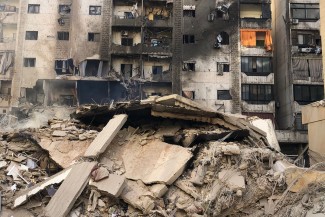
The ongoing war in the Middle East is not an isolated event; it represents a 75-year cycle of violence marked by historical grievances, geopolitical struggles, and humanitarian crises. In the latest episode of this tragic story, Lebanon has become the newest battlefield. So far, the conflict has caused widespread destruction, killed or injured thousands, and displaced over a million in Lebanon. The country now faces many daunting questions about reconstruction, reparations for victims, and the type of society that will emerge in the war’s aftermath.