1521 results

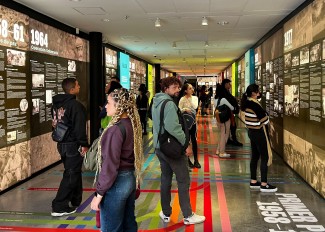
On February 13, 2024, the interactive cultural exhibit “If There Is Truth, There Is Future” opened to the public at Bogotá’s Center for Memory, Peace and Reconciliation. As part of the Colombian Truth Commission’s post-closure cultural and educational outreach activities, the exhibit aims to inform Colombians of all generations about the commission’s findings and inspire them to take action to prevent a recurrence of conflict.

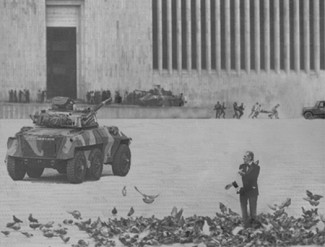
It has been nearly 30 years since one of the darkest episodes in Colombia’s recent history: the siege of the Justice Palace. Late last year, the families of those disappeared managed to take a step forward in their long struggle to obtain some measure of justice when the Inter-American Court of Human Rights issued a ruling condemning the Colombian state for responsibility in the disappearance of 12 individuals.

International and hybrid jurisdictions have been created in response to the commission of heinous international crimes: genocide, crimes against humanity and war crimes, including mass rape. This article shows that, by their legal definitions, genocide and crimes against humanity are ...

As UN member states convene virtually this week for the annual General Assembly, they will likely focus on a narrow list of agenda items, topped by issues related to the deadly coronavirus pandemic and a global economic downturn. For this reason, ICTJ would like to recall the vital importance of justice for global peace, security, health, and development by sharing findings from an analysis of the open debate on transitional justice that the UN Security Council held on February 13, 2020, as part of its peacebuilding and sustaining peace agenda.

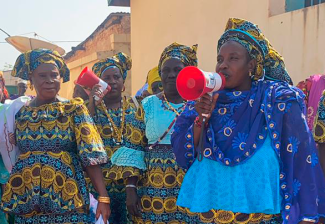
On November 28, ICTJ hosted an international conference to explore the synergies between reparations and sustainable development in Bogotá, Colombia. The event, titled “Advancing Victims’ Rights and Rebuilding Just Communities: An International Dialogue on Reparations and Sustainable Development,” brought together ICTJ partners from The Gambia, Tunisia, and Uganda along with civil society and government representatives from Colombia to discuss local strategies for advancing reparations for human rights abuses and how repairing victims and affected communities can contribute to local and national development. On the occasion, ICTJ also launched a new research report on the topic.

At this conference which will be held August 24 in Bogotá, national and international actors will present reflections and recommendations on criminal investigation and prosecution strategies, such as the selection and prioritization of cases, for a better development of the Justice and Peace Process in Colombia.

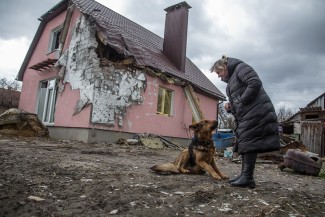
Two and a half years after Russia’s full-scale invasion of Ukraine, victims continue to demand justice for the massive violations they have suffered, which have left many of them gravely harmed. The International Criminal Court opened an investigation into alleged crimes in March 2022. It now faces a critical challenge: how to ensure that Ukrainian victims can meaningfully participate in all stages of its procedures, despite the court’s location far from the conflict.

On 26 June each year, the world marks the International Day in Support of the Victims of Torture. The day was instituted in 1997 by the General Assembly of the United Nations, in an effort to build up the unanimity of condemnation required to abolish torture effectively in our time. In the effort to...

As the Special Court for Sierra Leone wraps up cases against accused war criminals, a conference will be held later this week in Freetown to assess the Court’s work and lasting legacy. The conference is part of a larger international effort to look at how the court has helped to bring peace and establish the rule of law for the people of Sierra Leone, Liberia, and the region as a whole.

When perpetrators of serious international crimes are brought to justice by the country in which they committed their crimes, it signals a strong commitment to accountability and the rule of law. To ensure that domestic investigations and prosecutions occur for serious crimes such as genocide and crimes against humanity, the need for international assistance goes beyond the walls of the courtroom: development agencies and rule of law actors can provide countries with essential support to fairly and effectively prosecute serious international crimes in their own courts.