

1521 results

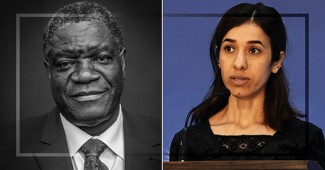
Recent recognition of the work of Nobel Laureate Nadia Murad has drawn global attention to the issue of sexual violence and gender-based violence in conflict. But, as ICTJ Expert Kelli Muddell argues, the nuances of gender norms and how they impact women, men, and vulnerable populations are still often missing from conversations about victims.

This paper discusses the challenges encountered during efforts to pursue justice in a number of sub-Saharan African countries in transition, including Burundi, the Democratic Republic of Congo, Ghana, Liberia, Rwanda, Sierra Leone, and South Africa. It presents a background and geneal...

Background of the generations-long conflict in Colombia involving the state, the guerilla group FARC and paramilitaries. The shifting boundaries between drug trafficking and political crime remain a serious obstacle to efforts to promote accountability and respect for human rights in ...

Pablo de Greiff, director of Research at ICTJ, has presented his candidacy for the role of Special Rapporteur for the Promotion of Truth, Justice, Reparation, and Guarantees of Non-Recurrence. This new position is being established by the United Nations Human Rights Council to bring greater attention to accountability for serious crimes and human rights violations.

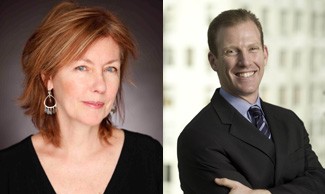
ICTJ is pleased to announce that Pamela Hogan and Jamie Metzl have joined ICTJ’s Board of Directors. “We are delighted to welcome Jamie and Pamela to the ICTJ Board,” said President David Tolbert.

For the past few months, ICTJ, along with our partners at the Center on International Cooperation at New York University, has been working on a comprehensive new policy paper on the situation of the many thousands of Syrians detained somewhere in the country’s vast network of prisons. The depravity that goes on inside these detention sites is already so appalling that it would have been hard to imagine when we started the project that the situation for the prisoners could get any worse. And then the COVID-19 pandemic hit, upending all of our preconceptions, and our lives, in ways none of us ever expected.

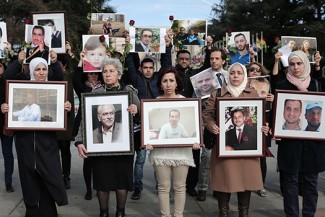
What happens when a state refuses to acknowledge the suffering of victims of mass atrocities? Or when the public celebrates perpetrators as heroes? Earlier this month, a panel discussion hosted by The International Center for Transitional Justice and New York University’s Center for Global Affairs grappled with the impact of denial on justice.

A panel of policy and media experts discusses women's experience in war and the responsibility of media covering their stories at the New York City premiere of a new documentary.

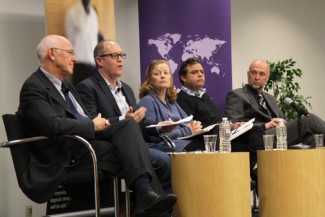
The International Peace Institute (IPI) held a panel discussion on International Justice in Times of Transition, focusing on the relationship between peace and justice in the context of recent developments and transitions throughout the world. Video streaming by Ustream

Examples of pardons in international jurisprudence, including Inter-American Court and Commission, European Court of Human Rights, UN Treaty Bodies, and the African Commission on Human and Peoples’ Rights.