

1521 results

Property Rights in Kosovo explores cultural, political and social factors dating as far back as the Ottoman period that have contributed to the present state of property rights. It examines the legacy of the armed conflict and NATO intervention of 1999 in the massive population displa...

Seven years after its approval, the ambitious project to demobilize illegal armed groups in Colombia called Justice and Peace is in crisis. The fact that it has only seven convictions, most of which have been appealed and only one upheld on appeal, is seen as proof of its failure...

Since 1990, 65 former heads of state or government have been legitimately prosecuted for serious human rights or financial crimes. Many of these leaders were brought to trial in reasonably free and fair judicial processes, and some served time in prison as a result. This book explores...

In September 1985, ninemembers of Argentina’smilitary junta, whose successive regimes covered the period in Argentine history known as the “dirty war,” walked into a courtroom in downtown Buenos Aires.

This briefing paper focuses on the topic of prosecuting international and other serious crimes in Kenya, including crimes committed in the context of the postelection crisis of late 2007 and early 2008. In particular, it identifies and analyzes obstacles and opportunities for such pro...

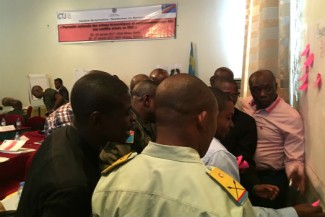
Potential political interference, poor evidence gathering and difficulty accessing remote areas are some of the main challenges to prosecuting economic and environmental crimes related to armed conflict in the Democratic Republic of Congo. Overcoming these challenges was the focus of a two-day workshop for judges and prosecutors in Goma and Bukavu, organized by the International Center for Transitional Justice (ICTJ), in collaboration with the United States Institute for Peace.

This paper analyzes the Maubuti case in Timor-Leste, the third serious crimes case to be brought to trial after the closure of the UN-supported Serious Crimes Unit in 2005. Maubuti was indicted for crimes against humanity including murder, attempted murder, and rape. The decision and ...

A new report from the United Nations Special Rapporteur on the promotion of truth, justice, reparation and guarantees of non-recurrence says States should hold perpetrators of serious crimes accountable for their actions.

NEW YORK, March 15, 2012—Brazilian federal prosecutors announced yesterday that they have opened a criminal investigation against a military officer accused of the enforced disappearance of civilians during the 1964–1985 military dictatorship. This is a welcome blow against the use of a 1979 amnesty law to shelter government agents who committed horrific crimes against civilians from accountability.

In the years immediately before the 2015 election, there was a palpable sense of waiting among those working in Burmese civil society. Many of their plans depended on one or two critical developments to take hold: the NLD coming to power and the signing of a nationwide ceasefire agree...