

1521 results

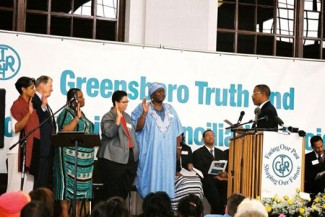
To mark 15 years of ICTJ, we asked staff past and present for the memories that stand out from their work. Former ICTJ consultant and Executive Director of the Truth and Reconciliation Commission in Greensboro, North Carolina Jill Williams reflects on her efforts to bridge a cultural gap in the pursuit of shared values.

To mark 15 years of ICTJ, we asked staff past and present for memories that stand out to them - moments that throw the stakes of our work into sharp relief and resonate with them years later. Virginie Ladisch and Clara Ramirez-Barat recall how one Canadian student, in exploring the legacy of the country's Residential Schools, arrived at the concept of "never again."

Mexico is overwhelmed by criminal violence and human rights violations in ways that ordinary rule of law mechanisms cannot address. While not undergoing a political transition, Mexico could benefit from transitional justice experiences when designing policies for pursuing accountabili...

This briefing paper examines the various actions that Ukrainian officials and members of the international community have launched to investigate and prosecute war crimes and other human rights violations committed in Ukraine since Russia invaded the country in February 2022. It explo...

First of the briefing paper Reflections on Victim-Centered Accountability in Ukraine

Between April 15 and May 3, 2019, ICTJ held a number of consultations with Kenyan youth from several informal settlements in Nairobi and Mombasa to reflect on their understanding of security sector reforms and their connection to the ongoing national dialogue process, particularly as ...

With the goal of creating an opportunity for debate between civil society and the Colombian government on JPL reform, ICTJ and the Mission to Support the Peace Process from the Organization of American States have organized an event titled “Challenges and Opportunities of the Justice and Peace Law Reform,” to take place May 14 in Bogotá.

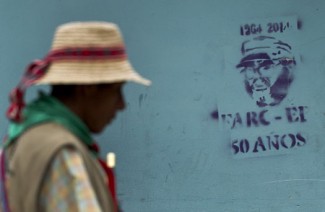
In this op-ed, ICTJ Vice President Paul Seils questions the policy objectives of punishing members of FARC accused of the most serious crimes in the ongoing Colombian peace negotiations.

Youth activists and traditional leaders from the city of Duékoué, in western Côte d’Ivoire, gathered on October 15 to discuss how best to strengthen social cohesion and prevent future conflict. The city and surrounding region were among the areas most affected by the violence that broke out across the country following the 2010 presidential elections and that left thousands dead and many more injured, beaten, or raped.

In this op-ed marking Universal Children’s Day, ICTJ's Virginie Ladisch explains why within transitional justice, the capacity to make positive choices and demonstrate moral agency are attributes that need to be encouraged and fostered in children, especially former child soldiers.

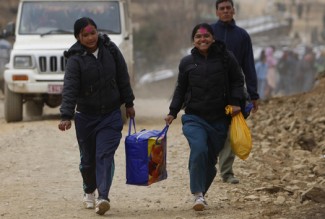
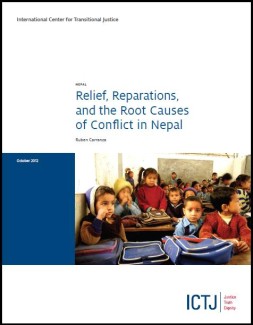
The report examines the measures taken in Nepal to redress victims following the 2006 peace agreement, which formally ended the ten-year civil war between the government and Maoist rebels. It looks closely at the Interim Relief Program (IRP) — a compensation scheme instituted in 2008 ...