


1521 results

ICTJ provides an overview of investigative reports into detention and interrogation practices by the U.S. government. The purpose of this brief is to provide a sampling of reports to survey the ways in which these have been commissioned, what they have covered, and how they relate to ...

ICTJ provides an overview of various United States Commissions of Inquiry. This publication includes briefs on the Senate and House Committee Investigations of the Palmer Raids in 1920, the Senator Frank Church Committee in 1975, a commission into wartime relocation and internment of ...

Details the range of measures that will be needed to address the consequences of abuses committed during the U.S. "war on terror," including independent investigations, public disclosure of the truth, prosecutions of those responsible for abuses and redress for victims of serious harm...

The paper focuses on security sector reform (SSR) programmes in view of the prominence SSR now has in donor policy discourse and the ambitious objectives and broad scope of contemporary donor SSR policy. Issues such as human security, transitional justice and gender are also considere...

Recent years have seen an increased recognition of the need to address the housing, land, and property (HLP) rights of displaced populations in post-conflict situations; however, the implementation of restitution programs is challenged by the fact that in most countries affected by in...

While contemporary understandings of restitution have been shaped by international responses to displacement and are primarily humanitarian in nature, restitution has its conceptual roots in traditional rules governing remedies for breaches of international law and is related to trans...

ICTJ sat down with three prominent experts on restorative justice, to learn more about their experiences, restorative justice, and its role in transitional justice and Colombia.

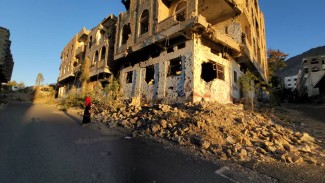
Yemen's nine-year conflict has devastated the country and created one of the world’s worst humanitarian crises. The regional upheaval stemming from the ongoing war on Gaza has created more obstacles on the country's already complex path toward peace and shifted attention away from the set of UN-brokered commitments agreed upon by the parties to the conflict in December 2023, which include a nationwide ceasefire. Amid these challenges, it is more imperative than ever to support civil society and victims and bring attention to victims’ grievances and needs.

ICTJ's Virginie Ladisch spoke with Heythem Guesmi, a young Tunisian activist who is fighting systemic oppression, economic exclusion, and impunity that persist despite the Revolution’s initial success, and Thenjiwe McHarris, a young organizer working with Black Lives Matter in the United States—a movement whose urgency also stems from historic marginalization leading to widespread impunity and systematic failures in law enforcement.

Victims of Tunisia’s dictatorship shared their stories publicly on November 17 in a historic moment for the country. The Truth and Dignity Commission (TDC) - charged with investigating gross human rights violations in the country since 1955 committed under the dictatorship - held its first public hearings in Tunis, gathering victims to testify to their experiences under dictatorship. The hearings present an essential opportunity for the country to confront its painful past. Since its inception in 2014, the TDC has received over 62,000 submissions and heard testimony from about 11,000 people.