Latest News

Explore our feature stories, opinion articles, and press releases.

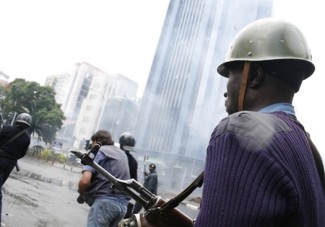
Kenya continues to deal with the repercussions of violence stemming from its disputed 2007 presidential elections, when political protests and targeted ethnic violence rocked the country, leaving thousands dead and hundreds of thousands displaced. Head of our Kenya office Chris Gitari gives an update on how Kenya is moving forward, and explains ICTJ's work in the country.
A new study by ICTJ finds that victims of human rights violations committed during Nepal’s 10-year armed conflict continue to experience hardship – and calls on the government to implement a comprehensive reparations program to respond to their acute and long-term needs.
On August 7, the Extraordinary Chambers in the Courts of Cambodia (ECCC) found two senior leaders of the Khmer Rouge, Nuon Chea and Khieu Samphan, guilty of crimes against humanity. For many victims who have been waiting for 35 years, the judgment still felt like bittersweet justice.

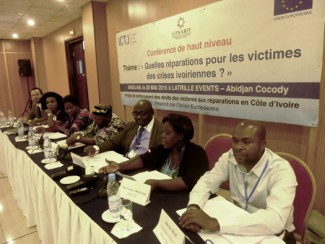
Cote d’Ivoire must prioritize effective consultations and ensure meaningful engagement with victims and civil society throughout the country in its efforts to provide reparations to victims of political violence that engulfed the country during the disputed 2010 presidential elections.

Continuing political repression, cronyism, and ongoing conflicts are disrupting attempts to put Myanmar on a linear path to democracy, peace, and development, says a new report from the ICTJ. According to the report, titled “Navigating Paths to Justice in Myanmar’s Transition,” dealing with current and historical abuses is essential to achieving genuine progress on peacebuilding and economic development in the country.

During Nepal's armed conflict, more than 13,000 people were killed and 1,300 forcibly disappeared. Today, a new government has voted to create a Truth and Reconciliation Commission, as well as a Commission of Inquiry on the Disappearance of Persons. Many victims have protested the flaws in the proposals; meanwhile, no comprehensive reparations have been provided for those left most vulnerable by conflict. In this interview with ICTJ's Santosh Sigdel, we discuss developments related to ICTJ's work in Nepal.

The need for a comprehensive reparations process was the central theme of the National War Victims’ Conference held in in May, in Kampala, Uganda.

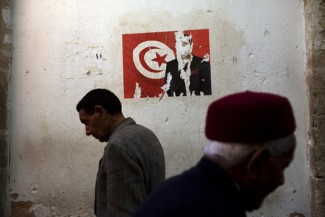
Since the uprising that sparked the "Arab Spring," Tunisians have demonstrated unwavering commitment to transitional justice. In this interview, ICTJ's Head of Office Rim El Gantri gives an overview of the country's efforts to address the truth about the past, seek justice for abuses committed under decades of repression, and provide reparations for harm suffered under the former regime.

In early May, the African National Congress (ANC) held on to power in South Africa’s general election. However, there is a widespread feeling that the party that oversaw the creation of the groundbreaking Truth and Reconciliation Commission has walked away from its obligations to the South African people.

ICTJ President David Tolbert will be a featured speaker at this year’s Al Jazeera Forum in Doha, Qatar. Al Jazeera Forum is the flagship event of Al Jazeera Media Network, at which Al Jazeera showcases its contribution to the world of media and politics.