Latest News

Explore our feature stories, opinion articles, and press releases.

For more than 20 years, the Amnesty Law has hindered El Salvador from pursuing accountability for perpetrators of serious crimes committed against civilians during the civil war fought between the government and leftist insurgents in the 1980's. However, this may change in very near future. On September 20, the Constitutional Court admitted a petition claiming that the Amnesty Law passed in March 1993 –which shielded perpetrators of serious crimes committed during the 12-year civil war– is unconstitutional.

In this edition of the ICTJ Forum, we speak with Lynn Maalouf, one of the primary authors of a new report by ICTJ entitled Lebanon’s Legacy of Political Violence. The report compiles information on hundreds of incidents of serious crimes that took place from 1975 to 2008 in all parts of Lebanon.

ICTJ welcomes the 6th National Event of Canada's Truth and Reconciliation Commission, part of the TRC’s journey towards completion of its mandate: to learn the truth about what happened in the residential schools, and to inform all Canadians about this history.

Despite the overwhelming number of Lebanon's civilians killed, injured, displaced or otherwise harmed by decades of violence, there remains a near-total lack of official acknowledgment, reparation, truth about serious crimes or accountability for the perpetrators. ICTJ is pleased to release the first in a series of publications that aim to bring the crimes of the past in Lebanon to light.

Ten years ago, on August 28, 2003, the Truth and Reconciliation Commission (TRC) of Peru presented its final report, clarifying the grave human rights violations committed between 1980 and 2000 during the internal armed conflict and the regime headed by Alberto Fujimori. This month, ICTJ joins Peru to examine the legacy and impact of the TRC.

Human rights organizations in Brazil have created an online platform Brasil Nunca Mais Digital to preserve evidence and other documents related to more than 7,000 political prisoners tried before Brazil’s Military Supreme Court, during that country’s military dictatorship.

The one-day forum “Latin American Experiences with Truth Commissions,” organized by the International Center for Transitional Justice in Bogotá on July 22, brought together leading experts to discuss experiences and lessons learned from truth-seeking processes that shed light on massive human rights violations in four countries: Argentina, Guatemala, Paraguay, and Peru.

ICTJ and the Barcelona International Peace Resource Center (BIPRC) are pleased to announce the 5th Intensive Course on Truth Commissions, which will focus on a practical approach to addressing the challenges of designing and implementing a truth commission.

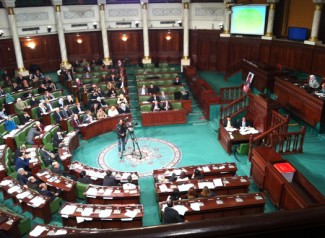
As Tunisia concludes its final deliberations on the new constitution, transitional justice issues such as reparations for victims, truth about the past and the rights of women have been central to the legislative debates. Over the past month, ICTJ’s leading experts have been engaged with stakeholders on the ground on a variety of issues under deliberation, including truth-seeking, reparations, gender justice, and the role of children and youth.

In pursuing the truth about mass crimes, a mandate provides a truth commission with more than just a legal authorization to act. It sets out a vision of what society hopes to achieve through the truth-seeking process and provides direction to commissioners and others in their operations. ICTJ has just released a new publication, “Drafting a Truth Commission Mandate: A Practical Tool,” which is intended to inform victims’ groups, civil society, and governments about the contents of a legal mandate of a truth commission.