
Beacons of Truth, Spaces of Remembrance: The Role of Memorials for the Disappeared

Title slide.
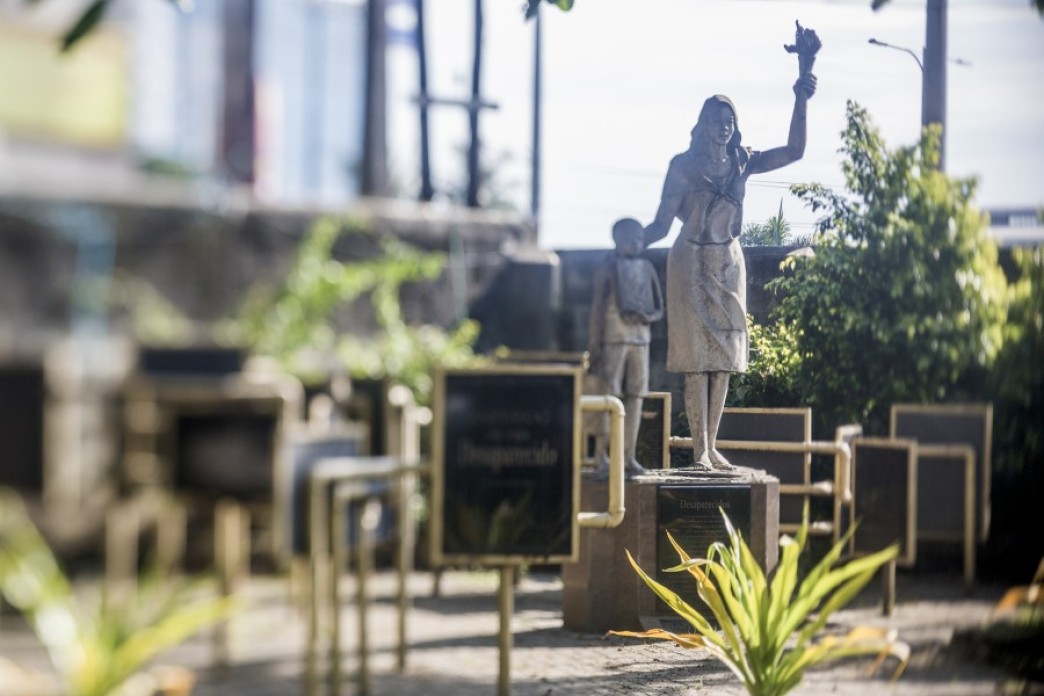
A monument with a statue of a woman and a child.

Philippines: Banatayog ng Mga Desaparecidos

More than 120,000 people have died in the Philippines during the decades of conflict between the government and armed groups including Muslim separatists, communists, and clan militias. To remember their loved ones, the Families of Victims of Involuntary Disappearance (FIND) erected the “Flame of Courage Monument” in 1994, without any institutional support, in Pasay City, south of the capital, Manila. The monument was unveiled again in 2004 and is now known as “Banatayog ng Mga Desaparecidos.”

“This memorial has been ‘unveiled’ every few years since it was first opened 8 years after the end of the Marcos dictatorship. That shows the ceaseless and lonely struggle of the families of the disappeared, from both the period of dictatorship and beyond, to remind the rest of society about those who are absent. But these unveilings also mark their victories, both small and more significant. The 2012 unveiling of an additional area within the site marked the passage of the law criminalizing enforced disappearances. The following year, a reparations law for victims of the Marcos dictatorship was passed and is now being implemented, which offers compensation for families of the disappeared, and a State-run effort that will officially recognize and fund different memorials to the dictatorship’s victims,” says Ruben Carranza, Director of ICTJ’s Reparative Justice program. (Photo credit: Ivan Sarenas)

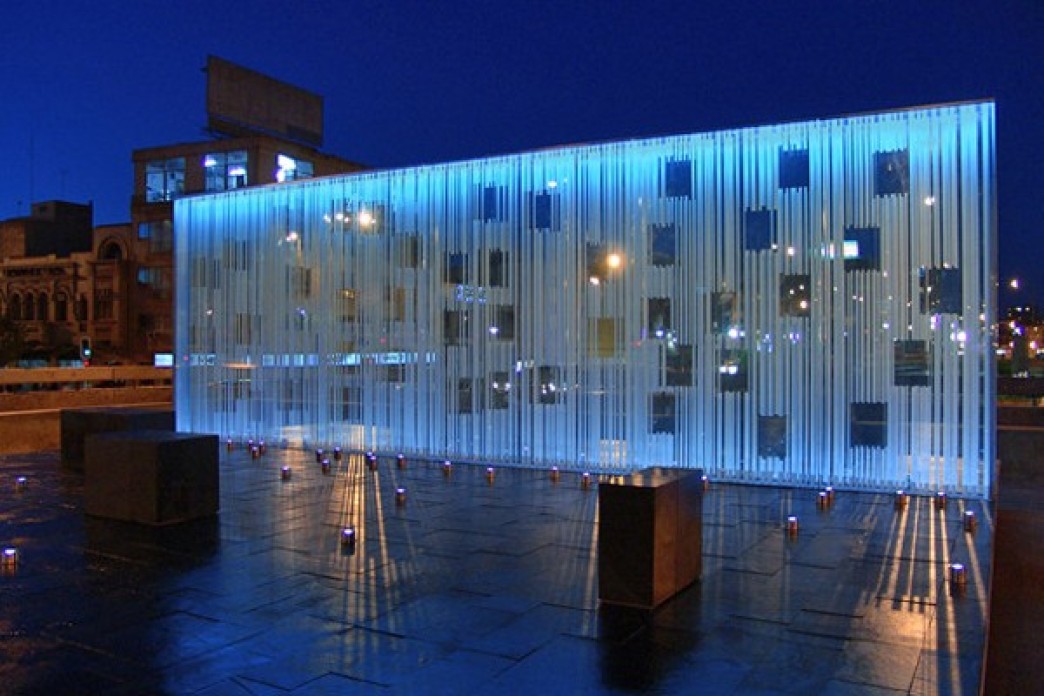
A glass monument illuminated.

Chile: Women in Memory Monument

The military coup led by general Augusto Pinochet in 1973 plunged Chile into a regime of repression and torture which lasted until 1990. Some 3,000 people died or were disappeared during the dictatorship. Erected in 2006, the “Women in Memory” memorial depicts the posters of the disappeared and the candlelight vigils held in their honor. The monument, designed by Emilio Marin and Nicolas Norero, goes beyond portraying women as passive victims and captures their struggle against the dictatorship. While the memorial was initially dedicated to 72 women who disappeared and 118 who died, it evolved to embody the activism of women victims of political repression.

“It is important that memorials capture women’s full range of experiences in a society marked by enforced disappearance, rather than reifying only the traditional conceptions of men as the victims of disappearance. A critical first step in ensuring this happens is making sure that women are included in consultations about a future memorial’s nature and design. It is refreshing to see memorials such as “Women in Memory” that present a nuanced, complex picture: women in mourning, yes, but also women as active agents of change engaging in and leading society’s struggles, first against repression and later against impunity,” says Kelli Muddell, Director of ICTJ’s Gender Justice program. (Photo credit: Nicolás Rupcich/Oficinadearquitectura)

A wall with the shape of a human cut out and writing surrounding the hole.

Bosnia and Herzegovina: Annual Installation on the Missing in Prijedor

Throughout the 1990’s, as Yugoslavia broke apart, its territories—including Croatia, Bosnia and Herzegovina (BiH), Macedonia and Kosovo—were battlegrounds for the most serious conflict and abuses in Europe since World War II. More than 140,000 people were killed or disappeared, and almost four million others were displaced. Twenty years after the end of the conflict in Bosnia and Herzegovina, 827 people are still listed as missing in the municipality of Prijedor. For political reasons, the Bosnian Serb authorities of the municipality are not allowing a permanent memorial to be built for the non-Serb victims. Instead, on every 30 August, the families take to the main city square with installations commemorating their missing. The installation in the photo, from August 2014, symbolizes the ghosts of the missing and the ten of the largest mass graves found in the municipality. On the exhibit with the silhouette of a missing person, the families left messages asking their Serb neighbors to tell them where their loved ones’ bodies are.

“In Bosnia and Herzegovina there is an ongoing war for the truth about the past. This war plays out in classrooms, in the media, but also in the public space through memorials. If one doesn’t know what happened in Prijedor in the nineties, but only sees memorials to the fallen Serb soldiers, it would be impossible to know that more than 3000 non-Serb civilians were killed or disappeared here by the Serb forces. These annual installations are a way of fighting this denial and fighting for the right to acknowledgement and public remembrance,” says Refik Hodzic, ICTJ’s Director of Communications. (Credit: Edin Ramulic/“Izvor” Association)

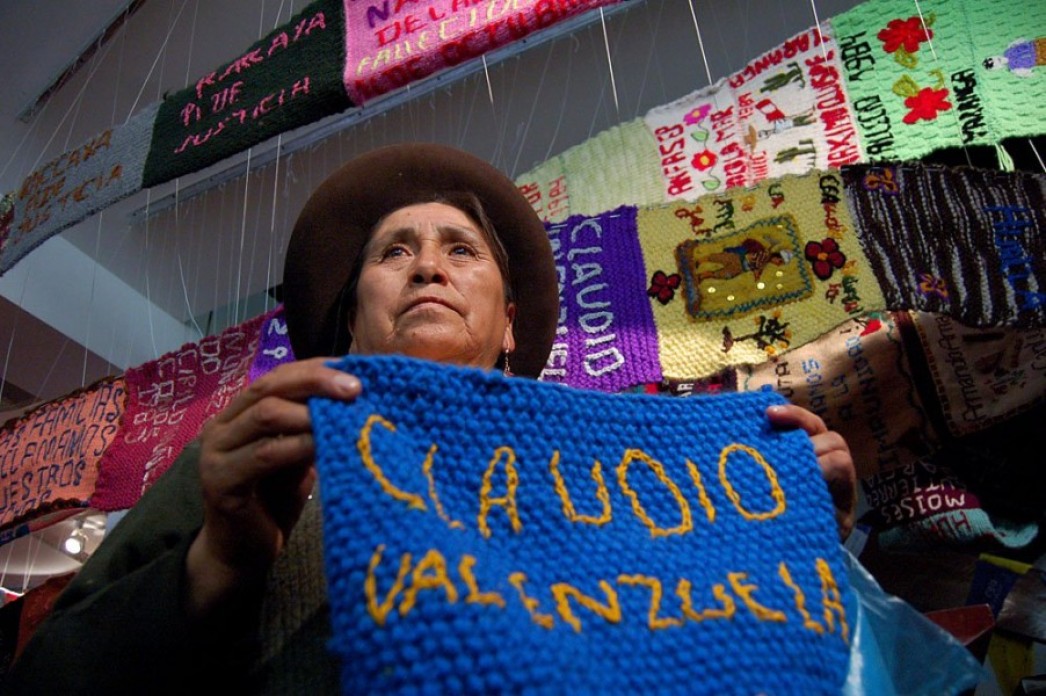
A woman holding a knitted scarf.

Peru: Scarf of Hope

A violent internal conflict between the Shining Path left-wing guerrillas and the armed forces wracked Peru from 1980 to 2000, leaving behind nearly 70,000 dead, including over 15,000 disappeared. Woven between November 2009 and January 2011 by women from urban and rural areas from all over Peru, the Scarf of Hope is a collaborative, performance memorial. Artists, relatives of the victims and human rights advocates created of the one-kilometer long knitted scarf. The scarf has different panels, some of them have the names of the missing person, others have words of wisdom, and others are blank or have beautiful, abstract designs.

“The fact that the relatives knitted the scarf is also a deeply emotional activity for them, since in Peru, very often, the means of identification of the disappeared exhumed from mass graves, mostly indigenous peasants, has been through the identification of handmade clothes, uniquely distinguishable by the women who made them. Creative and potent forms of memory work, such as the Scarf of Hope reminds us that commemoration does not need to be monumental or architectural. In fact, an intervention like the Scarf of Hope, allows the participants to build the memorial with their own hands,” says Eduardo González, Director of ICTJ’s Truth and Memory program. (Photo credit: Colectivo Desvela)

People gathered in front of a wall inscribed with text.

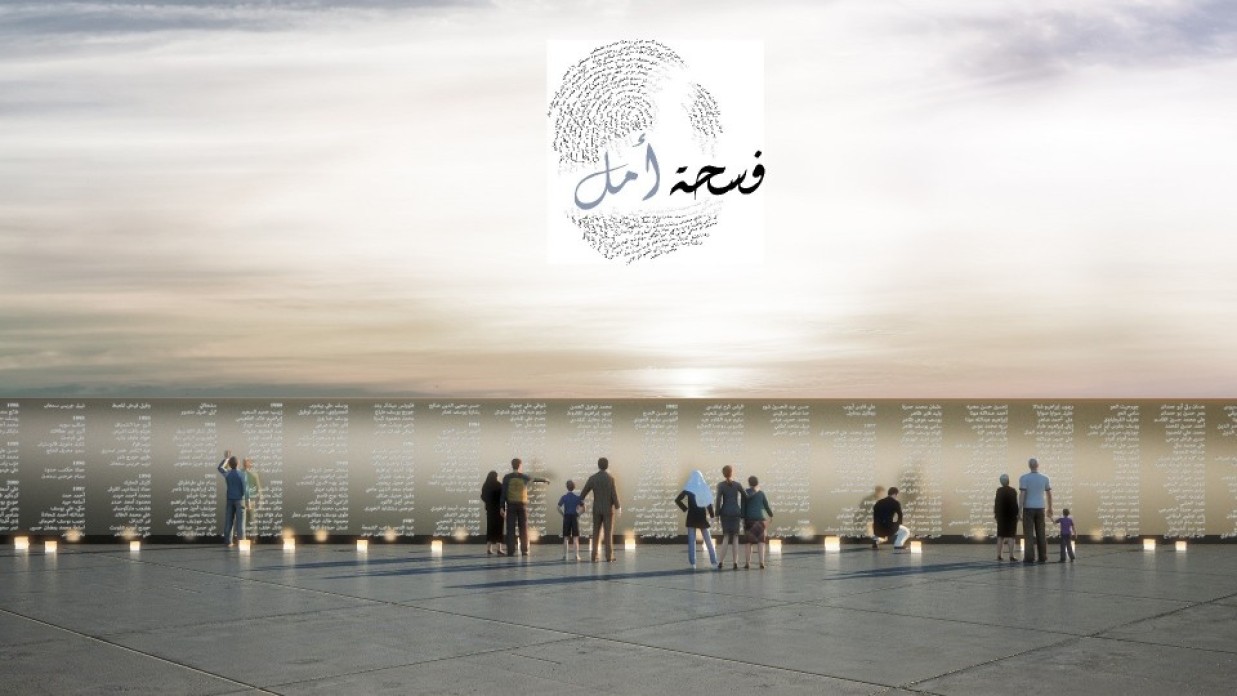
Lebanon: Space for Hope

Over 100,000 civilians were killed and approximately 17,000 disappeared in the Lebanese civil war (1975-1990). Since that date the estimation of “17,000 missing” has become a conventionally accepted figure, but to date the Lebanese authorities have not established a list of the disappeared. In 2015, ACT for the Disappeared, a local NGO that works with victims’ families to develop community memorialization projects, launched a digital memorial entitled "Fushat Amal" (Space for Hope). The digital memorial consists of an interactive website to which anyone can add the case of a missing person or update information on existing cases. A space is reserved for each missing person and displays biographical information, information about the disappearance, photos and videos, as well as testimonies of relatives of the missing person.

“The families of the missing took the decision not to build physical memorials before they know the fate of their loved ones. This position is also motivated by the concern that if they will ask for memorials to honor their disappeared it may imply that they recognize the missing are dead while they in fact don’t know. The families’ idea is to build a physical memorial once the proposed creation and implementation of the National Commission on Missing and Disappeared has been achieved,” says Carmen Abou Jaoudé, Head of ICTJ’s Lebanon Office. (Photo credit: Fushatamal.org)

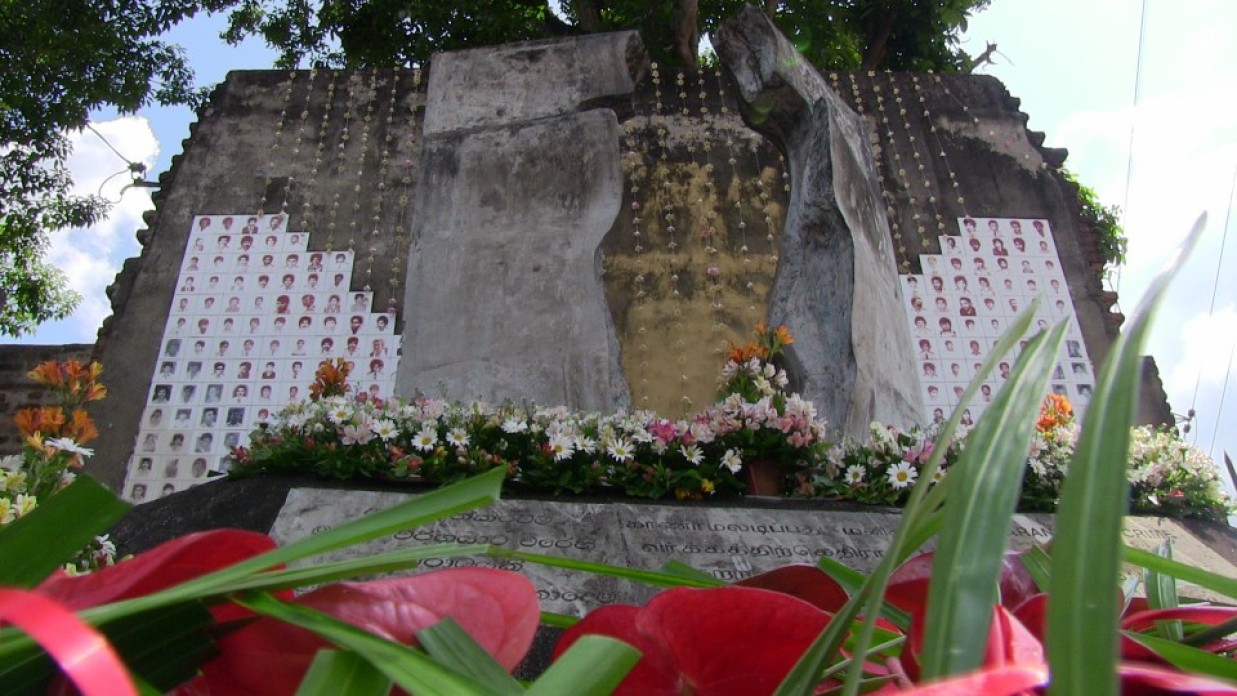
A stone monument with flowers and images of people.

Sri Lanka: Monument for the Disappeared in Seeduwa

Forced disappearance has been used as a counter-insurgency method in Sri Lanka, both to repress Left-wing insurgencies in the 1970s and 1980s, and in the context of the ethnic conflict between Buddhist Sinhalese and the Hindu Tamil. Erected in 2000, the monument on Raddoluwa Junction, in the city of Seeduwa, is meant to remember those who have disappeared since the 1970’s. On October 27, Sri Lanka’s National Day for the Commemoration of the Disappeared, families come from all over to the monument and pay tribute to their missing loved one. It was conceptualized by Chandraguptha Thenuwara, a famous Sri Lankan artist, and created under the guidance and initiative of Kalape Api and Asian Human Rights Commission.

“A modest object, like the passport photograph, which is normally used to assert identity in official procedures, has become charged with symbolism to remember the disappeared, here in Sri Lanka and many other places. By using identity photos in a monument, the disappeared look back at the living, make their existence undeniable, interrogate the state and demand justice,” says Marcie Mersky, ICTJ’s Director of Program. (Photo credit: Vikalpa/Flickr)

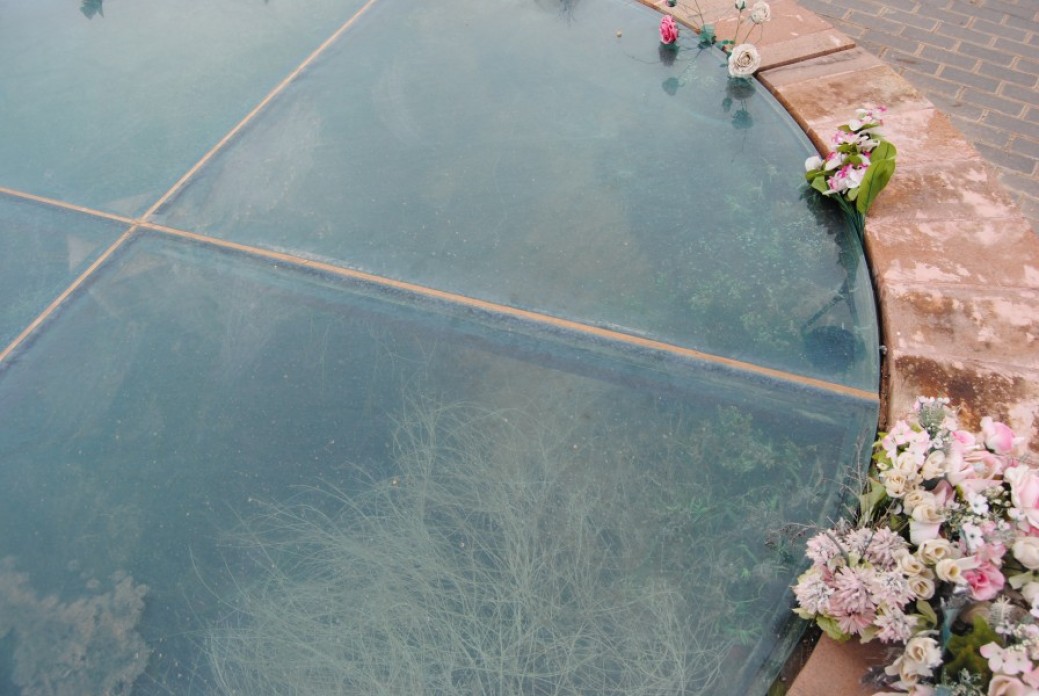
A pool of water with flowers surrounding.

Spain: Caudé Wells

70 years after the end of the Spanish civil war (1936-1939), the exact number of victims who died or were disappeared due to the conflict and the nearly four decades of dictatorship under Francisco Franco that followed is still unknown. More than 110,000 people were disappeared during that period. As the country transitioned into democracy in 1978, it opted for burying the past through an amnesty law, blocking processes to fight impunity for serious human rights abuses and refusing to deal with their long-term legacy. The state and some sectors of society have largely ignored the calls of victims and their families, who primarily ask for the truth about what happened and the whereabouts of the remains of their loved ones. In 2007, a Historical Memory Law was the first official initiative to address some of the long overdue claims of the victims. The current lack of funding and political support makes this law inoperative and the families of the victims have recurred to private funds and organizations like Asociación para la Recuperación de la Memoria Histórica (ARMH) to begin exhuming mass graves. There are more than 2,300 mass graves in Spain, and some 330 have been exhumed so far. A well near the town of Caudé, where some 1,000 civilians were executed and buried at the beginning of the civil war, has been transformed into a memorial in which the families of the victims pay tribute to the missing with flowers and small signs on the wall with the victims’ names.

“The location and exhumation of the remains of all the people who disappeared during the Spanish civil war and the dictatorship should not be a task assumed solely by the family members. Their pain and personal tragedy is a heavy enough burden without having to carry out this task without resources or support. This issue should not be the subject of controversy in Spain. On the contrary, it should be the logical next step of a society that is committed to healing the wounds of war: recognizing all victims of disappearance and providing support to their families in the search, exhumation, identification and related processes. This is not a question of political ideology. It is simply a matter of rights. At this point, no Spanish citizen should be disenfranchised of these rights,” said Fernando Travesí, Deputy Program Director at ICTJ. (Photo credit: Ruth Sastre)

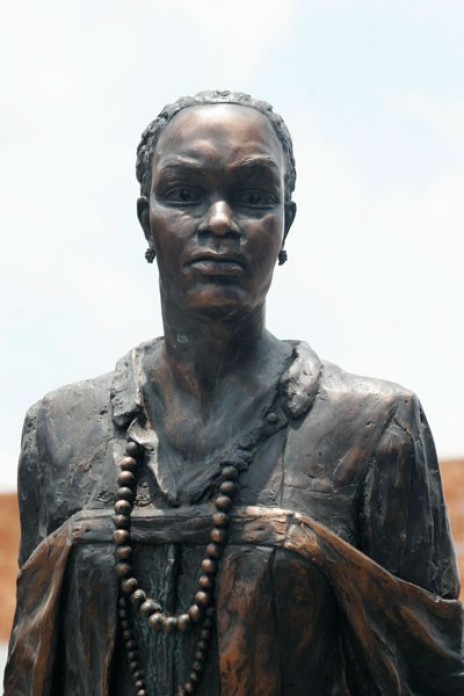
A bronze statue of a woman.

South Africa: Nokuthula Simelane Sculpture

In 1983, 23-year-old South African university grad and anti-apartheid activist Nokuthula Simelane was forcibly abducted, tortured and disappeared by members of the Security Branch of the South African police. Her body has never been found. While her family continues to fight for justice to bring closure to her case, in the town of Bethal a sculpture of Simelane was erected to honor her sacrifice in the anti-apartheid struggle. The monument has attracted hostility from the supporters of the previous regime and the statue was vandalized in 2011, when two men broke it from its base and dragged it behind a vehicle in the streets of Bethal.

“Nokuthula’s story is rooted in South Africa’s bitter and divided past. She was violently abducted by all-powerful State forces, brutally tortured and murdered. The statue was erected to pay tribute to her sacrifice in the struggle for freedom,” says Howard Varney, ICTJ Senior Associate in South Africa. (Photo credit: South Africa House of Memory)

Two people pointing to a monument.

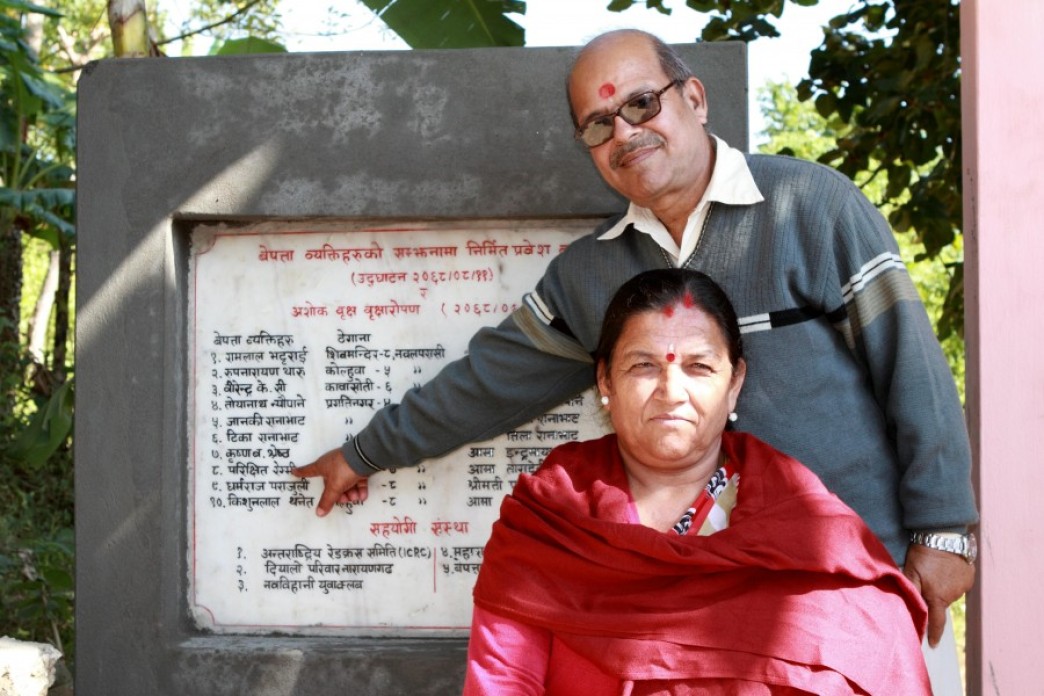
Nepal: Memorial of the disappeared in Nawalparasi

For ten years, fighting between the government of Nepal and Maoist rebels brought terror to the lives of many Nepalese. More than 13,000 people were killed and 1,300 forcibly disappeared. Though the war ended in 2006, the country’s recovery has been slow, stagnated by the absence of justice for victims and unanswered questions about the disappeared. Victims’ families are leading and funding the establishment of many memorials for their loved ones, like this one created by a family association in Nawalparasi district.

“Poverty makes victims choose to prioritize basic needs and to remember the disappeared in ways that are practical – they may ask whether the toothbrushes and comb of their disappeared family members can be accepted as exhibits in the museums we often mention as examples of memorialization,” said Santosh Sigdel, ICTJ Senior Program Officer in Nepal. (Photo credit: ICRC Nepal/NEFAD)

The fence in front of a memorial museum.

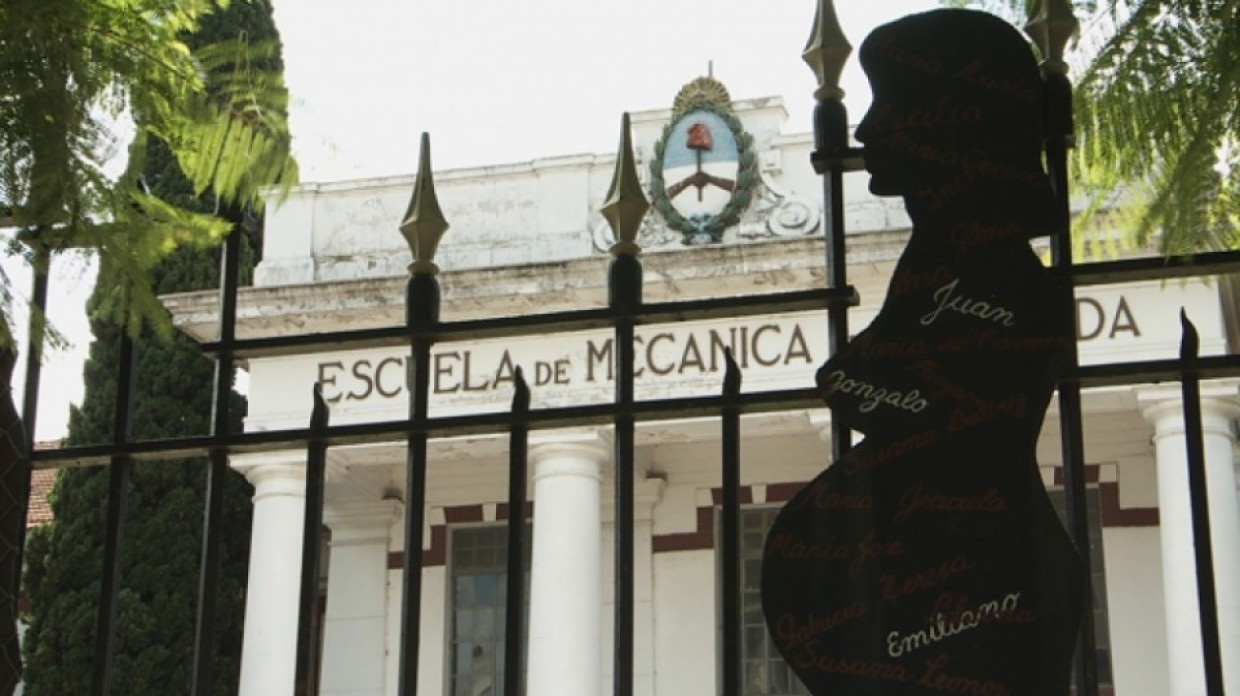
Argentina: ESMA: Human Rights Museum/Monument

More than 30,000 Argentinians died during the military junta's 'Dirty War' (1976-1983). Political dissidents, student and union leaders, intellectuals, and other civilians were systematically disappeared, tortured, and killed in some 400 torture camps. In 2008, one of the most infamous torture camps, the Escuela de Mecánica de la Armada (ESMA), was converted into a public memorial honoring the disappeared and documenting the horrendous crimes committed by the dictatorship.

“The ESMA museum is not simply a place for commemoration, but for education, dialogue and advocacy. It has become over the years a space where a troubling memory is processed with the instruments of democracy: participation, knowledge and debate,” says Eduardo González, Director of ICTJ’s Truth and Memory program. (Photo credit: Shtëpia-Muze te Nëna Ferdonije Qerkezi)

The walls of a house covered in photographs.

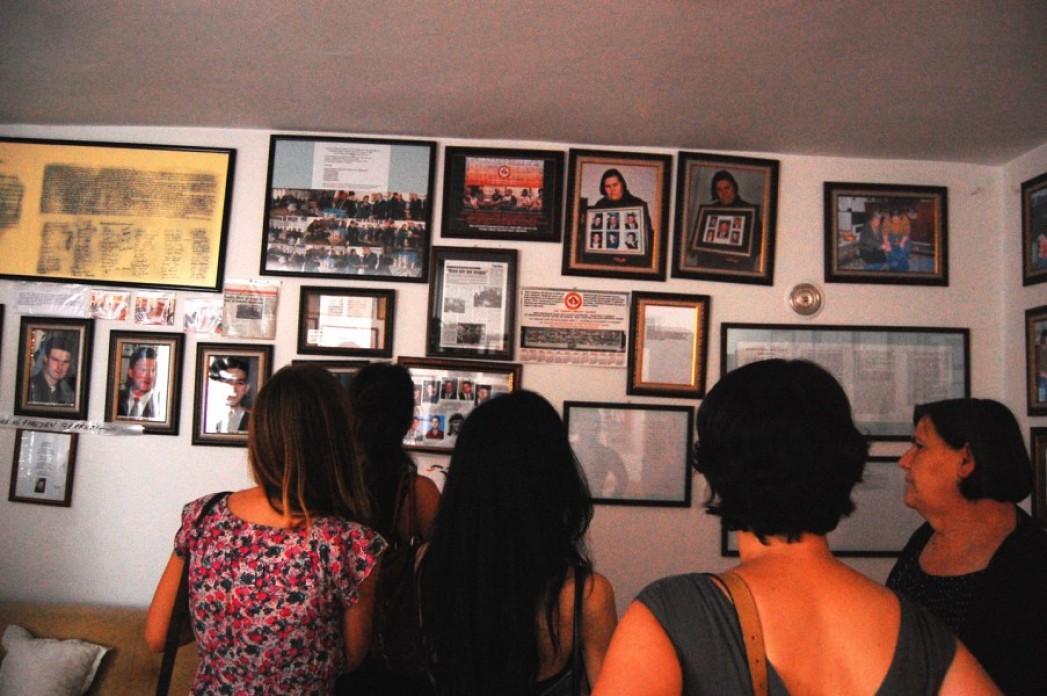
Kosovo: The House-Museum of Mother Ferdonije Qerkezi

In March 1999, during the ethnic cleansing campaign unleashed by Serbian forces in Kosovo, paramilitary forces assaulted the house of the Qerkezi family, in the town of Gjakova, a few miles south of Pristina. All the male members of the family, Halim, the father, and four children were abducted and taken to unknown locations. They were never seen alive again. The bodies of Artan and Edmond, the eldest and the youngest sons respectively, were found years later in a clandestine gravesite. Ferdonije Qerkezi, the mother of the family, transformed her house into a grassroots museum commemorating the martyrdom of her loved ones. The rooms where the disappeared lived have been preserved to look as they did the last time they were present; and the living room has been transformed into a shrine with personal objects, including those that were found during the exhumation of Artan and Edmond.

“Kosovo is dotted by memorials erected directly by families and communities. Mother Ferdonije’s House-Museum is a poignant example of how unstoppable memory is. Even in the absence of governmental initiatives, the citizens will feel the need to mark the events of the past, to grieve and to heal,” says Anna Myriam Roccatello, Deputy Program Director. (Photo credit: Abhi/iamnothome.net)

A large stone statue.

Timor Leste: Memorial of Santa Cruz Cemetery Massacre

During the 24 years of occupation by Indonesia, East Timorese suffered displacement, sexual violence, torture and other abuses. More than 100,000 people died in the conflict, and 1,400 other lives were lost at the hands of Indonesian security forces and their Timorese militia when the country became independent in 1999. In 1991, over 200 people were killed and some 200 others were disappeared at Santa Cruz cemetery in Dili, the country’s capital, as they were peacefully burying a resistance leader killed two weeks earlier by Indonesian soldiers. Today, this massacre is memorialized in a powerful monument depicting a procession participant dying in a friend’s arms.

“Part of the importance of a physical memorial to the disappeared is that their families do not have a grave to go to grieve and commemorate. In Timor Leste, where the population is traditionally Catholic, the absence of such a sacralized space for those disappeared at the Santa Cruz cemetery, and—indeed—the violation of such a sacred space by a massacre, is deeply traumatic. Memorials help to process the loss and provide a place of mourning in absence of a grave,” says Ruben Carranza, Director of ICTJ’s Reparative Justice program. (Photo credit: Memorial da Resistencia de Sao Paulo)

A wall of stone faces.

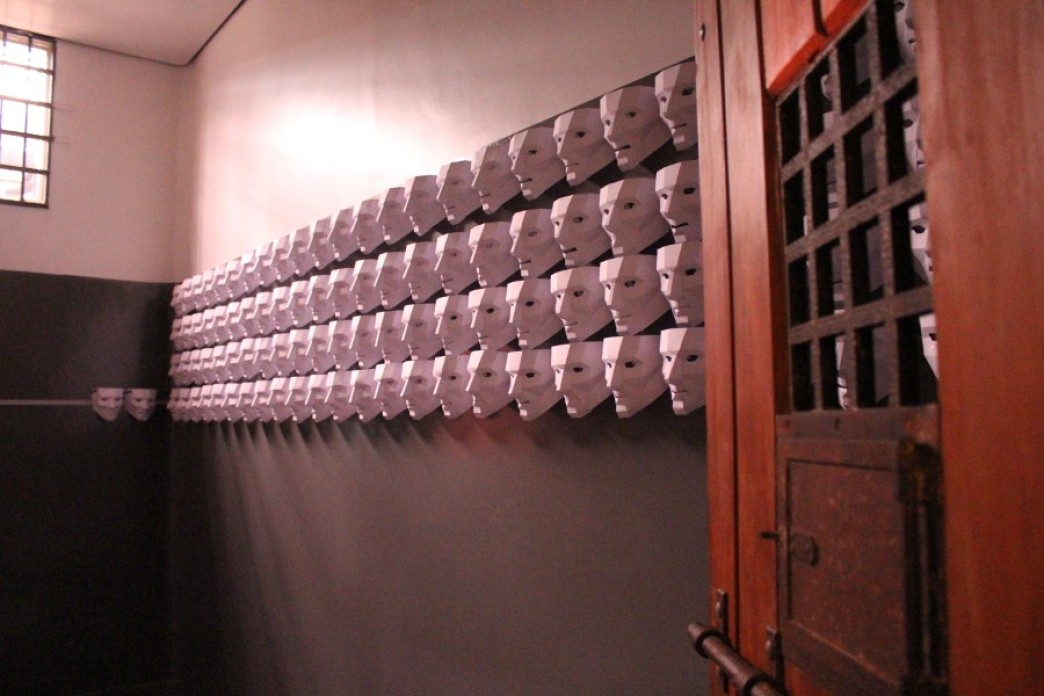
Brazil: Memorial of Resistance in Sao Paulo

Enforced disappearances were widely used as a repression tool by the military junta that ruled Brazil between 1964 and 1985. Around 400 people were killed or disappeared during that period, and thousands were tortured or subjected to other severe abuse. A much-challenged amnesty law still holds and has blocked attempts to hold perpetrators criminally accountable for the human rights violations that took place under the dictatorship, but the country embarked on a process centered on the truth and the memory of the disappeared, and on reparations for thousands of victims and survivors. The national truth and reconciliation commission, which issued its final report in December 2014, and several memorialization initiatives are important manifestations of this process. In Sao Paulo, a former prison has been turned into a memorial depicting the political repression and honoring the resistance to the dictatorship. Former political prisoners who were held there played a major role in designing the memorial. They ensured that rather than focusing on the brutality and inhumanity of their torturers, the memorial would highlight the acts of solidarity among prisoners that helped support each other and other efforts that asserted and affirmed their dignity.

“Brazil has made enormous progress in its transitional justice process, with one glaring exception: the failure to prosecute those responsible for crimes against humanity, who are protected by a self-amnesty law passed as the military dictatorship waned. Memory sites, like the Memorial of Resistance, give a human face to the need for full accountability,” says Eduardo González, Director of ICTJ’s Truth and Memory program. (Photo credit: Memorial da Resistencia de Sao Paulo)

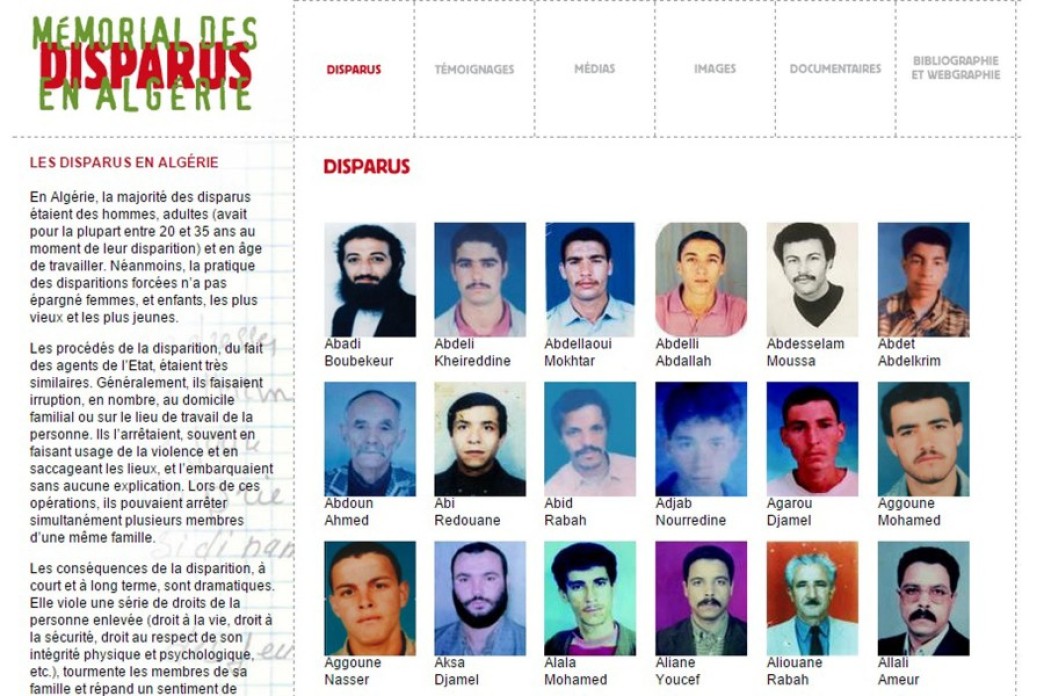
A grid of faces on a website.

Algeria: Memorial of the Missing

Algeria’s “dirty war” in the 1990s led to approximately 150,000 deaths and thousands of disappeared. President Abdelaziz Bouteflika passed a law in 2005 providing amnesty to armed rebels and state security forces. Although the Algerian authorities officially recognize the existence of 7200 missing due to State agents, no effective investigation has been conducted on the fate of the missing to date. No official list of missing was ever published. The families of the disappeared challenged this imposed silence by issuing a digital memorial, The Memorial to the Missing, to preserve the memory of the disappeared. This memorial contains a photo gallery of the disappeared and the video testimonials of their families and their struggles. These Algerian families keep gathering each Wednesday, claiming their right for truth and justice.

“In societies where there are amnesties for perpetrators and official policies to suppress the truth about the disappearances, like in Algeria, it is very difficult for the families to have this grave injustice acknowledged through public memorials. However, such “official amnesia” never stops the families’ quest for truth about their loved ones, nor do these issues go away with time, they simply find alternative ways of memorialization. And with the ascendance of the Internet it is increasingly the digital space where such memorialization takes place. This is where the information on the disappeared is shared and where their memory lives on, until such time when it is possible to enact policies that will acknowledge the disappeared and the continuing plight of their families,” says Fernando Travesí, Deputy Program Director at ICTJ. (Photo credit: Memorial des Disparus en Algerie Homepage)

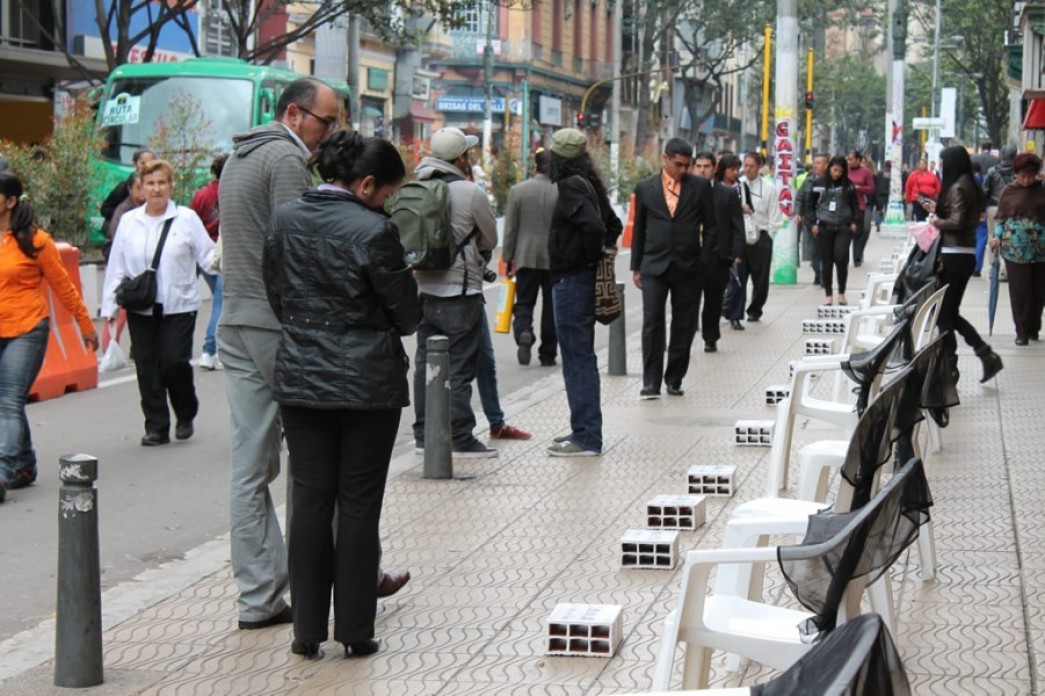
An urban street with pieces of concrete lined up along it.

Colombia: Civil Society-Led Initiatives on the Disappeared

Colombia has experienced violence and a state of fear for over 50 years. The armed conflict between left-wing guerrilla groups and the armed forces eventually developed into a complex struggle for resources and power, where fighting between rebel groups, the military, and right-wing paramilitaries has resulted in thousands of murders, enforced disappearances, sexual crimes, and the forced recruitment of minors. The common practice of enforced disappearances has remained silenced for many years, but the government and the FARC guerrilla recently announced that, if a final peace agreement is reached, the investigation of disappearances will be a main focus for the potential truth commission. For years, civil society has taken the lead on developing a vast array of memory initiatives, from local museums to murals, knitting projects, or artistic installations like the one pictured above, honoring those who are absent.

“This war has brought out the worst of human beings. The recognition of the damage caused and the pain of others is the only possible way to re-humanize a society dehumanized by indifference and denial of others. Now Colombian society has the opportunity to demonstrate the greatness of which it is also capable,” says Maria Camila Moreno, director of ICTJ’s program in Colombia. (Photo credit: Astrid Elena Villegas/ICTJ)

Some of the relatives’ stories start with the banging of a door at night, followed by a sudden abduction; others begin with a seemingly innocent citation to appear at a police station for a “routine procedure”. In any case, the stories always unfold in a desolate manner: as a loved one vanishes without official explanation, the family starts a desperate pilgrimage to hospitals, barracks, morgues and clandestine burial sites, only to be mocked and stigmatized.

The crime of enforced disappearance—the abduction of a person followed by the indefinite denial of their detention and of information on their whereabouts—is one of the cruelest and most effective forms of repression. The relatives and social circles of the disappeared suffer a deep sense of anxiety and fear that has been recognized as a form of torture; communities and organizations weaken under a pall of terror.

The Working Group on Enforced or Involuntary Detentions, a UN body established in 1980 to assist the families of the disappeared seeking cooperation from the governments concerned, has examined over 54,000 cases representing violations that took place in 104 countries. This is but a fraction of known cases from around the world. The contexts where disappearances have taken place vary widely: a military dictatorship, like the Argentine junta in the 1980s; a civil war like Algeria’s in the 1990s; the so-called “war on terror” in more recent times.

Disappearances violate several fundamental rights, including the right to life, to legal recognition as a person, to due process guarantees, and to be protected from torture. In addition, since perpetrators hide information, the relatives’ and society’s right to know the truth is also violated.

Several countries where ICTJ has worked over the years have developed policies to address the needs of families of those who are missing: truth commission in Peru, Morocco, and Brazil established authoritative lists of victims, identified sites of illegal detention and clandestine gravesites; and local forensic experts have developed impressive technical knowledge, conducting thousands of exhumations, identifying remains and returning remains to families in countries like South AfricaBosnia, and Guatemala. But what needs to be done is still much more than the progress in the terrain: governments often put legislation to seek the disappeared on the back burner or fail to provide sufficient resources to their experts, inured to the demands of aging, desperate relatives.

On the International Day of the Victims of Enforced Disappearances, ICTJ joins efforts worldwide to uphold the rights and reflect the dignity of the victims and their relatives.

The struggle of the relatives of the disappeared has been a source of inspiration to all of us who work in transitional justice processes and in defense of human rights more generally. They set an example for us with their courage and creativity in insisting on the right to know what happened to their loved ones, in demanding justice and in keeping the presence of the disappeared alive in the broader society. On this International Day of the Victims of Enforced Disappearance, ICTJ is highlighting some of the many forms that relatives of the disappeared have used to promote and honor the memory of the disappeared around the world. These memorials and commemorative practices help to educate the public about this horrible crime, about the lives that were lost and fates that were hidden, and to remind the citizens of a continued responsibility to unveil the truth and seek justice for the disappeared.

In some places where democracy has strengthened since authoritarian regimes, like Chile and Argentina, memorials have gained official status and receive thousands of visitors; in other countries, like Lebanon or Nepal, the relatives perform demonstrations and pilgrimages to mark the disappearances; while artists and civil society supporters in Peru develop other forms of commemoration, like the ceremonial knitting of clothing objects with the names of the disappeared. Everywhere, these commemorative practices and sites are imbued by the symbolic power of one of the most basic human cultural needs: grieving for the dead, and honoring them in accordance to each community’s spiritual beliefs.

Memorials allow for mourning, but they also facilitate dialogue and learning. They can mobilize educators, artists, religious leaders, and other constituencies whose participation is critical to affect societal transformation. The importance of memorializing is critical not only to the relatives of the disappeared but to new generations focused on a future free of abuse. Commemorating the disappeared—honoring their dignity and their relatives’ struggle—is an integral element of transitional justice that governments and society need to uphold.
