
Capturing the Void

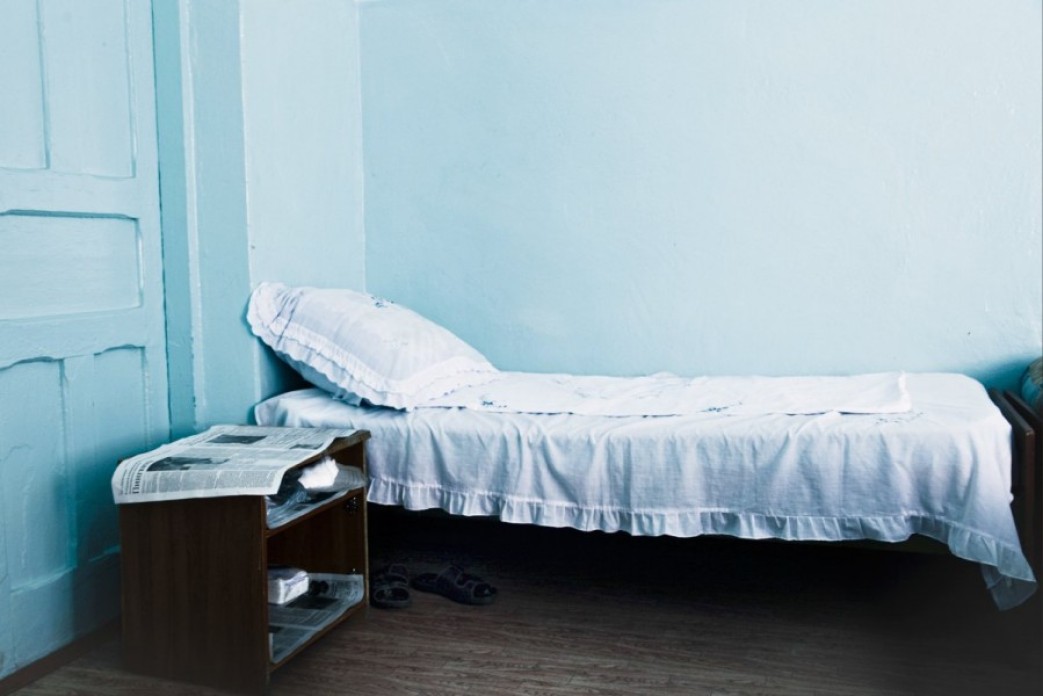
An empty bed.

In June 2009, human rights organisation Memorial Grozny received information that Apti Zainalov, a victim of abduction who had been reported to them earlier that year, had been spotted in Atchko-Martan Hospital with multiple bullet wounds. Apti was unconscious and being kept under strict police surveillance. Memorial launched an immediate inquiry, but the organization lost access to Apti after the authorities noticed activity around the hospital. Memorial employees managed to trace a car that moved Apti to a secure facility in Gudermes, but they were unable to gain further access. The whereabouts of Apti remain unknown. In the Caucasus region, local groups have reported 5,000 disappearances, less than half of which are acknowledged by the government. Families of the disappeared have opened 1,814 investigations, resulting in no convictions.

From the Photographer: Mari Bastashevski

People were disappearing, boys who grew up reading the same books as I did, watching the same news programs. The information void on Chechnya added allure to the mystery; I'd been meaning to go for years. I called Natalia Estemirova, the head of the Russian human rights organization Memorial Grozny, and told her that I had read her reports and would like to photograph the disappeared. I had it all wrong back then, but she said “Good,” and told me I would be staying with her. It wouldn't be safe otherwise.

On my first day in the North Caucasus region I met six families. One of the mothers, Tumisha, had been coming to Memorial every other day for four years, asking for bodies. The other said that both of her sons are still alive in secret prisons. The relatives of Zelemkhan Murdalov and Elza Kungayeva did not succumb to self-delusion. They kept on through threats and assassination attempts, and, against all odds, they brought the perpetrators to justice.

In the ensuing year, I must have met hundreds of families. The first thing all of them said to me was: “He is not guilty, he hasn't done anything.” The concept of "presumed innocent" had long been forgotten here, there are no means of recourse. Even the boys who joined the ranks of Ramzan Kadyrov's security forces weren't immune. Two of the Nenkayev brothers were abducted while working for the local police.

On January 20, 2009, Natalia picked up the phone and screamed “It cannot be! Not Stas!” Stanislav Markelov, a lawyer who had dedicated his career to representing the disappeared, had been assassinated in Moscow. On January 21 she returned to work at Memorial. Her unflinching dedication earned her respect, not only among the victims and colleagues, but among the people who genuinely disliked her: the generals, the contractors. This respect was her safety net, but it wasn’t enough. She was abducted, driven across the regional borders demonstratively, and shot dead on July 15 of the same year.

There are no exceptions to the “counter-terrorism” abduction strategy in North Caucasus. As an observer, an outsider, there is nothing you can do to change this, only something to remember it.

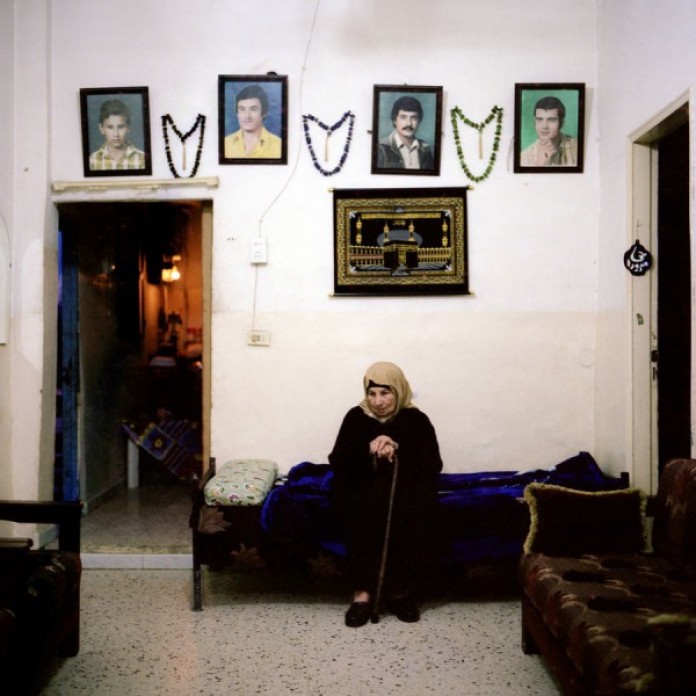
A woman alone under a set of photographs.

Amineh Hassan Banat (Imm Aziz) sits under the framed portraits of her four sons at the Bourj el Barajneh Palestinian refugee camp in Beirut, Lebanon, 2010. From left to right, Ahmad (13), Mansour (22), Ibrahim (25), and Aziz (31). All four were taken from their home by force in 1982 by members of a militia. She never saw them again. Lebanon's 15-year civil war, which began in 1975, led to the disappearance of 17,000 persons. Families believe some of the disappeared are still alive, but detained in Syrian prisons.

From the Photographer: Dalia Khamissy

I was seven when my father was kidnapped in 1980; three days later he returned home. Many years later, I understood he was luckier than many; 17,000 people are estimated missing in Lebanon. They all disappeared during the 1975-90 Lebanese civil war, abducted by different Lebanese militias, Syria, or Israel.

In 2010, trying to understand the violence I grew up in, I decided to tell the stories of the missing, one of the most complicated issues in Lebanon. While most Lebanese were trying to forget the war and move on, some are unable to do so, and still struggle to know the fate of their missing.

Amineh Hassan Banat is one of the mothers whose children were taken away by force in September 1982, never came back home, a day she never forgot. On the wall she hung framed photographs of her four sons, turning the living room into a shrine, as if wanting to keep them where she could constantly see them. Entering the room, one could feel that time had stopped the day they were kidnapped, as most probably her life did. At 80 all she wishes for is to know their fate, before she dies.

The missing is my first project on the civil war’s aftermath. Every time I think it could have been my father or any other member of my family, I feel the urge to go on telling their stories until their fate is hopefully unveiled.

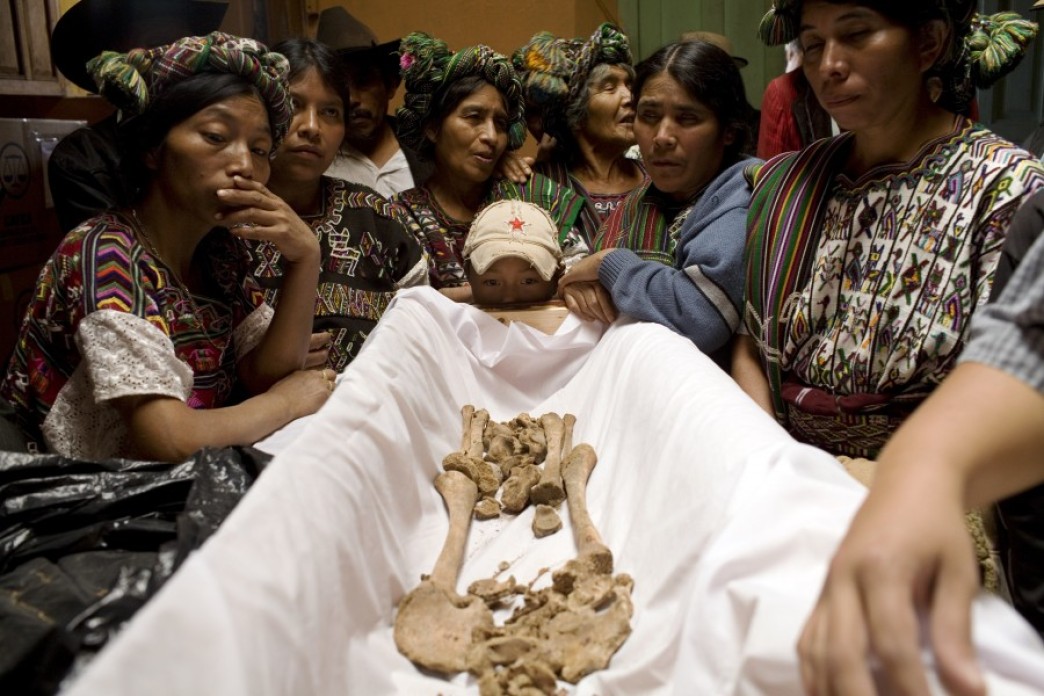
A skeleton with a crowd of people surrounding it.

Relatives look at the bones of Gaspar Terraza Matom, approximately 10 years of age, who was killed in the massacre of 79 people by the Guatemalan Army onApril 16, 1981, at a mass burial in Cocop, Guatemala, June 10, 2008. After the exhumation of 76 bodies, a team of forensic anthropologists made a scientific study of the bones and clothes of the massacred villagers for identification purposes. During 36 years of civil war in Guatemala, around 250,000 people were killed or disappeared.

From the Photographer: Rodrigo Abd

“Absence. When my brother disappeared, part of my life disappeared with him. I feel pain, rage, I sometimes even want to take revenge…what I and my family have is thirst for justice,” said Giovana Cueva in Huancavelica, Peru, when she spoke to me about the disappearance of her brother, Alfredo Ayuque, in 1989.

After having been born in Argentina, living for nine years in Guatemala, and now almost one year in Peru, I fully appreciate that the plight of the disappeared is a tragedy for all Latin Americans.

Until justice is served and the hundreds of thousands of disappeared people are found, our countries will not be able to find peace.

This wound must be closed forever. We already know that the loss of human life is irreparable, but the families need to know what happened to their loved ones and be able to bury them with dignity. We also need justice to be done in order to be certain that these atrocities will never be repeated.

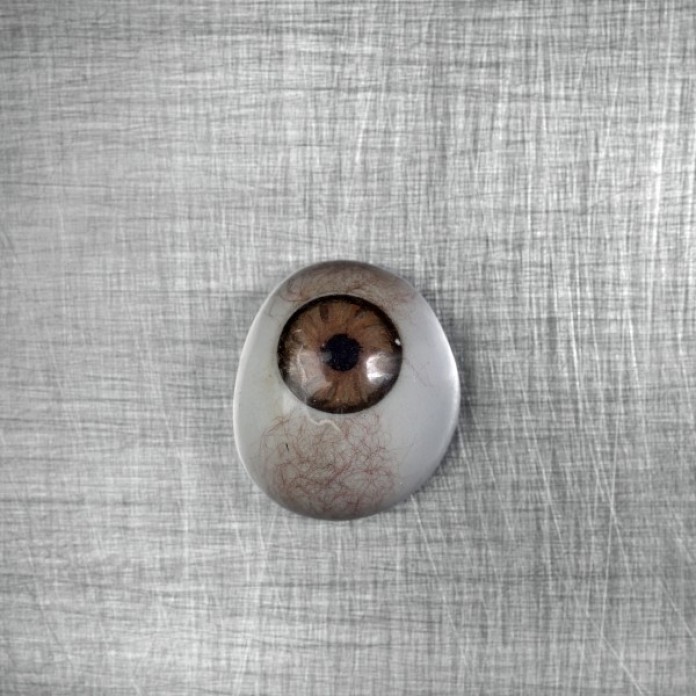
A model of an eyeball on a table.

During the four years of conflict that devastated Yugoslavia in the early 90s, approximately 30,000 people went missing. Most of them were killed either in the early days of the war or toward the end of hostilities, when UN safe zones like Srebrenica fell into the hands of the Serbian Army.

From the Photographer: Ziyah Gafic

These are simple objects: clocks, keys, combs, glasses. They are the things that victims of genocide in Bosnia carried with them on their final journey. As part of the process of identifying those who disappeared, personal belongings found with victims’ remains have been collected by the International Commission on Missing Persons, which was established by the U.S. government. The main goal of the commission is to identify those lost in the killings, the first act of genocide on European soil since the Holocaust. Not a single body should remain undiscovered or unidentified.

I decided to photograph every single item exhumed from the mass graves in order to create a visual archive that survivors could easily browse. Once recovered, these items, carried by the victims on their way to execution, are carefully cleaned, catalogued, and stored in several locations around the country. Thousands of artifacts are packed in clearly labeled white plastic bags. In addition to the objects’ use as a means of identifying victims, the items also are used as forensic evidence in ongoing war crimes trials stemming from the conflict. Survivors of the massacres are occasionally called to try to identify these personal items, but physical browsing is extremely slow and difficult, an ineffective and painful process. The fact that some of the victims carried personal items such as toothpaste and a toothbrush is a clear sign they had no idea what was about to happen to them. Usually, in an effort to forestall resistance, victims were told that they were going to be exchanged for Serbian prisoners of war.

Once all the missing persons are identified, only their graves and these everyday items will remain. In all their simplicity, these objects are the last testament to the identity of the victims, the last permanent reminder that these people ever existed.

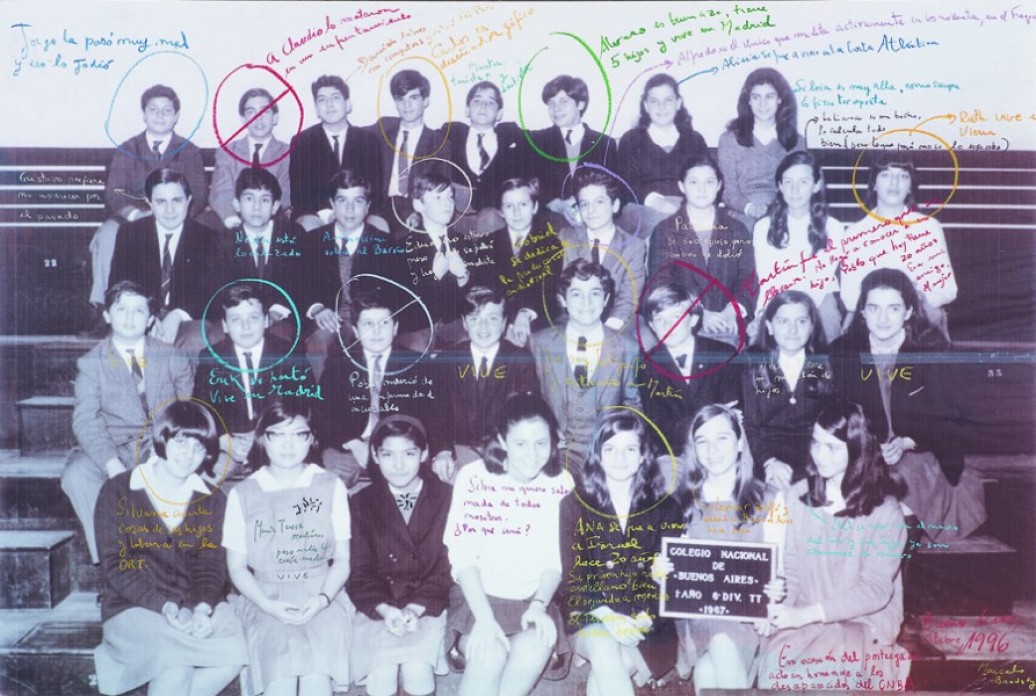
An annotated class photograph.

Marcelo Brodsky’s 1967 high school class in Buenos Aires, Argentina. Decades later, Brodsky investigated the lives of his colleagues, finding out what happened to each of them. Two of them — marked in red — were disappeared by the military during the dictatorship. From 1976 to 1983, a series of military juntas resulted in the disappearance of over 30,000 people in a campaign of terror, torture, and kidnappings.

From the Photographer: Marcelo Brodsky

“Art is a social act of a solitary man,” is the W. B. Yeats quote that started my first book of poems, Parable, published in Barcelona in 1982. I was then more concerned with words than with images, and I was only starting to become a visual artist.

In 1996-1997, this intervention on my class of 1967 photo, in which I marked the members of my class who were disappeared by state terrorism with a red circle crossed by a line, started an intersection between my artwork and the claim for truth, memory and justice that made me become a human rights activist.

From my memory works with the books we buried out of fear during the Argentine dictatorship, to the covering of a Nazi monument in Hanover with photographs to remember the concentration camps of Germany and Argentina, from my “finding” the stones of the facade of the bombed AMIA building in Buenos Aires, to tinting the fountains red in Madrid and Buenos Aires to protest the war in Iraq, I believe art is a powerful tool of communication that can bring a different, sensible view to the international debate about memory and human rights, and can also become an alternative way of transmitting our traumatic experiences to new generations with statements that can reach their hearts.

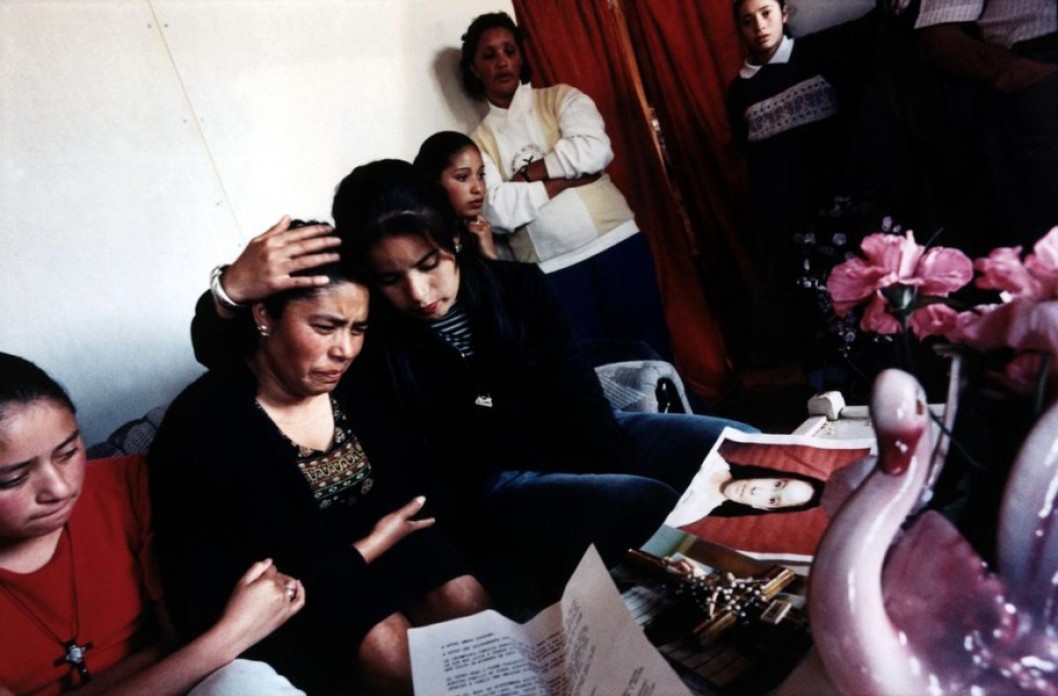
A family wearing black crying.

The family of Maria Sagrario Gonzales Flores at home in the Lomas de Poleo, Ciudad Juárez, Mexico, 1998. Beginning in 1993 and peaking during escalated drug cartel wars in 2007, over 1,000 women and girls possessing similar physical features have suffered violent, often sexual deaths in Ciudad Juárez.

Susan Meiselas

The killing of women in Ciudad Juarez has been a constant for nearly two decades and continues to impact daily life for families living along the border. Their daughters work in the nearby maquiladora factories, fabricating for Americans, but their lives are at risk when they return home. Maria was 17 years old when she disappeared, no trace was ever found of her in the desert.

“Part of what happens if you stay and take pictures is that you feel you will protect people just by standing there,” Meiselas said in an interview with The New York Times in August, 2007. “But you can’t stand there that long, and you can’t protect them.”

Taking photographs, she once said in an interview with Nicaraguan television, “is sometimes the least you can do.”

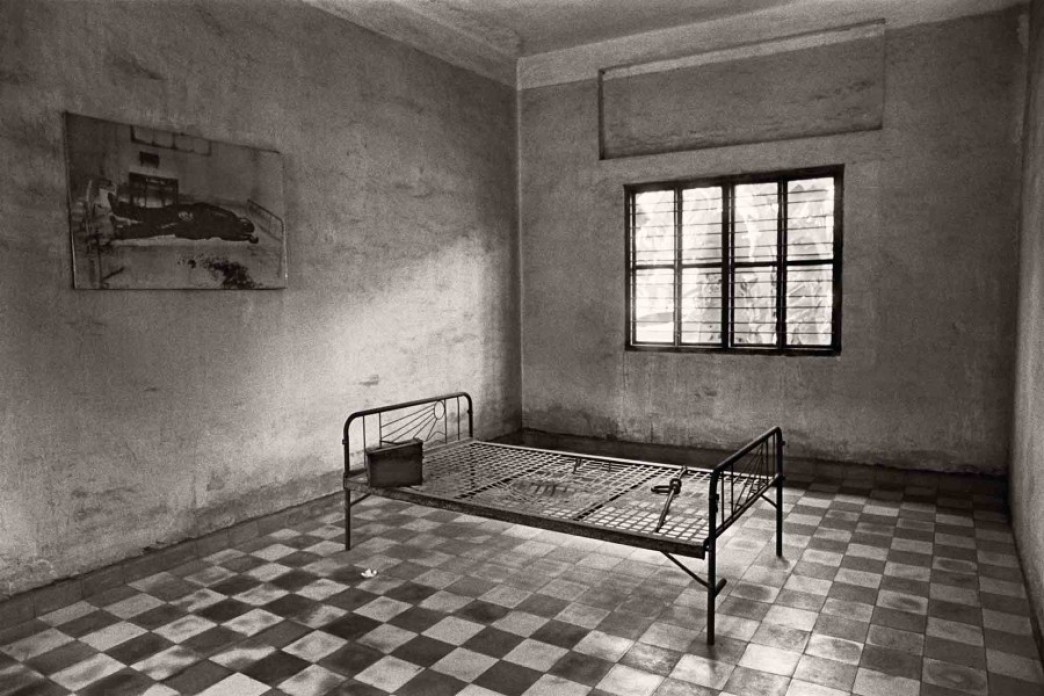
A bed frame in an empty room.

One of the torture cells at Tuol Sleng, Security Prison 21 (S-21), established by the Khmer Rouge regime in Phnom Penh. The Khmer Rouge ruled Cambodia from 1975–1979. During its reign, the regime caused the deaths of approximately 1.7 million Cambodians, by execution, starvation, and forced labor.

From the Photographer: Gervasio Sánchez

The plight of the disappeared has been an important part of my professional life. It is the most difficult project that I have ever undertaken, and I am convinced that the pain of the victims has left me with deep scars. I could say that a part of my life has also “disappeared” throughout its implementation.

When I look back I see the long path that I have taken: Guatemala, El Salvador, Chile, Peru, Colombia, Iraq, Cambodia, and Bosnia and Herzegovina. I see girls who have lost their youth and continue to search; I see wives who have lost the best years of their lives and continue to wait; I see fathers and grandfathers who are forced to play a passive role for fear of being the next on a long list of disappeared persons if they raise their voices to complain, and continue to cry.

I see so much pain that I have reached a sad conclusion: my work can just barely begin to describe the plight of the disappeared. It is almost less than a drop in a great river of silence, desperation, but also dignity.

About the Project

There are few crimes with such devastating and far-reaching impacts as enforced disappearance. Innocents taken from their homes vanish to secret locations known only to the perpetrators. Imprisoned, tortured, and often killed for dubious reasons, their disappearance leaves a void in which families struggle to understand what has happened to their loved ones. In this limbo of not knowing, they exist condemned to days, months, and sometimes years of searching for clues and bits of information, left vulnerable to discrimination and abuse by the same people who disappeared their kin. Sometimes their search leads them to a grave with remains that can be identified by a personal detail, a key their child had when her life was taken or a DNA sample from a single bone. Some end up living in this limbo for the rest of their lives, unable to reconcile that their loved one is dead, desperately clinging to hope, against all odds, with the absence of the disappeared palpable every day of their life.

To help depict the impact of disappearances on families, we solicited the help of some of the world’s leading photographers, whose photos bring to life the universality of the plight of the families of the disappeared. For this unique project, Rodrigo Abd, Mari Bastashevski, Marcelo Brodsky, Ziyah Gafic, Dalia Khamissy, Susan Meiselas, and Gervasio Sánchez have shared some of their most poignant images and thoughts about their experience of working with the families of the disappeared and its impact on them.

The motives are as diverse as the dimensions of the pain suffered by the families. From empty rooms echoing with the voices of the taken, to personal artifacts exhumed with remains hidden by killers, to the endless conflict between despair and hope on the faces of parents who cling to the photo of their disappeared children. However, all of the images, without exception, capture the void that dominates the lives of those left behind. It is images like these that make the horror of this crime visible and real.

On this International Day of the Disappeared, we invite you to take a moment to consider the awful impact of this heinous crime that has scarred numerous societies around the world and stand in solidarity with its victims in their struggle for truth and justice.
