
'I Am Not Who They Think I Am': Reflections of Children Born of Sexual Violence During Uganda’s Conflict

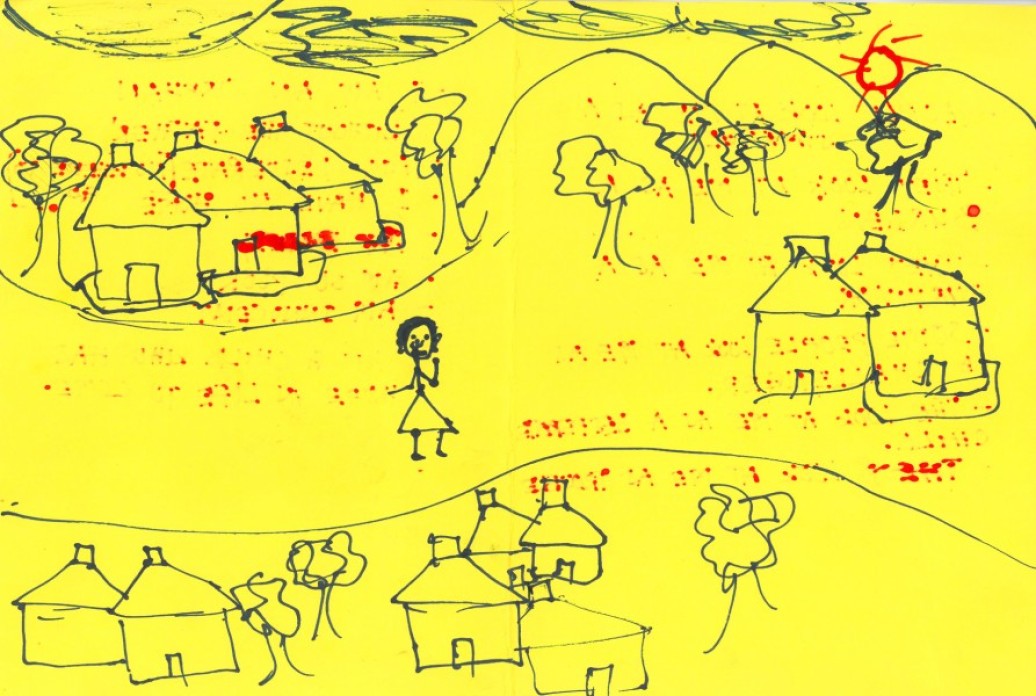
Hand-drawn art on colorful paper with writing.

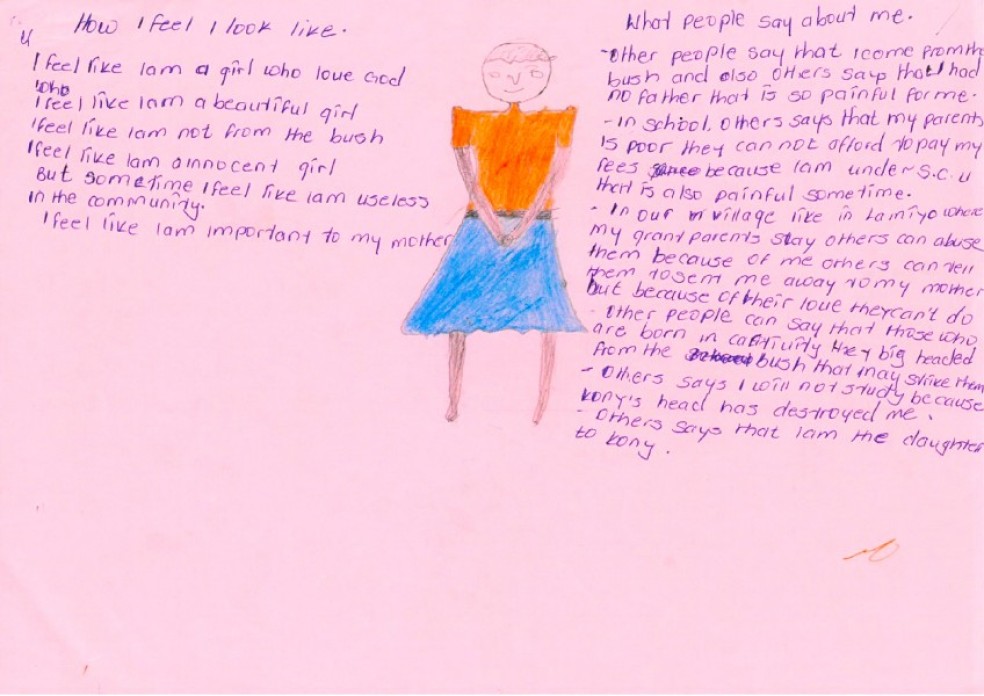
What People Think of Me

– Other people say that I come from the bush and that I have no father; that is so painful for me.
– In school, others say that my parents are poor, that they cannot afford to pay fees because I am under Sponsoring Children Uganda (SCU), that is also painful sometimes.
– In our village, like in Lamiyo, where my grandparents stay, others abuse them because of me, others can tell them to send me away to my mother, but because of their love they can’t.
– Other people say that those who are born in captivity are big headed, from that bush, and that I may strike them.
– Others say that I will not study because Kony’s head has destroyed me.
– Others say that I am the daughter of Kony.

How I Feel About Myself

– I feel like I am a girl who loves God.
– I feel like I am an innocent and beautiful girl
– I feel like I am not from the bush.
– I feel like I am important to my mother, but sometimes I feel like I am useless in the community.

Hand-drawn art on colorful paper with writing.

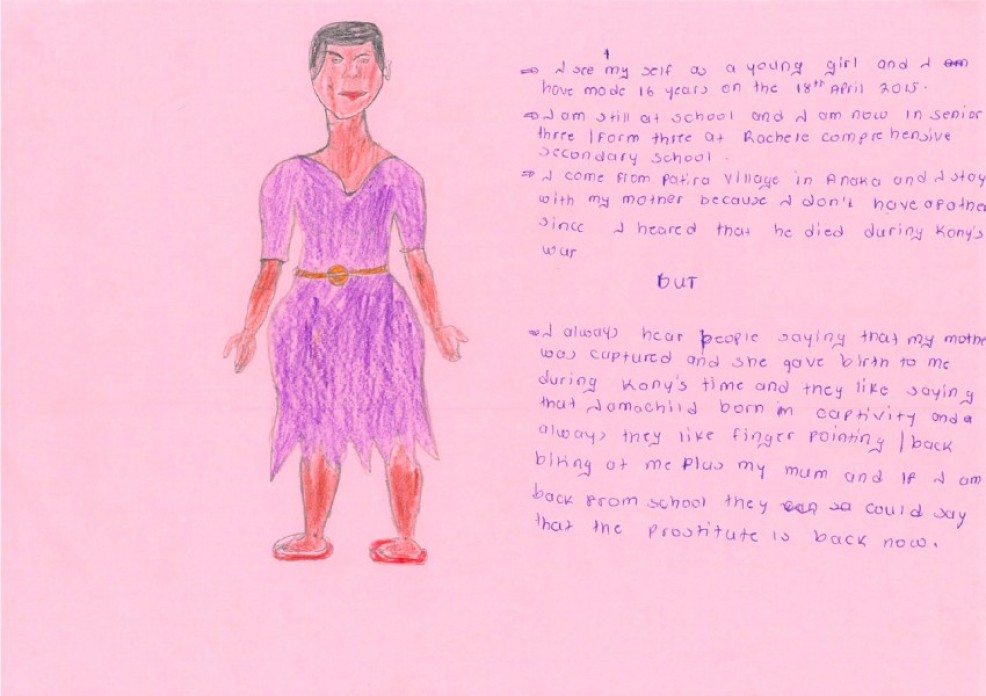
What People Think of Me

– I always hear people saying that my mother was captured and that she gave birth to me during Kony’s time. They like saying that I am a child born in captivity. They finger point at both me and my mother. When I return from school, they say that the prostitute is back.

How I Feel About Myself

– I see myself as a young girl. I will be 16 years old.
– I am still at school.
– I come from Anaka and I stay with my mother because I do not have a father. I heard that he died during Kony’s war.

Hand-drawn art on colorful paper with writing.

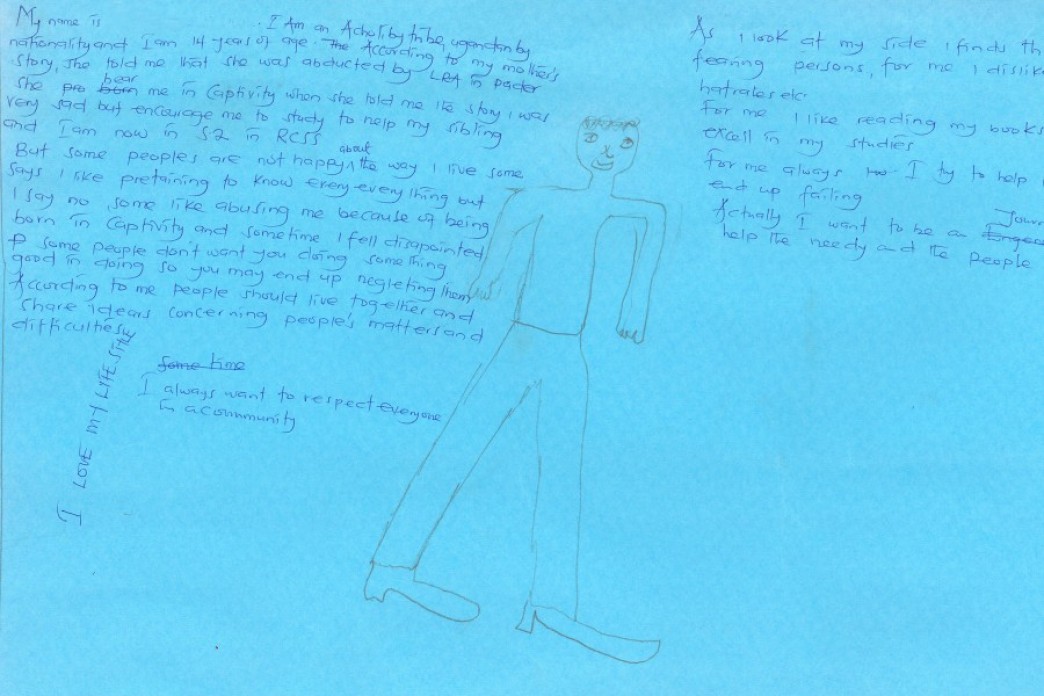
What People Think of Me

– Some people are not happy about the way I live. Some say that I like pretending to know everything, but I say no.
– Some like abusing me because I was born in captivity. Sometimes I feel disappointed if people don’t want others doing something good because in doing so you may end up neglecting them. According to me, people should live together and share ideas concerning people’s difficulties.

How I Feel About Myself

– I always want to respect everyone in a community.
– As I look to my side, I find that I am a God-fearing person, for I dislike stealing, hatred, etc. I like reading my books; that is why I excel in my studies.
– I always try to help the needy. I sometimes end up failing.
– Actually, I want to be a journalist by profession, so that I can help the needy and the people who are born in captivity.

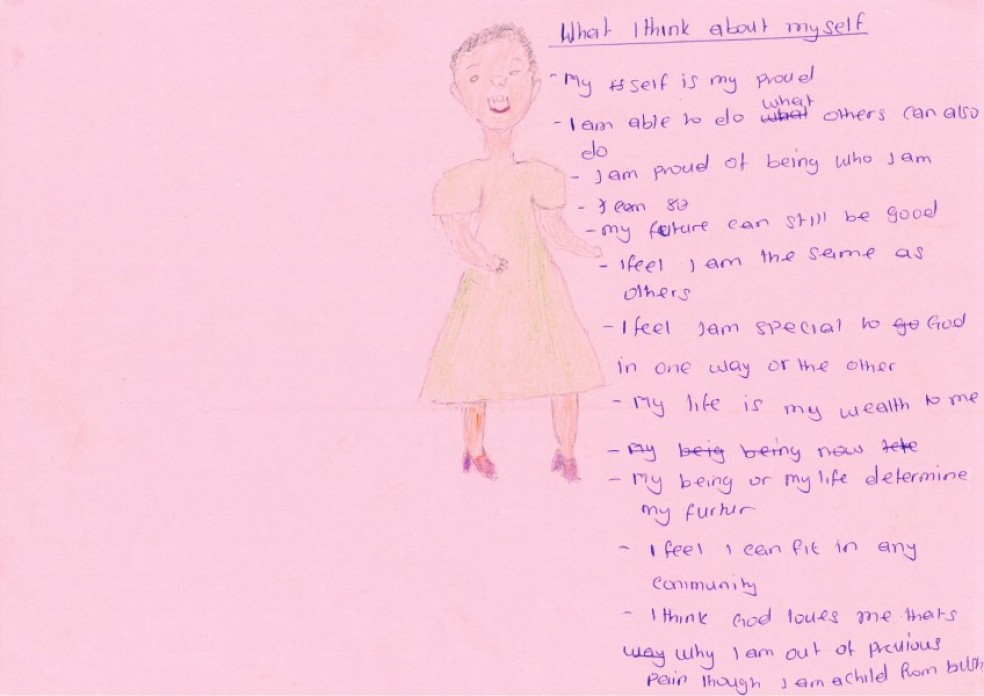
Hand-drawn art on colorful paper with writing.

What People Think of Me

– Other people think I am useless.
– Others think I am cursed.
– Others think I don’t fit in the community.
– Others think I am mysterious.
– They think we cannot do what others do.
– They think we are traumatized.
– They think our future cannot be good because of being in the bush.
– They think we are monsters in the community.
– They think I cannot succeed in life.
– They think I am a burden in the community.
– They think I am not capable of living my own life.

How I Feel About Myself

– I am proud.
– I am able to do what others can also do.
– I am proud of being who I am.
– My future can still be good.
– I feel I am the same as others.
– I feel I am special to God in one way or another.
– My life is my wealth.
– My being or my life determines my future.
– I feel I can fit in my community.
– I think God loves me and that is why I am out of previous pain, though I am a child from the bush.

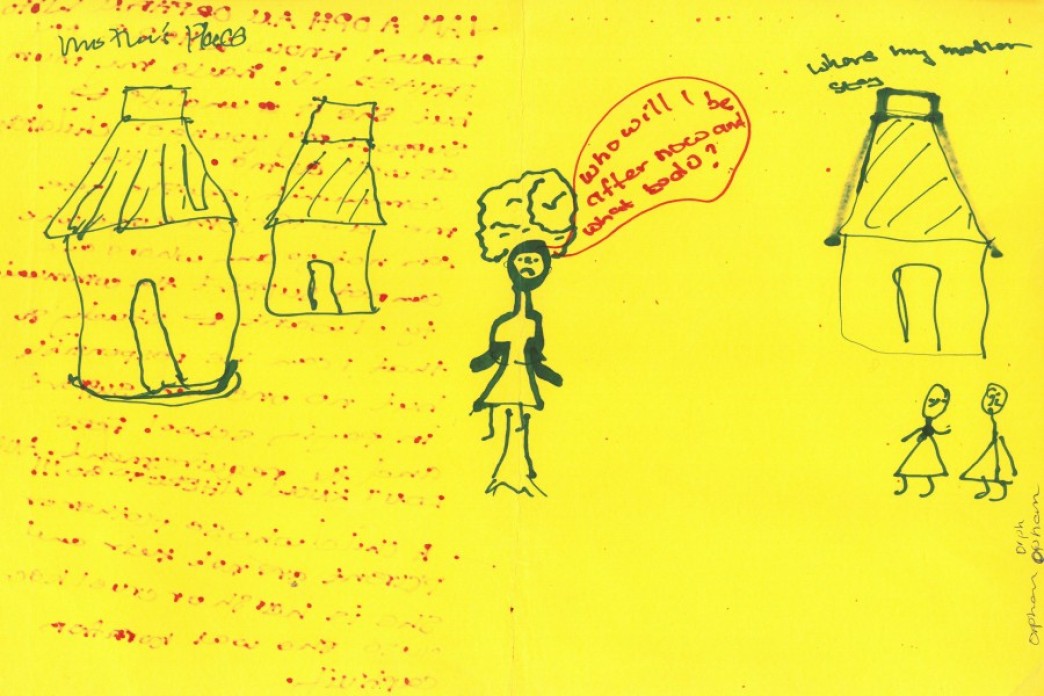
Hand-drawn art on colorful paper with writing.

What People Think of Me

– In the community, people see me as if I am someone who cannot go anywhere and cannot support the community.

How I Feel About Myself

– I am an orphan who does not know where my father is! I have my mum but she is unable to support me and my younger siblings.
– I want to study so that I can be responsible, but no one can support me in paying my school fees requirement. I don’t know where to go!!!
– I am a child whose mother or parents are not there and my mother is harsh or cruel to me because I was born in captivity.

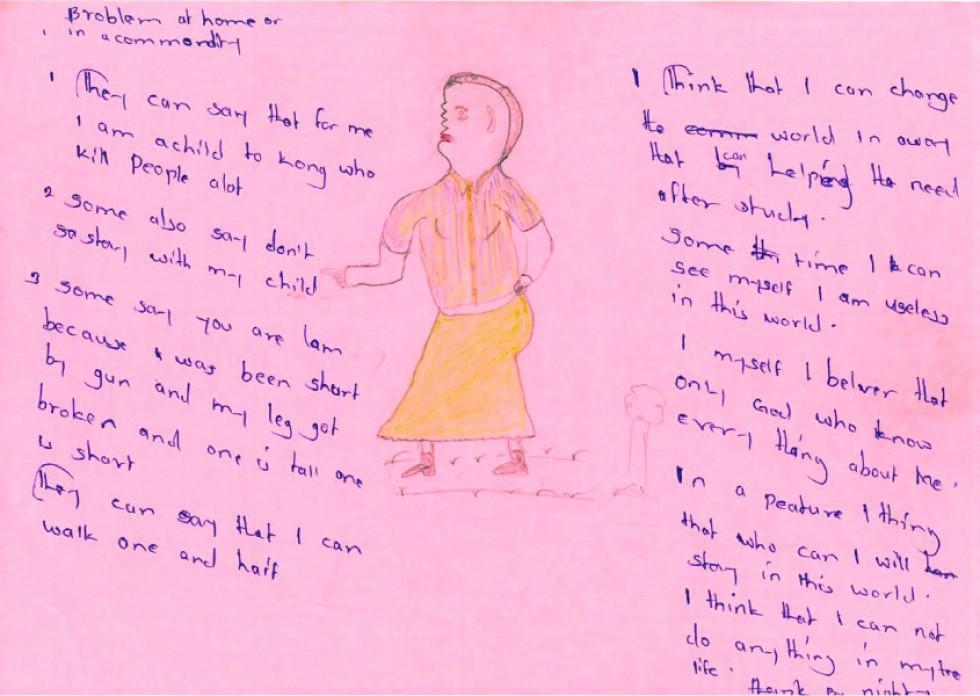
Hand-drawn art on colorful paper with writing.

What People Think of Me

– They say that I am the child of someone who killed many people.
– Some say that I do not stay with my child.
– Some say you are lame because I was shot by a gun and my leg was broken and one leg is tall and the other one is short

How I Feel About Myself

– I think that I can change the world in a way that can help.
– Sometimes I see myself as if I am useless in this world.
– I believe that only God knows everything about me.
– I think I cannot do anything in my life.

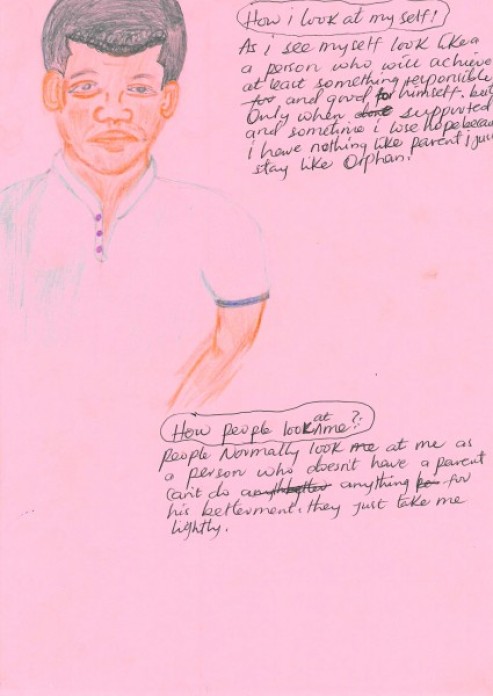
Hand-drawn art on colorful paper with writing.

What People Think of Me

– People normally look at me as a person who doesn’t have a parent and can’t do anything for his betterment. They just take me lightly.

How I Feel About Myself

– I see myself as a person who will achieve at least something responsible for the good and for himself, but when I am supported. Sometimes I lose hope because I have nothing. I do not have a parent, I am just an orphan.

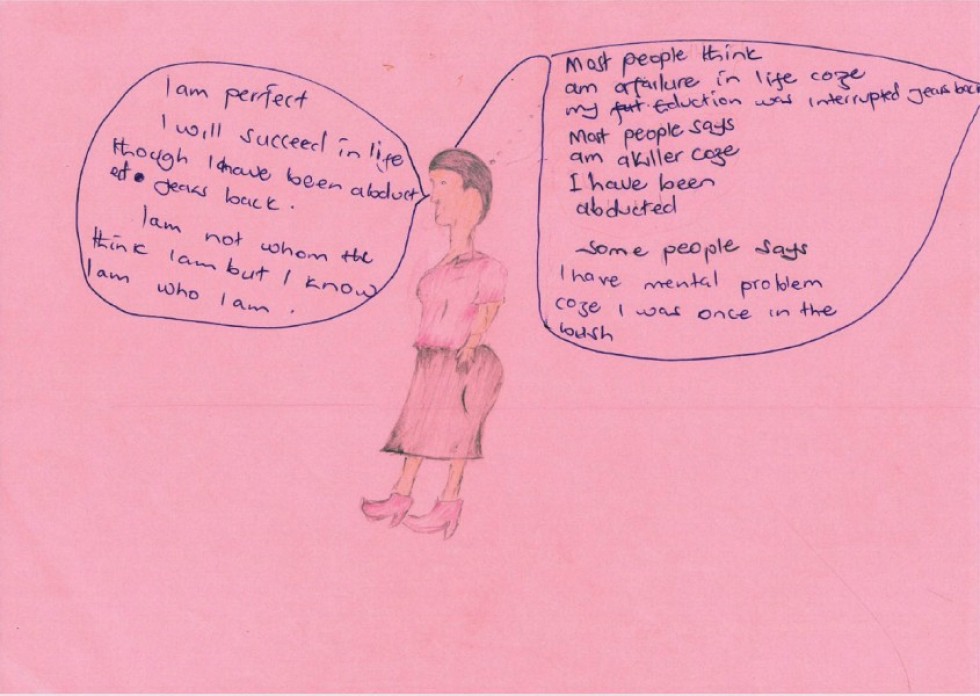
Hand-drawn art on colorful paper with writing.

What People Think of Me

– Most people think I am a failure in life because my education was interrupted and that I am a killer because I was abducted.
– Some people say I have mental problems because I was once in the bush.

How I Feel About Myself

– I am perfect and I will succeed in life even though I was abducted years ago.
– I am not whom they think I am, but I know who I am.

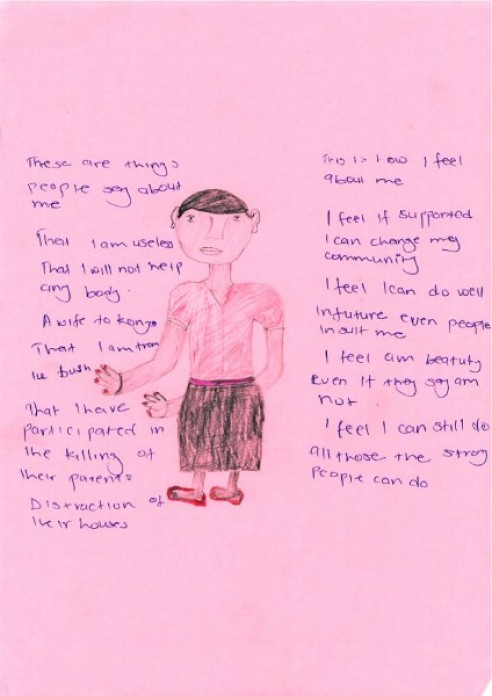
Hand-drawn art on colorful paper with writing.

What People Think of Me

– That I am useless, that I will not help anybody. Also, that I am a wife to Kony, and that I am from the bush.
– That I participated in the killing of their parents and the destruction of their homes during the war.

How I Feel About Myself

– I feel if I am supported I can change my community.
– I feel I can do well in the future even if people insult me.
– I feel I am beautiful even if people say I am not.
– I feel I can still do all the things that strong people can do.

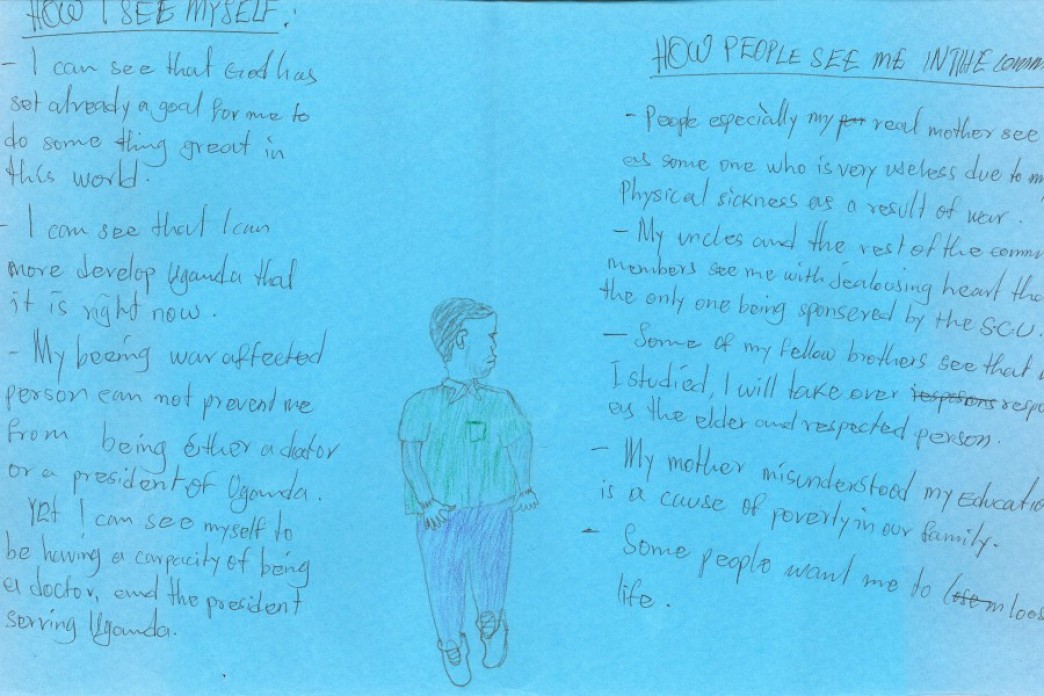
Hand-drawn art on colorful paper with writing.

What People Think of Me

– People, especially my real mother, see me as someone who is very useless due my physical sickness that is a result of war.
– My uncles and the rest of the community members see me with jealously because I am the only one sponsored by the Sponsoring Children in Uganda (SCU).
– Some of my fellow brothers see that when I finish my studies, I will take over the responsibility of the elder and respected person.
– Because of poverty in our family, my mother misunderstood my education.
– Some people want me to lose my life.

How I Feel About Myself

– I can see that God has already set a goal for me to do something great in this world.
– I can see that I can develop Uganda more than it is now.
– Being a war-affected person cannot prevent me from being either a doctor or the President of Uganda. Yet, I can see myself having the capacity to be a doctor and the President serving Uganda.

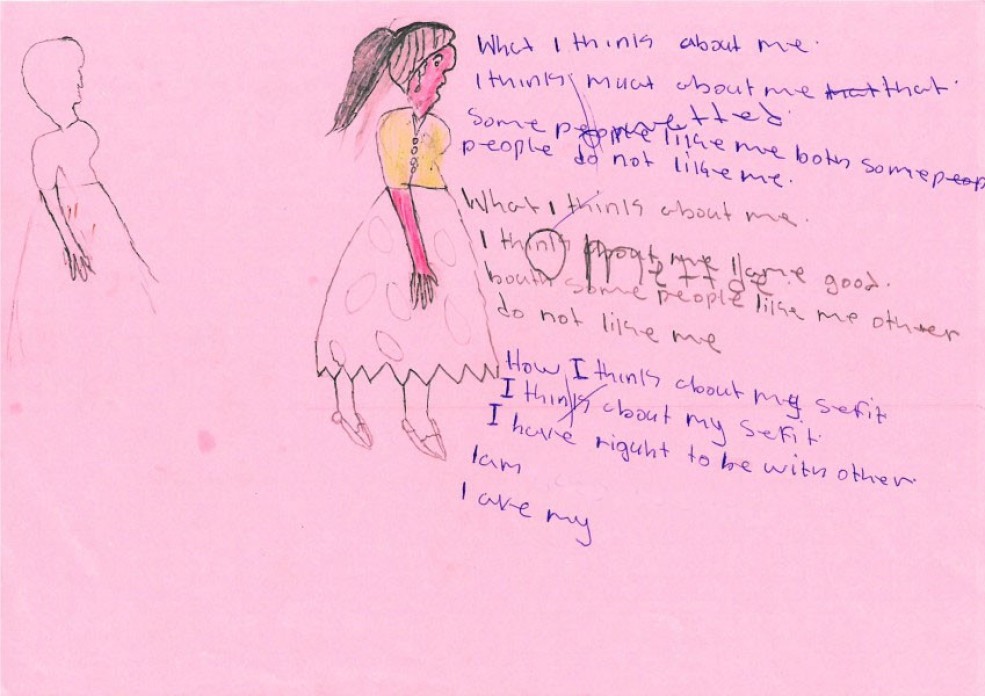
Hand-drawn art on colorful paper with writing.

How I Feel About Myself

– I think I have the right to be with others.
– I think people see me as a child born during the war. They also think I may kill them because my mind is not well. Every time they see me as a rebel. Many people want to confuse my mind so that I stop what I am doing for my life. They also try to abuse me using bad language so that my mind gets confused.

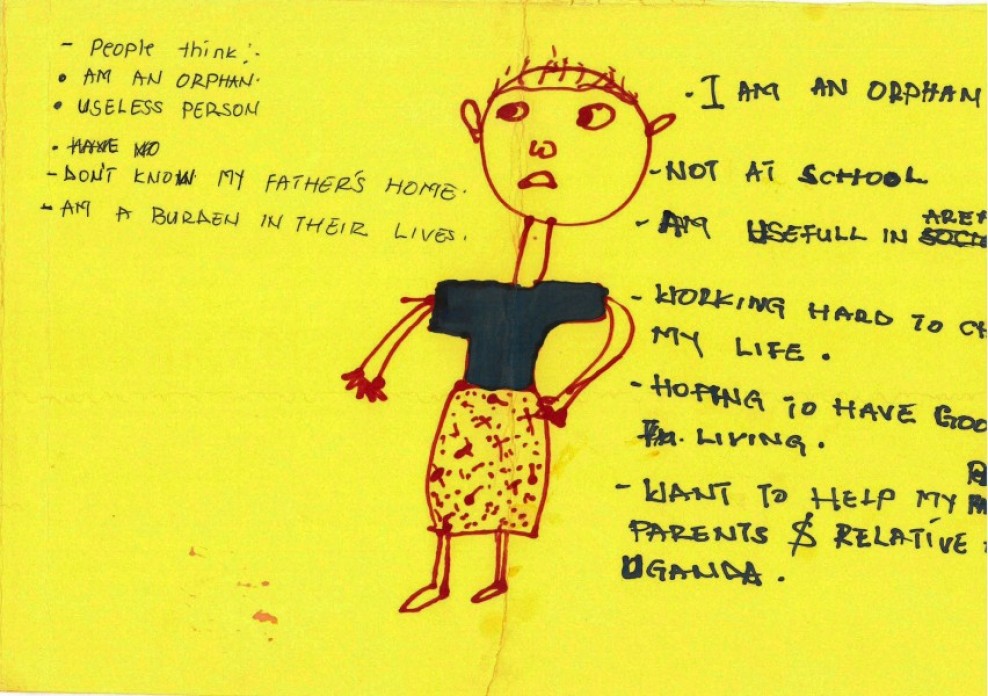
Hand-drawn art on colorful paper with writing.

What People Think of Me

– People think I am an orphan, a useless person, that I don’t know my father’s home and that I am a burden in their lives.

How I Feel About Myself

– I am an orphan who has dropped out of school.
– I see myself as useful to the community and I am working hard to change my life.
– I am hoping to have a good living. I want to help my parents, relatives and all of Uganda.

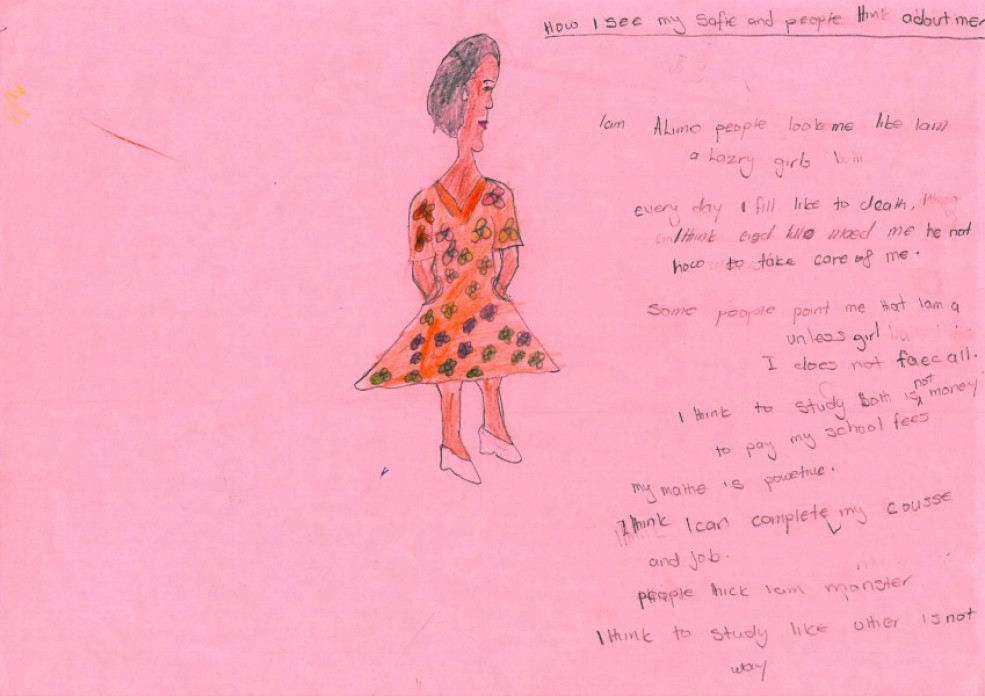
Hand-drawn art on colorful paper with writing.

What People Think of Me

– People look at me like I am a lazy girl.
– People think I am a monster.
– Some people point at me and say I am useless.

How I Feel About Myself

– I think God, who made me, does not know how to take care of me.
– Every day I feel like dying.
– I want to study but I do not have money for school fees.
– My mind is positive.
– I think I can complete my courses and job.
– I do house work, but my parents do not thank me.

Hand-drawn art on colorful paper with writing.

What People Think of Me

– People see me as though I was not born like any other child. Some call me a bastard. There are times when they refuse me to stay or play with their children. Some people insult me that I am as useless as a child without a mother.

How I Feel About Myself

– On my part, I feel good when I am paid in school. I see myself as badly off. I am in need. I will feel good when people do not insult my past.

Thousands of children were born as a result of sexual violence in northern Uganda during the armed conflict that lasted from 1986 to 2007. Now, as teenagers and young adults who are trying to find their place back in their communities, these young men and women face a multitude of challenges – including stigma, poverty, and social exclusion – which hinder their reintegration into society and their future prospects.

Over the two-decade conflict, girls and young women were specifically targeted for sexual violence by the Lord’s Resistance Army (LRA) and, in some cases, state forces. Among the serious crimes committed by the LRA, led by the infamous Joseph Kony, it is estimated that some 66,000 children and youth were abducted to serve as soldiers or sex slaves.

ICTJ spoke with 249 people in the northern regions of Acholi, Lango, Teso, and West Nile in April 2015 to analyze the long-term consequences of the lack of accountability sexual violence committed during the conflict. Among those interviewed there were 52 children born of sexual violence (27 girls, 25 boys), who reflected on the challenges they face through group discussions and drawing exercises.

Nothing can capture more clearly the ongoing impact of sexual violence than the words written by these young women and men. This photo gallery presents a selection of their drawings and thoughts on how their communities perceive them and how they see themselves and their hopes for the future.

Children born of sexual violence are marginalized in northern Uganda. They are scorned for coming “from the bush,” they are labeled as “useless,” “cursed,” “failures,” “mad,” and even “monsters.” They are constantly reminded of their association to Joseph Kony, when people call them “child of Kony” or “wife of Kony.”

Deep social stigmatization and exclusion often affects the children’s mothers and caretakers as well. “In Lamwo, where my grandparents stay, others abuse my grandparents because of me, others tell them to send me away to my mother, but because of their love they can’t,” wrote a 14-year-old girl from Pader District.

When describing themselves in these drawings, the adolescents show resilience in moving past this rejection. They see themselves as “beautiful,” “innocent,” “positive,” “proud,” and capable of building a better future for themselves, their communities, and their country.

“Being a war-affected person cannot prevent me from being either a doctor or the President of Uganda.” wrote a 19-year-old male from Oyam District.

Nevertheless, many express contradictory feelings and frustration caused by the institutional neglect and total lack of opportunities. “Sometimes I lose hope because I have nothing,” wrote a young male from Gulu.

Many participants emphasize that they need support in order to have successful futures and contribute to their communities. They often describe themselves as “poor” and see their economic struggle as a major obstacle in achieving the goals.

“I want to study so that I can be responsible, but no one can support me in paying my school fees requirement. I don’t know where to go!!!” wrote a young girl from Gulu.

Most of the adolescents see education as the essential step towards personal improvement, and they often link their own well-being to that of their communities and their country. In the words of a young girl from Gulu: “I see myself as useful to the community and I am working hard to change my life. I am hoping to have a good living. I want to help my parents, relatives and all of Uganda.”

As ICTJ’s new report concludes, the social and economic challenges suffered by children born of sexual violence in Uganda and their mothers need urgent attention. The Ugandan government must to listen to these young women and men’s demands, acknowledge that their rights were violated, and provide the redress to which they are entitled.

Read and download ICTJ’s report “From Rejection to Redress: Overcoming Legacies of Conflict-Related Sexual Violence in Northern Uganda,” and watch our film about their fight for justice.
