115 results

In advance of the 2023 SDG Summit, the Working Group on Transitional Justice and SDG16+ has released a new report underscoring the contribution of transitional justice to the advancement of sustainable peace and development and offering stakeholders strategies to better incorporate it into relevant agendas and action plans. The SDG Summit marks the halfway point of the 2030 Agenda for Sustainable Development and offers the global community an opportunity to take stock of the progress it has made and the challenges it still faces in achieving the Sustainable Development Goals.

International policymakers recognize that transitional justice is an important component of the 2030 Agenda for Sustainable Development, especially in countries affected by systemic violence, repression, and marginalization. Yet responses to massive human right violations often remain...

Cover image of the report Toward Victim-Centered Change: Integrating Transitional Justice into Sustainable Peace and Development. It features several black lines that lean slightly to the right. A single yellow at the far right stands straight.

Five years ago, in August 2018, to mark his 100 days in office, Armenian Prime Minister Pashinyan addressed a large rally in Yerevan’s Republic Square to officially announce his government’s intentions to incorporate transitional justice mechanisms into Armenian post-revolution reform agenda. Since then, Armenia has been pursuing a range of transitional justice initiatives alongside other democratic reforms, and it has made some limited headway, despite setbacks and major challenges including renewed conflict with Azerbaijan.

The photography exhibition “All Our Tears” weaves together the stories of victims from the wars in the Western Balkan region in the 1990s. It consists of photographs taken by four photographers in various locations in Kosovo, North Macedonia, and Serbia, and was part of a three-year project funded by the European Union that brought together civil society organizations and victims’ groups in Kosovo, North Macedonia, and Serbia, along with the international organizations ICTJ and PAX to develop meaningful, victim-led peacebuilding and reconciliation initiatives in the region.

On May 12, the Council of Europe’s Committee of Ministers agreed to create a mechanism to receive claims for damages caused by the Russian crime of aggression in Ukraine. The new registry is intended to receive information on claims of damage, loss, or injury caused by Russia’s invasion of Ukraine since February 24, 2022 and assess their eligibility for future adjudication or compensation. Many of the register’s chief proponents are hailing its creation as a key step toward accountability for the many violations of international law that Russia has committed in or against Ukraine. However, the register alone will not be sufficient to address the multitude of harms caused by the war.

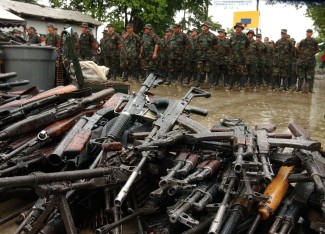
Colombia’s new president Gustavo Petro was elected to office on a progressive campaign to strengthen democracy, implement social reforms, and bring “total peace” to the country. His approach to peace encompasses political negotiations with all remaining insurgent groups and simultaneous dialogues with criminal organizations geared toward their voluntary submission to justice in exchange for punitive leniency. But eight months into his administration, Petro’s efforts to deliver on his campaign promise are facing numerous challenges.

In 2016, the Yemeni National Commission to Investigate Alleged Violations to Human Rights began documenting violations committed since the 2011 uprising and during the subsequent brutal civil war, which continues today. To date, the commission has documented more than 23,000 human rights abuses and referred over 2,000 cases to Yemen’s Public Prosecutor for prosecution. However, no verdict has been issued in any of these cases. To help the commissioners and members of Yemen’s judiciary advance accountability, ICTJ organized a workshop for them on transitional justice mechanisms. However, to deliver a justice that meets all the reparative needs of victims, these efforts must be an integral part of a broader, multifaceted transitional justice process.

This briefing paper examines the various actions that Ukrainian officials and members of the international community have launched to investigate and prosecute war crimes and other human rights violations committed in Ukraine since Russia invaded the country in February 2022. It explo...

First of the briefing paper Reflections on Victim-Centered Accountability in Ukraine

In a fast-changing world, ICTJ regularly reexamines and adapts its methodology to develop innovative solutions to emerging problems, advance its mission, and achieve justice for victims of human rights violations. In that spirit, ICTJ recently launched an exciting new website and newsletter design. After over a year of research, planning, surveying stakeholders, designing, and testing, we unveiled a site that better aligns with what ICTJ and transitional justice are today.

ICTJ is more than two decades old. At the time it was established, many of those who contributed to transitions in Argentina, Chile, Guatemala, South Africa, and the former Yugoslavia saw the value of a specialized organization that could draw from diverse national experiences to prov...

The cover of a report with the text, "2022-2027, Strategic Plan," with an image of people embracing underneath.