

6 results

This research report examines how civil society actors involved in transitional justice processes narrate and communicate their role, impact, and value. The study focuses on actors in Colombia, The Gambia, and Kenya, describing the content, form, and audiences of their communication w...

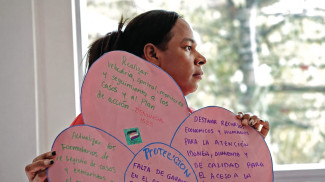
A person holds up a poater collage made up of pink paper with text in Spanish

Can truth commissions help secure a just peace following a violent conflict in which massive human rights abuses are committed? In this special series of the ICTJ Forum, we present a series of conversations with some of the world’s top peace mediators and truth commission experts, whose collective experience include years on the front lines of critical peace agreements in Latin America, Africa, the Middle East, and Asia.

Displacement was a major tactic used by armed groups during the brutal conflict in Liberia from 1989 to 2003. It is estimated that during this time, half the country’s population experienced displacement as a result of warfare. The large numbers of people forced from their homes meant...

This initiative aims to promote accountability within the media through independent monitoring of the performance of the media during the TRC process. While freedom of the press is essential to the cultivation of a democratic culture, it is only fair for the media to labor in overcomi...

The Liberian Truth Reconciliation Commission (TRC) was necessitated by the Accra Comprehensive Peace Accord signed in 2003. The insertion of the TRC in the peace agreement was largely seen by various actors as Liberia’s maiden step towards addressing a history that was fraught with gr...

The Liberia Truth and Reconciliation Commission (TRC) released its final report in December 2009 after more than three years of operations. The report offers valuable insights into Liberia’s turbulent history, including the gross human rights violations committed during the country’s ...