


939 results

Germain Katanga, a warlord convicted by the International Criminal Court (ICC) for murder and other crimes, thought he was getting released from prison in January. Instead, authorities in the DRC have held Katanga following the conclusion of his ICC sentence and are now trying him on charges not originally addressed by the ICC. This represents a major step by the national judiciary in assuming its responsibility to prosecute international crimes.

Prosecution efforts so far have exacerbated, rather than alleviated, ethnic and regional divisions. Credible prosecutions against those most responsible on all sides of the conflict would offer a clear statement to all citizens of Côte d’Ivoire that the justice system is blind to ethnicity and is there to serve and protect all its citizens.

Côte d’Ivoire is obligated to provide reparations to victims of both the political violence that shook the country following the 2010 presidential elections and the different episodes of political violence and armed conflict since 1990. Fulfilling this obligation will show that the st...

Colonel Muntazini serves as the focal point for cooperation between the ICC and the military justice system of the DRC, making him ideally placed to explain the practical implications of complementarity. Read his review of our Handbook on Complementarity and discover how it applies to his country and his work.

This summer, our Intensive Course on Transitional Justice and Peace Processes brought experts from around the world together in Barcelona to examine how transitional mechanisms can be integrated into peace negotiations. Read about the course and watch interviews with our experts.

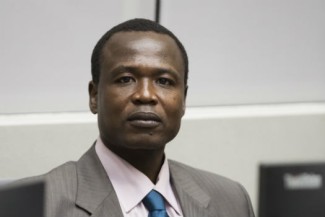
The long-awaited trials of two LRA leaders, Dominic Ongwen and Thomas Kwoyelo, will proceed in two different settings - but why? ICTJ's Sarah Kasande explains the significance of Ongwen's trial before the International Criminal Court and Kwoyelo's prosecution by the International Crimes Division of the High Court in Gulu, Uganda.

Where should justice for some of the world’s worst crimes be done? In national courts or at the International Criminal Court in The Hague? Our Handbook on Complementarity explores those questions, laying out the interconnected relationship between the ICC and national court systems in...

Last week, El Salvador’s Supreme Court overturned the country’s General Amnesty Law enacted in 1993, which served as a blanket amnesty for all crimes committed by the parties during the country’s 12-year civil war. Now, prosecutors must work with victims to seek justice for these crimes.

A new handbook written by ICTJ vice president Paul Seils explores the relationship between the ICC and national courts.