939 results

On October 2, an award ceremony honored the winners of the amateur photography contest on memory, called “Images to Resist Oblivion,” organized by the Center for Historical Memory and the International Center for Transitional Justice (ICTJ). View photo galleries from the three winning submissions.

The latest ICTJ Program Report explores transitional justice issues in Colombia and charts our work in the country with the longest running armed conflict in the world. In this interview, head of ICTJ's Colombia office Maria Camila Moreno answers questions on the ongoing transitional justice mechanisms in the country, and describes ICTJ's work with the government and civil society groups on issues of criminal justice, reparations and memory. She provides a look ahead to the new peace negotiations between the Colombian government and the FARC, and identifies key transitional justice issues at stake for the talks.

National healing and reconciliation in Uganda requires a multilayered truth-telling process comprised of community and national processes that are mutually reinforcing and should not be mutually exclusive, as proposed by the JLOS report. A national truth-telling body should address is...

The Fourth Intensive Course on Truth Commissions, presented by ICTJ in partnership with the Barcelona International Peace Resource Center (BIPRC), focuses this year on the challenge of recognizing the experiences of vulnerable populations in the work of truth commissions. Practitioners and academics representing 17 countries will participate in the week-long course, including members of the Brazilian and Ivorian Truth Commissions, the Maine Wabanaki-State Child Welfare TRC Process, and ICTJ experts from around the world.

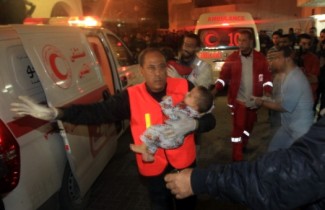
In an address to the UN Security Council, ICTJ President David Tolbert urged States to prioritize transitional justice as an integrated approach to seeking accountability for crimes against children in armed conflict.

Accountability for violations against children in armed conflict is best achieved through a comprehensive approach to justice that addresses the responsibility of perpetrators and the rights of victims within a broader process of social change. This is the key message to be delivered by the International Center for Transitional Justice (ICTJ) on September 19, 2012, during the UN Security Council’s Open Debate on Children and Armed Conflict.

Transitional Justice is often pursued in contexts where people have been forced from their homes by human rights violations and have suffered additional abuses while displaced. Little attention has been paid, however, to how transitional justice measures can respond to the injustices ...

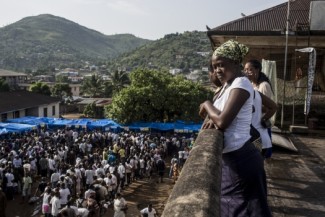
On August 30, 2012, ICTJ joined government officials and civil society in Freetown to celebrate the launch of a new website for the Truth and Reconciliation Commission of Sierra Leone and welcome the prospects for revitalization of Sierra Leone’s reconciliation.

The latest ICTJ Program Report explores transitional justice issues in the Middle East and North Africa (MENA) and charts our work in this important and dynamic region. Claudio Cordone, ICTJ’s program director covering the MENA region, discusses individual country scenarios, prospects for transitional justice processes and explains ICTJ’s involvement and impact. Cordone speaks about transitional justice principles being at the root of popular uprisings referred to as “Arab Spring” and the challenges facing societies in their efforts to reckon with legacies of dictatorships and recent violence. He describes ICTJ’s efforts to address the impact of violence on women and promote their participation in transitional justice initiatives. The interview provides a thorough overview of ongoing initiatives and future prospects in Tunisia, Libya, Egypt, Syria, Yemen, Lebanon and Israel and Occupied Palestinian Territory.

Forced disappearance is a crime against humanity. The decisions made by politicians and officials authorizing such practices in different countries cannot be justified legally or morally. They must be held to account and be shown for what they are: enemies of a civilized society.