939 results

As gunfire dies down over Tripoli, the new Libyan authorities will be coming to terms with enormous dilemmas about the hierarchy of priorities in building a new society. Their offices will see long processions of emissaries from near and far in the coming days and weeks. Some will be sternly pressing for issues of security to be immediately addressed and others will demand that business and development concerns precede all else, while there are also bound to be those advocating for justice to be done first and quickly.

As the international community considers its response to the surging violence in Syria, those responsible for gross human rights violations in the country should be held to account, said the International Center for Transitional Justice (ICTJ) today.

The appearance of Hosni Mubarak in the opening of his trial this week reassured millions of Egyptians that their revolutionary struggle was not in vain. But the truth about Mubarak’s ability to participate in his trial is still unclear. With the public doubting the court’s seriousness, Mubarak’s appearance could have been a political decision aimed at boosting confidence. If this is the case, the judiciary risks appearing politicized in the eyes of Egyptians.

ICTJ is pleased to present the KickStarter campaign to launch the Iriba Center for Multimedia Heritage in Kigali, Rwanda. The Iriba Center, whose name means “the source,” is a project to make accessible an audiovisual history of Rwanda, to “keep the country’s history alive.”

ICTJ hosted a conference on “Strengthening Indigenous Rights through Truth Commissions” July 19-21, 2011. Regional and international experts convened to discuss how truth commissions can incorporate and address indigenous peoples’ rights. Videos of each session and summaries of the conference proceedings are available.

ICTJ's expert conference on the relationship between truth-seeking and indigenous rights is in session. View the live stream here.

NEW YORK, July 19, 2011—Leaders of the global indigenous rights community gathered in New York today for a three-day meeting to discuss how truth commissions can support indigenous rights. The Strengthening Indigenous Rights through Truth Commissions conference was organized by the International...

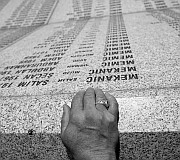
As we approach International Justice Day on July 17, calls for accountability for human rights abuses resound across the globe, from Cairo to Washington, from Bogotá to Kinshasa, from Srebrenica to Colombo. The demands for justice are today a driving force of social change and popular revolutions, and their reach now extends to those at the highest levels of power.

“Residential schools affected everything about how we live. They targeted and destroyed our strong family unit, the basic foundation of our communities. They destroyed the glue that holds us together—love, respect and sharing.” These words, spoken by Charlie Furlong, a community leader of the Gwich'in people of Canada’s Northwest Territories, sum up the chilling legacy of the country’s policy of forced assimilation of indigenous cultures implemented through a system of Indian Residential Schools (IRS) from the 1870s to 1998.

This paper analyzes the Maubuti case in Timor-Leste, the third serious crimes case to be brought to trial after the closure of the UN-supported Serious Crimes Unit in 2005. Maubuti was indicted for crimes against humanity including murder, attempted murder, and rape. The decision and ...