


743 results

In our work providing assistance to societies around the world, we draw continual inspiration from individuals and communities who refuse to ignore the abuses of the past, and who often face great obstacles to expose it. To honor their courage, we invite you to read a selection of perspectives on truth and dignity from those who have used their words to convey a powerful idea: truth is the foundation of justice.

This year, ICTJ's campaign for the International Day for the Right to the Truth centers around the theme, “Truth is the Foundation of Justice.” This notion, fundamental to the idea of a comprehensive approach to justice, is explored through several new releases from ICTJ.

March 21, 2013, New York, NY- The International Center for Transitional Justice (ICTJ) is launching a global awareness campaign for the International Day for the Right to the Truth, March 24, to affirm the right of victims to know the truth about human rights violations. Under the slogan, “Truth is the foundation of justice,” ICTJ’s campaign will highlight the important role that truth commissions can play in societies dealing with a legacy of violence and repression.

This publication provides an overview of the essential best practices guiding the main aspects of a truth commission, answering basic questions relating to its goals, powers, operations, framework, protections for commissioners and witnesses, and reporting. Its intention is to provide...

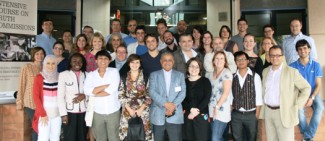
Nearly a decade after Colombia’s first transitional justice mechanisms were created, the country is now weighing options for the establishment of an official truth commission. To examine and inform these options, the International Center for Transitional Justice is hosting the International Course on Truth Commissions from March 11-15, 2013, in Villa de Leyva, Colombia. The course will be modeled after ICTJ’s international Intensive Course on Truth Commissions, which has been held for five consecutive years.

From its inception in 2003, the process of de-Baathification – the purge of Iraq’s state institutions of Saddam Hussein’s Baath Party members in the aftermath of the US-led invasion - polarized Iraqi politics and led to the collapse of many state functions. Today, Iraq continues to be haunted by its legacy. An examination of Iraq’s flawed vetting experience is presented in a major new ICTJ report, titled "A Bitter Legacy: Lessons of De-Baathification in Iraq."

The International Center for Transitional Justice (ICTJ) released a new report today providing detailed information and analysis on how Iraq dismantled Saddam Hussein’s Baath Party and purged state institutions of party members. The report, titled “A Bitter Legacy: Lessons of De-Baathification in Iraq,” carries valuable lessons for countries in the Middle East and North Africa (MENA) as they consider how to deal with legacies of abuse by the security and political apparatuses of former regimes.

Based on significant field research and interviews with the Higher National de-Baathification Commission, this report focuses on Iraq’s purge of members of Saddam Hussein’s Baath Party, which is the most well-known example of large-scale and politically based dismissals in the Middle ...

From February 27-March 1, leading indigenous rights activists from around the world will join their counterparts and other experts at Columbia University to discuss access to truth, justice, and reconciliation for indigenous peoples.

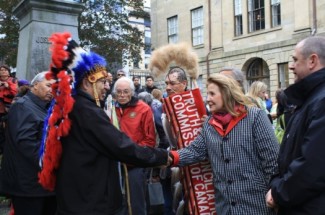
Maine’s foster care system was intended to act in the best interests of all children. But for indigenous children removed from their communities and placed with white families, often without the consent of their parents or tribes, the foster care system caused the painful loss of their cultural identity and traumatic severing from their heritage.