


751 results

In December, ICTJ partnered with NYU School of Law and the Center for Human Rights and Global Justice to host Auschwitz survivor and Judge Thomas Buergenthal for the 7th Annual Emilio Mignone Lecture on Transitional Justice.

As the Tunisian government takes firm steps to investigate human rights abuses committed since 1955, including under the Ben-Ali regime, ICTJ calls for care and attention in appointing members to the upcoming Truth and Dignity Commission.

Nearly three years after violence in Cote d’Ivoire claimed the lives of over three thousand civilians and displaced hundreds of thousands, victims have yet to receive adequate reparation for the harm they suffered. ICTJ convened victims’ organizations, civil society, government officers and others to assess how the country should move forward to ensure victims see their right to reparation fulfilled.

Transitional justice processes have a fundamental public dimension: their impact depends in part on the social support they receive. Beyond outreach programs, other initiatives, such as media and cultural interventions, can strengthen—or in some cases undermine—the public resonance of...

Marking three years since Tunisia's revolution, ICTJ President David Tolbert argues that transitional justice developments in the country are not only worthy of attention, but serve as useful markers for transitions in the region and beyond.

Three years after Tunisia's revolution, victims in the south of the country are still facing severe economic and social marginalization. In recent workshops with ICTJ, they explain why collective reparations and development are both central parts of their vision of justice.

ICTJ welcomes the historic passage of the Draft Organic Law on the Organization of Transitional Justice Foundations and Area of Competence by the Tunisian National Constituent Assembly (NCA). In a nearly unanimous vote on Sunday, 125 of 126 deputies voted in favor of the law.

Can truth commissions help secure a just peace following a violent conflict in which massive human rights abuses are committed? In this special series of the ICTJ Forum, we present a series of conversations with some of the world’s top peace mediators and truth commission experts, whose collective experience include years on the front lines of critical peace agreements in Latin America, Africa, the Middle East, and Asia.

Dating back to the 1980s, when peace settlements were made across Latin America, truth commissions have become an important component of peace negotiations. In this opinion piece, ICTJ President David Tolbert calls for societies to give truth commissions a chance of fulfilling their potential by learning from their failures and success.

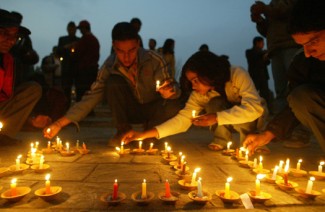
In this opinion piece, Lucia Withers argues that Nepal's elected parties and their representatives should not limit their discussions to the establishment of a truth commission or whether it will provide for amnesties and/or prosecutions. Rather, they should focus on designing policies that are more comprehensive and that would better serve the rights and needs of conflict victims and contribute to broader peace-building efforts.