


629 results

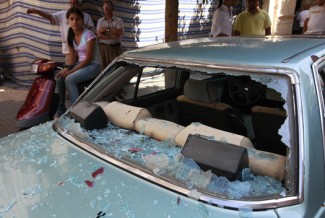
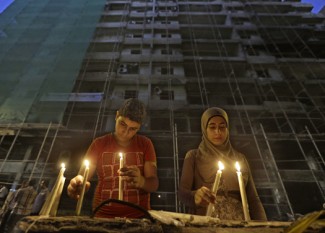
A culture of impunity for serious violations of human rights continues to thrive in Lebanon, says a report released today by ICTJ.

The Maine Wabanaki-State Child Welfare Truth and Reconciliation Commission (TRC), the first of its type in the United States, marks one year of work.

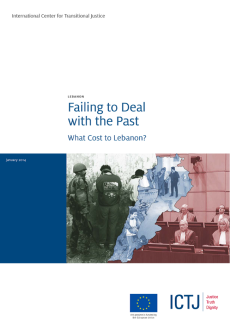
This report examines the situation of impunity in Lebanon that has persisted since the 1975-1990 war through the lenses of core elements of transitional justice. It analyzes Lebanon’s past experience of ineffective transitional justice measures -- including limited domestic trials, na...

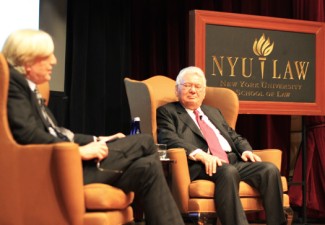
In December, ICTJ partnered with NYU School of Law and the Center for Human Rights and Global Justice to host Auschwitz survivor and Judge Thomas Buergenthal for the 7th Annual Emilio Mignone Lecture on Transitional Justice.

As the Tunisian government takes firm steps to investigate human rights abuses committed since 1955, including under the Ben-Ali regime, ICTJ calls for care and attention in appointing members to the upcoming Truth and Dignity Commission.

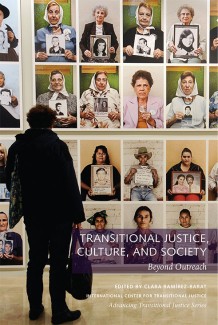
Transitional justice processes have a fundamental public dimension: their impact depends in part on the social support they receive. Beyond outreach programs, other initiatives, such as media and cultural interventions, can strengthen—or in some cases undermine—the public resonance of...

Marking three years since Tunisia's revolution, ICTJ President David Tolbert argues that transitional justice developments in the country are not only worthy of attention, but serve as useful markers for transitions in the region and beyond.

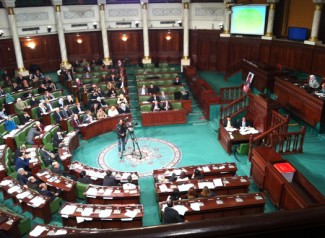
ICTJ welcomes the historic passage of the Draft Organic Law on the Organization of Transitional Justice Foundations and Area of Competence by the Tunisian National Constituent Assembly (NCA). In a nearly unanimous vote on Sunday, 125 of 126 deputies voted in favor of the law.

Can truth commissions help secure a just peace following a violent conflict in which massive human rights abuses are committed? In this special series of the ICTJ Forum, we present a series of conversations with some of the world’s top peace mediators and truth commission experts, whose collective experience include years on the front lines of critical peace agreements in Latin America, Africa, the Middle East, and Asia.

Dating back to the 1980s, when peace settlements were made across Latin America, truth commissions have become an important component of peace negotiations. In this opinion piece, ICTJ President David Tolbert calls for societies to give truth commissions a chance of fulfilling their potential by learning from their failures and success.

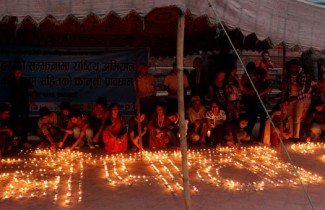
In this opinion piece, Lucia Withers argues that Nepal's elected parties and their representatives should not limit their discussions to the establishment of a truth commission or whether it will provide for amnesties and/or prosecutions. Rather, they should focus on designing policies that are more comprehensive and that would better serve the rights and needs of conflict victims and contribute to broader peace-building efforts.

More truth commissions are being created now through peace agreements than at any other time in history. But are they living up to high expectations for truth, accountability, and reconciliation in societies emerging from violent conflicts? This week, the Kofi Annan Foundation and the International Center for Transitional Justice (ICTJ) held a three-day, high-level symposium to explore the challenges and benefits of truth commissions emerging from peace processes.

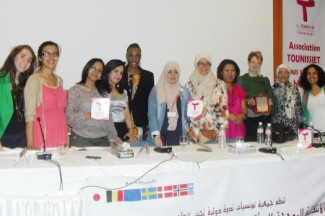
To offer assistance and international expertise to Tunisian civil society groups, ICTJ partnered with the Office of the High Commissioner for Human Rights (OHCHR) for a training on public engagement in truth seeking processes. Titled “The Role of Civil Society in Truth Commissions: Participation and Advocacy for Victims in Tunisia,” the training offered around 65 participants the opportunity to examine the role of truth commissions in contexts of transitional justice, and to assess future engagement of their organizations in Tunisia’s proposed truth commission.

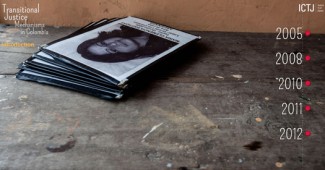
Next week, the Colombian courts will issue the first partial verdict in the Justice and Peace case against the paramilitary leader Hebert Veloza García, alias “HH,” one of the most significant cases of the Justice and Peace process. Ahead of the HH partial verdict on October 30th, ICTJ is launching a comprehensive timeline on transitional justice measures implemented in Colombia since 2005 that recognize victims' rights to truth, justice, reparations, and the guarantee of non-recurrence.

A group of leading world experts on truth-seeking and memorialization has called for the mayor of Prijedor, in Bosnia and Herzegovina, to publicly acknowledge and memorialize the non-Serb victims of atrocities committed in the city in the early 1990s.

A group of leading world experts on truth-seeking and memorialization has called for the mayor of Prijedor, in Bosnia and Herzegovina, to publicly acknowledge and memorialize the non-Serb victims of atrocities committed in the city in the early 1990s.

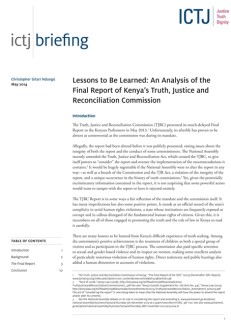
In a legal brief submitted yesterday to Kenya’s High Court, the International Center for Transitional Justice (ICTJ) warns that striking down parts of the final report of the Truth, Justice and Reconciliation Commission of Kenya (TJRC) would amount to censorship and obstruct the right of victims to an effective remedy for past violations.

A newly adopted UN Security Council resolution calls on the Syrian government to cooperate in destroying its chemical weapons arsenal, stressing that “those responsible for any use of chemical weapons must be held accountable.” Yet, it does not provide a framework for pursuing accountability, in the short or long term. What role might transitional justice play in a post-conflict Syria? Should Syria rush to prosecute war criminals once the fighting draws to a close? These are some of the pressing questions explored in ICTJ’s newest briefing paper.

This briefing paper focuses on establishing a credible approach to accountability and human rights in a post-conflict Syria. Looking ahead to an eventual resolution to the war, it recognizes that Syrian authorities and civil society, as well as the international community, will have t...

For more than 20 years, the Amnesty Law has hindered El Salvador from pursuing accountability for perpetrators of serious crimes committed against civilians during the civil war fought between the government and leftist insurgents in the 1980's. However, this may change in very near future. On September 20, the Constitutional Court admitted a petition claiming that the Amnesty Law passed in March 1993 –which shielded perpetrators of serious crimes committed during the 12-year civil war– is unconstitutional.

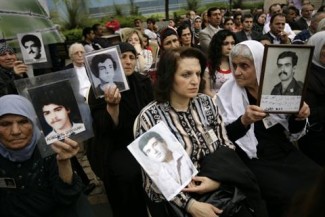
In this edition of the ICTJ Forum, we speak with Lynn Maalouf, one of the primary authors of a new report by ICTJ entitled Lebanon’s Legacy of Political Violence. The report compiles information on hundreds of incidents of serious crimes that took place from 1975 to 2008 in all parts of Lebanon.

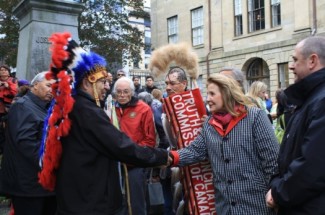
ICTJ welcomes the 6th National Event of Canada's Truth and Reconciliation Commission, part of the TRC’s journey towards completion of its mandate: to learn the truth about what happened in the residential schools, and to inform all Canadians about this history.

Despite the overwhelming number of Lebanon's civilians killed, injured, displaced or otherwise harmed by decades of violence, there remains a near-total lack of official acknowledgment, reparation, truth about serious crimes or accountability for the perpetrators. ICTJ is pleased to release the first in a series of publications that aim to bring the crimes of the past in Lebanon to light.

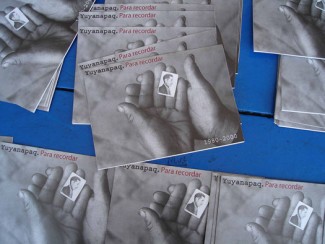
Ten years ago, on August 28, 2003, the Truth and Reconciliation Commission (TRC) of Peru presented its final report, clarifying the grave human rights violations committed between 1980 and 2000 during the internal armed conflict and the regime headed by Alberto Fujimori. This month, ICTJ joins Peru to examine the legacy and impact of the TRC.

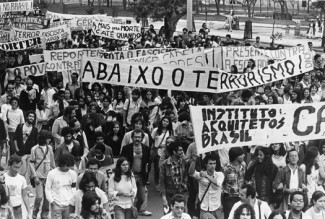
Human rights organizations in Brazil have created an online platform Brasil Nunca Mais Digital to preserve evidence and other documents related to more than 7,000 political prisoners tried before Brazil’s Military Supreme Court, during that country’s military dictatorship.

ICTJ is launching a new multimedia page featuring projects that highlight the human perspective of issues in transitional justice and seek to engage a wide variety of audiences in a discussion on accountability for massive human rights abuses. Here's why we think multimedia can play a key role in deepening public understanding of transitional justice, and convey the guiding principles of ICTJ.

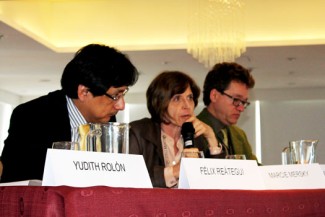
The one-day forum “Latin American Experiences with Truth Commissions,” organized by the International Center for Transitional Justice in Bogotá on July 22, brought together leading experts to discuss experiences and lessons learned from truth-seeking processes that shed light on massive human rights violations in four countries: Argentina, Guatemala, Paraguay, and Peru.

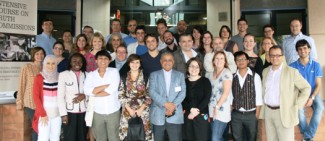
ICTJ and the Barcelona International Peace Resource Center (BIPRC) are pleased to announce the 5th Intensive Course on Truth Commissions, which will focus on a practical approach to addressing the challenges of designing and implementing a truth commission.

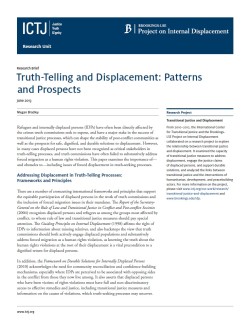
Refugees and internally displaced persons (IDPs) have often been directly affected by the crimes truth commissions seek to expose, and have a major stake in the success of transitional justice processes, which can shape the stability of post-conflict communities as well as the prospec...

As Tunisia concludes its final deliberations on the new constitution, transitional justice issues such as reparations for victims, truth about the past and the rights of women have been central to the legislative debates. Over the past month, ICTJ’s leading experts have been engaged with stakeholders on the ground on a variety of issues under deliberation, including truth-seeking, reparations, gender justice, and the role of children and youth.

In pursuing the truth about mass crimes, a mandate provides a truth commission with more than just a legal authorization to act. It sets out a vision of what society hopes to achieve through the truth-seeking process and provides direction to commissioners and others in their operations. ICTJ has just released a new publication, “Drafting a Truth Commission Mandate: A Practical Tool,” which is intended to inform victims’ groups, civil society, and governments about the contents of a legal mandate of a truth commission.

This publication is intended to facilitate the process of drafting a mandate for a truth commission charged with the nonjudicial investigation of serious human rights violations. It covers the different aspects of a legal mandate that are necessary to enable an effective truth-seeking...

The International Center for Transitional Justice ICTJ welcomes the release of the Truth, Justice and Reconciliation Commission (TJRC) Report, which is the result of an official truth-seeking process undertaken by Kenya following the 2007/2008 post-election violence. The report shares the TJRC’s findings on gross violations of human rights, economic crimes, illegal acquisition of public land, marginalization of communities, and ethnic violence between 1963 and 2008.

In this new opinion piece, ICTJ President David Tolbert says the United States has publicly lauded the rule of law as it applies to other countries and offered significant financial and political support to torture victims of foreign regimes; yet it has failed to acknowledge or address its obligation to victims of its own detention policies. To regain its credibility in the eyes of the world, the US government must take steps to acknowledge and address past violations and provide redress to victims of US-sanctioned abuses.

In an unprecedented act of unity, youth activists from across Bosnia and Herzegovina united to visit sites of former detention camps and pay respect to victims from all ethnic groups and sides of the conflict. Some 50 activists of the initiative “Because It Matters” from Prijedor, Banja Luka, Mostar, Tuzla, Sarajevo, Ljubuski, Gradiska, Konjic and other cities visited locations in Hadzici, Celebici, Jablanica, and Dretelj, where crimes were committed against civilians of Bosniak, Serb, and Croat ethnicities.

Elementary and high school teachers and students in the Montréal area gathered today for “Education Day,” an event convened by the Truth and Reconciliation Commission of Canada (TRC) to kick off the TRC’s historic Québec National Event, scheduled from April 24 to 27, 2013.

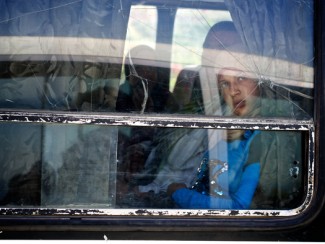
Despite the overwhelming percentage of Lebanese who were affected by recent wars and political unrest, discussion of Lebanon’s past is largely absent from public spheres. A new documentary follows youth in Lebanon as they set out to find the truth.

This opinion piece by Eduardo González, director of the Truth and Memory program at ICTJ, asks: can you build a solid, legitimate democracy on the sands of silence, or does truth provide a more trustful foundation?

In our work providing assistance to societies around the world, we draw continual inspiration from individuals and communities who refuse to ignore the abuses of the past, and who often face great obstacles to expose it. To honor their courage, we invite you to read a selection of perspectives on truth and dignity from those who have used their words to convey a powerful idea: truth is the foundation of justice.

This year, ICTJ's campaign for the International Day for the Right to the Truth centers around the theme, “Truth is the Foundation of Justice.” This notion, fundamental to the idea of a comprehensive approach to justice, is explored through several new releases from ICTJ.

March 21, 2013, New York, NY- The International Center for Transitional Justice (ICTJ) is launching a global awareness campaign for the International Day for the Right to the Truth, March 24, to affirm the right of victims to know the truth about human rights violations. Under the slogan, “Truth is the foundation of justice,” ICTJ’s campaign will highlight the important role that truth commissions can play in societies dealing with a legacy of violence and repression.

This publication provides an overview of the essential best practices guiding the main aspects of a truth commission, answering basic questions relating to its goals, powers, operations, framework, protections for commissioners and witnesses, and reporting. Its intention is to provide...

Nearly a decade after Colombia’s first transitional justice mechanisms were created, the country is now weighing options for the establishment of an official truth commission. To examine and inform these options, the International Center for Transitional Justice is hosting the International Course on Truth Commissions from March 11-15, 2013, in Villa de Leyva, Colombia. The course will be modeled after ICTJ’s international Intensive Course on Truth Commissions, which has been held for five consecutive years.

From February 27-March 1, leading indigenous rights activists from around the world will join their counterparts and other experts at Columbia University to discuss access to truth, justice, and reconciliation for indigenous peoples.

Maine’s foster care system was intended to act in the best interests of all children. But for indigenous children removed from their communities and placed with white families, often without the consent of their parents or tribes, the foster care system caused the painful loss of their cultural identity and traumatic severing from their heritage.

ICTJ calls on the Prime Minister of the Solomon Islands to make the report of the Solomon Islands Truth and Reconciliation Commission public without delay. Almost one year since the TRC handed its final report to the prime minister, it has still not been publicly released, contrary to the law that established the commission.

Indigenous rights are increasingly being addressed through different transitional justice measures, and ICTJ is actively involved in the discourse on how truth commissions and other transitional justice mechanisms can help the struggle for the rights of indigenous people.

For the second consecutive year, ICTJ has been named among the world’s Top 100 NGOs by The Global Journal. ICTJ was also listed among the top three NGOs in the “Law and Justice” sector, acknowledging its unique role in assisting societies to strengthen the rule of law at the national level.

Recent proposals on using transitional justice as a means of stabilizing Syria in the aftermath of the eventual fall of the Assad regime— including by providing incentives for loyalists to give up a possible ‘fight to the death’ in Damascus — are a significant development in the debate on Syria. As Syrian groups and international actors gathered as “Friends of Syria” consider these proposals, it is of paramount importance to be clear about what is meant by transitional justice.

The International Center for Transitional Justice (ICTJ) signed a cooperation agreement with the Tunisian government on January 16 to provide further technical assistance in establishing transitional justice mechanisms in the country. The development comes two years after protests forced President Zine El Abidine Ben Ali to step down and flee the country in January 2011.