


726 results

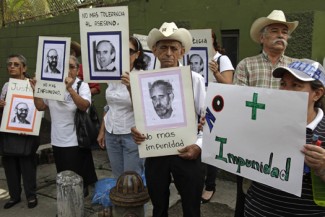
For more than 20 years, the Amnesty Law has hindered El Salvador from pursuing accountability for perpetrators of serious crimes committed against civilians during the civil war fought between the government and leftist insurgents in the 1980's. However, this may change in very near future. On September 20, the Constitutional Court admitted a petition claiming that the Amnesty Law passed in March 1993 –which shielded perpetrators of serious crimes committed during the 12-year civil war– is unconstitutional.

ICTJ's documentary Voices of Dignity inspired Wilson Herrera, professor of philosophy and researcher at the Universidad del Rosario in Colombia, to reflect on the role of victims in a democratic society, and on the importance of empowering them as agents of change and rights-holders, rather than relegating them to the status of permanent victims.

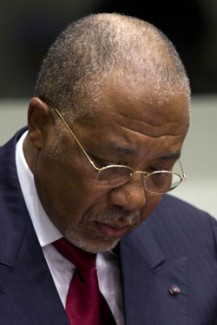
ICTJ welcomes the decision by the Special Court for Sierra Leone to uphold the guilty verdict against former Liberian President Charles Taylor for war crimes and crimes against humanity. The court dismissed challenges from Taylor’s defense, and the prosecution’s request for the sentence to be increased to 80 years, and affirmed his 50-year sentence with immediate effect.

ICTJ has expressed concern over the Bangladesh Supreme Court’s sentencing to death of Abdul Quader Mollah, a senior leader in Bangladesh’s largest Islamic party, for crimes against humanity committed during the country’s 1971 war of independence with Pakistan. The decision retroactively increased Mollah’s original penalty from life imprisonment to capital punishment, in breach of international legal conventions.

Despite the overwhelming number of Lebanon's civilians killed, injured, displaced or otherwise harmed by decades of violence, there remains a near-total lack of official acknowledgment, reparation, truth about serious crimes or accountability for the perpetrators. ICTJ is pleased to release the first in a series of publications that aim to bring the crimes of the past in Lebanon to light.

Enforced disappearances are among the cruelest of crimes. To the kidnapping, torture, and in many cases, murder of the victim, perpetrators intentionally create fear and uncertainty about the fate of the missing person. Although men are predominantly targeted, the impact on women is severe and lasting.

In a briefing paper released on the eve of the International Day of the Disappeared, ICTJ documents the experience of the wives of the disappeared in Nepal and calls for measures to address the poverty, social stigma, and legal limbo they continue to face in their day-to-day lives.

Based on the findings of over 450 interviews, this briefing paper looks at the socioeconomic impact of enforced disappearances on the wives of the disappeared in Nepal. More than 1,000 people remain unaccounted for after Nepal’s 10-year conflict ended in 2006. The majority were young ...

In the brutality of armed conflict or tyranny of a repressive regime, many who go missing are never found again: whether “disappeared” by agents of the state or abducted by an armed faction, the whereabouts of thousands are still unknown to this day. On this International Day of the Disappeared, ICTJ recognizes that enforced disappearances constitute crimes against humanity, and they affect women in ways unique from the impact on men.

ICTJ is launching a new multimedia page featuring projects that highlight the human perspective of issues in transitional justice and seek to engage a wide variety of audiences in a discussion on accountability for massive human rights abuses. Here's why we think multimedia can play a key role in deepening public understanding of transitional justice, and convey the guiding principles of ICTJ.