


515 results

ICTJ and its partners will hosted a national dialogue in Kampala, Uganda on the aftermath of sexual violence. The aim: to shift stigma from victims to perpetrators and end the culture of silence. Sarah Kihika Kasande, head of ICTJ's Uganda office, explains why such efforts are essential to ending impunity and securing a lasting peace in the country.

The International Center for Transitional Justice denounces the passage of Tunisia’s deeply flawed “Administrative Reconciliation” law, which grants amnesty to public officials who were involved in corruption during the dictatorship but who claim they did not personally gain from it.

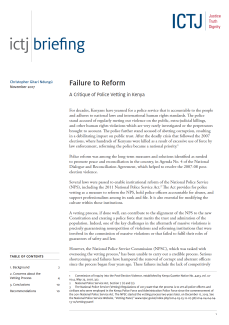
Kenya is just days away from the 2017 general election, but challenges dot the horizon, including the recent assassination of an election official. ICTJ's Chris Gitari calls for a strong, accountable security sector and the implementation of the Truth, Justice and Reconciliation Commission Report.

Where does transitional justice stand in Sri Lanka? Kelli Muddell, Director of ICTJ's Gender Justice Program, explores the country's contested historical narratives.

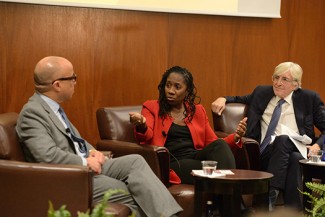
As grassroots efforts to confront the legacy of racial injustice in the United States take hold from New Orleans to Maine and beyond, how can transitional justice experiences around the world inform their work? That was a major focus of a recent conference ICTJ co-convened, hosted by Kean University.

Children born of wartime sexual violence often face rejection from the communities their mothers call home. For these families, the failure of the state to address the harm they suffered and the enduring stigma leads to their further marginalization. An ICTJ film on this stigma, and the paths to overcome it, sparked discussion at a panel held at the Austrian Mission to the United Nations.

A new ICTJ report argues that discussions about a future return of refugees and coexistence among groups currently at war in Syria must begin now, even in the face of ongoing violence and displacement.

Discussions about a future return of refugees and coexistence among groups currently at war in Syria must begin now, even in the face of ongoing violence and displacement. This report, based on interviews with refugees, makes it clear that the restoration of dignity will be important ...

In 1986, Wachira Waheire was whisked off the street, taken to Kenya's most infamous torture chamber, and sentenced to four years in prison. Over the next 30 years, his quest for justice led him to meetings with his torturers to courtroom showdowns with the country's Attorney General. Discover his ongoing struggle for truth, acknowledgement, and reparations alongside all survivors of abuse in Kenya.

Ongoing economic and social inequality, a legacy of the dictatorship, affects Tunisians across generations, but has particularly pronounced impacts on young people. ICTJ worked with four young photographers to confront the consequences of marginalization and explore its impacts on Tunisian youth. Their four photo galleries comprise the exhibition "Marginalization in Tunisia: Images of an Invisible Repression.”