




510 results

Morocco’s “Years of Lead” period was marked by policies of state violence against political dissidents including torture, arbitrary detention, and enforced disappearances. “ Morocco: Gender and the Transitional Justice Process” analyzes whether the various transitional justice processes undertaken by the IER sufficiently fulfill the gender-specific focus of its mandate.

ICTJ enthusiastically welcomes today’s decision of the United Nations Human Rights Council to establish a mandate for a special rapporteur on the promotion of truth, justice, reparation and guarantees of non-recurrence of serious crimes and gross violations of human rights.

The Kenya Transitional Justice Brief, a quarterly bulletin by ICTJ highlighting current developments in the field of transitional justice in Kenya. This brief focuses on the process of implementing the 2010 constitution and the political context in which this takes place, providing a ...

Since 1990, 65 former heads of state or government have been legitimately prosecuted for serious human rights or financial crimes. Many of these leaders were brought to trial in reasonably free and fair judicial processes, and some served time in prison as a result. This book explores...

Women played a crucially important role in brokering peace in Solomon Islands but they still face significant barriers to inclusion in transitional justice initiatives. ICTJ has been working closely with women groups to facilitate their formal contribution to the Truth and Reconciliation Commission (TRC).

NEW YORK, July 19, 2011—Leaders of the global indigenous rights community gathered in New York today for a three-day meeting to discuss how truth commissions can support indigenous rights. The Strengthening Indigenous Rights through Truth Commissions conference was organized by the International...

This report provides an overview of how truth commissions can address gender issues. It aims to help those involved with the truth commission process make informed decisions regarding different operational directions by highlighting potential advantages and disadvantages of the variou...

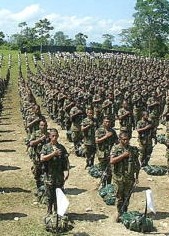
This paper examines the benefits of introducing justice-related considerations into disarmament, demobilization and reintegration (DDR) programs, an idea that has only recently been considered. Drawing links between DDR and reparations programs – the former a peace and security measur...

Given that women represent a very large proportion of the victims of conflicts and authoritarianism, it makes sense to examine whether reparation programs can be designed to redress women more fairly and efficiently and seek to subvert gender hierarchies that often antecede the confli...

Women face a double marginalization under authoritarian regimes and during and after violent conflicts. Nonetheless, reparations programs are rarely designed to address the needs of women victims. What Happened to the Women? Gender and Reparations for Human Rights Violations, arg...