

523 results

On October 14, The Gambia’s Truth, Reconciliation and Reparations Commission will begin public hearings with women victims who have dared break the nation’s silence around sexual violence. The hearings represent an important step toward the inclusion of women and their experiences in the Gambian truth-seeking process. But we cannot stop there.

This study, carried out in partnership with Aulas de Paz and Universidad Santo Tomás, explores experiences of acknowledgment of responsibility under Colombia’s Justice and Peace Law. Drawing on interviews with victims, former combatants, and judicial officials, it identifies key lesso...

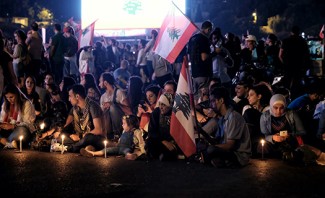
A person lights a candle during an anti-war protest in Barranquilla, Colombia.

The trend of missing and disappeared persons due to conflict remains more prevalent than ever today. Many governments around the world have remained undeterred in their abuse of power to invade a home or community and remove persons deemed to be a threat. This intractable problem has received global attention largely due to the efforts of family members who often risk their lives in pursuit of the right to know and ‍‍to bury their loved ones.

In February 2019, ICTJ hosted an international symposium on gender and transitional justice in Tunisia that brought together representatives from eight countries where ICTJ has been actively engaged in implementing a gender-focused approach to its programming. This briefing paper...

During the Ben Ali dictatorship in Tunisia, Najet Gabsi, an educator pursuing a diploma in law, was imprisoned for six months for her political activities. Through her participation in the "Voices of Memory" art exhibition, she was able to reignite her passion for activism and articulate the harms she endured at the hand of the regime.

When the government of Uganda signed the Juba Agreement on Accountability and Reconciliation (AAR) with the rebel group the Lord’s Resistance Army (LRA) in 2007, it committed to establishing concrete measures that would promote accountability, reconciliation, and justice for victims of serious human rights violations stemming from two decades of armed conflict. More than ten years later, on June 17, 2019, Uganda’s Cabinet finally approved the long-awaited National Transitional Justice (TJ) Policy.

June 20, 2019 — In a tightly packed room at the United Nations, human rights experts gathered for a historic symposium to commemorate a dark chapter of South Korea’s past, the Jeju Uprising and Massacre that began on April 3, 1948, and continued until 1951, which Koreans now refer to as “the 4.3 Jeju” events. Over 100 persons, including notable academic panelists, human rights experts, journalists, diplomats, religious leaders, and peace activists attended the symposium.

The Gambian Truth, Reconciliation, and Reparations Commission (TRRC) started its operations in January 2019 with the public hearings of witnesses, victims, and perpetrators. It has already succeeded in having high-profile perpetrators testify publicly on their role in violations concerning several victims. But the question is, who should be at the center of truth telling?

In designing transitional justice in Armenia, policymakers, civil society activists, and international actors should remember those who have not had justice for so long: the families of those killed or injured in March 2008, the victims of torture and political detention, the mothers in black seeking the truth about why their soldier sons were killed, the old pensioners who live in cold and hunger, farmers and rural communities who need access to social services, and students and young citizens who saw that their hope for a better future required a revolution.

When Janet Arach was still a schoolgirl, she was abducted by Joseph Kony’s Lord’s Resistance Army (LRA) in northern Uganda. During her eight years in captivity, she was forced to marry an LRA rebel and gave birth to two children. Read more on Janet's journey to become an agent of change for her community in Uganda.