

354 results

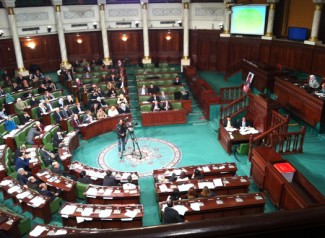
ICTJ welcomes the historic passage of the Draft Organic Law on the Organization of Transitional Justice Foundations and Area of Competence by the Tunisian National Constituent Assembly (NCA). In a nearly unanimous vote on Sunday, 125 of 126 deputies voted in favor of the law.

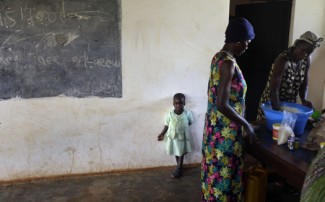
In this op-ed marking Universal Children’s Day, ICTJ's Virginie Ladisch explains why within transitional justice, the capacity to make positive choices and demonstrate moral agency are attributes that need to be encouraged and fostered in children, especially former child soldiers.

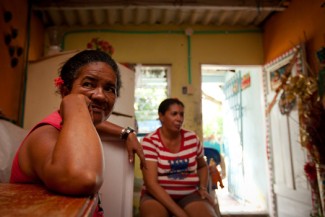
ICTJ's documentary Voices of Dignity inspired Wilson Herrera, professor of philosophy and researcher at the Universidad del Rosario in Colombia, to reflect on the role of victims in a democratic society, and on the importance of empowering them as agents of change and rights-holders, rather than relegating them to the status of permanent victims.

ICTJ welcomes the 6th National Event of Canada's Truth and Reconciliation Commission, part of the TRC’s journey towards completion of its mandate: to learn the truth about what happened in the residential schools, and to inform all Canadians about this history.

Enforced disappearances are among the cruelest of crimes. To the kidnapping, torture, and in many cases, murder of the victim, perpetrators intentionally create fear and uncertainty about the fate of the missing person. Although men are predominantly targeted, the impact on women is severe and lasting.

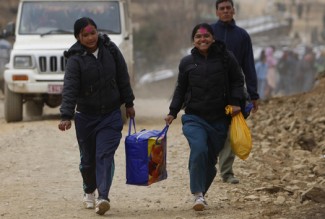
In a briefing paper released on the eve of the International Day of the Disappeared, ICTJ documents the experience of the wives of the disappeared in Nepal and calls for measures to address the poverty, social stigma, and legal limbo they continue to face in their day-to-day lives.

Based on the findings of over 450 interviews, this briefing paper looks at the socioeconomic impact of enforced disappearances on the wives of the disappeared in Nepal. More than 1,000 people remain unaccounted for after Nepal’s 10-year conflict ended in 2006. The majority were young ...

In the brutality of armed conflict or tyranny of a repressive regime, many who go missing are never found again: whether “disappeared” by agents of the state or abducted by an armed faction, the whereabouts of thousands are still unknown to this day. On this International Day of the Disappeared, ICTJ recognizes that enforced disappearances constitute crimes against humanity, and they affect women in ways unique from the impact on men.

Children and youth are especially vulnerable to the effects of conflict and gross human rights violations. In this edition of the ICTJ Program Report, ICTJ's Children and Youth Program Director Virginie Ladisch talks with us about the importance of integrating child and youth sensitivity into transitional justice mechanisms.

ICTJ is launching a new multimedia page featuring projects that highlight the human perspective of issues in transitional justice and seek to engage a wide variety of audiences in a discussion on accountability for massive human rights abuses. Here's why we think multimedia can play a key role in deepening public understanding of transitional justice, and convey the guiding principles of ICTJ.