49 results

New York—ICTJ closed its office in Côte d’Ivoire on July 1 after eight years of operation due to several factors including a lack of political will in the government and difficulty securing funding. Although a sad moment for the organization, ICTJ is proud of its achievements in the country and remains confident that its local many partners will continue to advance justice.

Tunis, August 12, 2020 —As the world today commemorates International Youth Day and Tunisia observes it National Women’s Day on August 13, ICTJ is launching the Voices of Memory virtual tour, in partnership with the Voices of Memory Collective, an intergenerational group of Tunisian women, and the University of Birmingham. The result of a collaboration between the Voices of Memory Collective and Tunisian artists, the virtual tour allows visitors to explore and interact with an online version of the widely successful Voices of Memory exhibition that traveled throughout Tunisia in 2018.

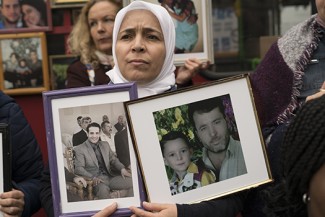
New York, May 29, 2020 — Time is of the essence for breaking the deadlock over the release of detainees, abductees, and the forcibly disappeared in Syria, says a policy paper released today by ICTJ and the New York University’s Center on International Cooperation (CIC). Coordinated action by the Syrian regime and other parties to the conflict, as well as the international community, must begin now, particularly as the spread of the coronavirus accelerates in Syria. The consequences of delay and a failure to act — for the detainees and their families — are likely to be calamitous.

Banjul, The Gambia, December 11, 2019—Women from three rural areas of the Gambia will submit a report to the Truth, Reconciliation and Reparations Commission (TRRC) on December 16 that describes their experiences of sexual and gender-based violence during the dictatorship of former President Jammeh and the impact of the violations on their lives and families. In the report, the women join voices to offer recommendations to the TRRC and the Gambian government.

New York, December 4, 2019—"Get ready to speak up and be heard because your voice matters!”—that is the message a new guidebook released today on transitional justice sends to Syrian youth. Produced by ICTJ and Dawlaty, a Syrian human rights organization based in Beirut, the guidebook introduces the concepts of transitional justice to young audiences in an engaging and interactive way while capturing the challenges of applying them in difficult contexts.

Banjul, June 12, 2019—“Never Again!” sings Awa Bling in her recently released song produced with the support of ICTJ. She is part of a movement of youth and prominent artists who are reclaiming this universal slogan by creating their own songs about transitional justice and bringing their voices to some of the most forgotten regions of The Gambia. Local and international fans can now access new music videos released on social media by five talented Gambian hip hop artists.

New York, June 3, 2019—Today, with just over a month to go before the 2019 UN High-Level Political Forum (HLPF) on Sustainable Development, ICTJ and its partners have released the Report of the Working Group on Transitional Justice and SDG16+, entitled “On Solid Ground: Building Sustainable Peace and Development After Massive Human Rights Violations.”

NEW YORK – The Swedish International Development Cooperation Agency (Sida) has awarded the International Center for Transitional Justice (ICTJ) a grant of 40 million Swedish kronor to implement its Strategic Plan 2018-2022. During this period, ICTJ will respond to the growing demand for its services...

The first of its kind and the culmination of three years of planning and development, Gender Modules is a comprehensive curriculum that uses case studies to illustrate topics such as gender and reparations and the prosecution of gender-based crimes. It provides concrete guidance to those seeking to implement gender-sensitive processes – informed by successes and failures in contexts around the world.

Kenyan media house Africa Uncensored has teamed up with the International Center for Transitional Justice (ICTJ) on a documentary that explores the Bulla Karatasi massacre that took place in the northern region of Garissa, Kenya, and its impact on communities in the North. The documentary will advance ICTJ’s efforts to partner with civil society on community-state dialogue initiatives, engage stakeholders around political and constitutional reforms stemming from the TJRC’s recommendations, and achieve redress for the legacy of state violence in Garissa and other communities in Northern Kenya.