255 results

The taboo around sexual violence against men and boys can leave victims in the shadows, write ICTJ's Kelli Muddell and Sibley Hawkins. Without acknowledgment of these crimes, efforts to address injustices of the past will be hard-pressed to develop inclusive and effective responses.

ICTJ’s Gender Symposium, held on February 2 to 4, 2019, in Tunis, Tunisia, brought together fearless women leaders working in 8 countries to advance the needs of victims and to bring gender issues to the center of transitional justice processes. What was achieved? What experiences cut across these diverse contexts? Kelli Muddell and Sibley Hawkins reflect on these questions and more in this short podcast.

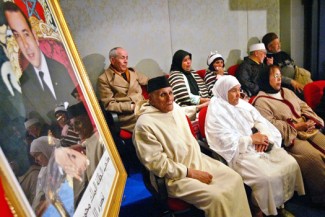
Established in 2004, Morocco’s Equity and Reconciliation Commission (IER: l’Instance équité et réconciliation) was one of the first attempts made in the Arab world to address human rights violations perpetrated in the post-independence period. It also aimed to include female victims o...

Morocco’s “Years of Lead” period was marked by policies of state violence against political dissidents including torture, arbitrary detention, and enforced disappearances. “ Morocco: Gender and the Transitional Justice Process” analyzes whether the various transitional justice processes undertaken by the IER sufficiently fulfill the gender-specific focus of its mandate.

The month of January has a particular significance in the Middle East and North Africa. It was the month when the Arab uprisings were sparked five years ago. It was also the month when the transitional justice process was inaugurated in Morocco, 12 years ago. What can be learned from Morocco’s experience?

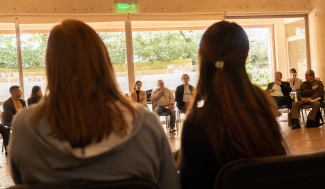
On November 28, 2023, ICTJ organized an international dialogue in Bogotá, Colombia, to share innovative strategies for advancing victims’ rights to redress for human rights abuses and for establishing more victim-centered development policies. The gathering also marked the official launch of ICTJ’s new report—Advancing Victims’ Rights and Rebuilding Just Communities Local Strategies for Achieving Reparation as a Part of Sustainable Development—which presents findings from a two-year comparative study of local efforts in Colombia, The Gambia, Tunisia, and Uganda to advance reparations.

Despite earlier efforts to envision a national transitional justice policy, Ukraine remains overly cautious about establishing one. This report provides a robust substantiation of why Ukraine should revive its holistic transitional justice policymaking. In the first part, it debunks t...

A women holds up an infant in the air on sunny day outdoors, surrounded by yellow and blue balloons

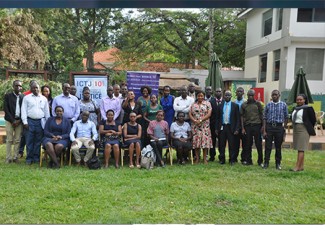
The International Center for Transitional Justice (ICTJ) and the Barcelona International Peace Resource Center (BIPRC) are pleased to announce an Intensive Course on Transitional Justice and Peace Processes, taking place in Barcelona, Spain, June 6 - 10, 2016. It will focus on practical examples of recent or paradigmatic peace processes where the question of justice formed a significant part of the negotiating context.

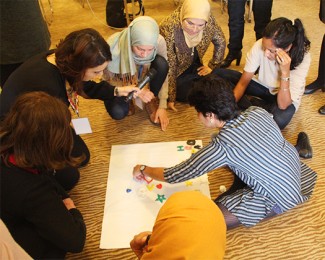
An ICTJ immersion course brought together women from Egypt, Yemen, Syria, and Libya to closely observe Tunisia’s emerging experience in transitional justice, including the ways in which issues of gender-based violence and the experiences of women are being addressed.

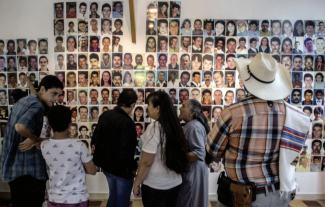
In a briefing paper released on the eve of the International Day of the Disappeared, ICTJ documents the experience of the wives of the disappeared in Nepal and calls for measures to address the poverty, social stigma, and legal limbo they continue to face in their day-to-day lives.