


255 results

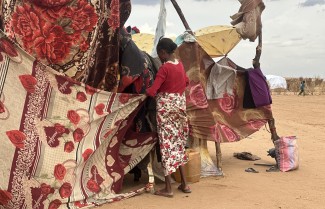
Despite the enormous challenges, Sudanese civil society and other stakeholders are prioritizing transitional justice, acknowledging the need to address past injustices to end the cycle of conflict in their country. ICTJ continues to support them as they envision and design victim-centered, gender-sensitive, and inclusive strategies. Leading these efforts is ICTJ's Ilaria Martorelli. In this interview, she discusses the prospects for lasting peace, accountability, and repair in Sudan.

The field of transitional justice is increasingly recognizing the relevance of mental health and psychosocial support (MHPSS) in contexts of massive human rights violations. Despite growing advocacy and awareness at the global policy level, however, the field lacks a systematic approa...

an image of colorful painting featuring a young girl

This week, the International Criminal Court heard closing arguments in the trial of Dominic Ongwen, a top commander of the Lord’s Resistance Army in Northern Uganda. Among the 70 counts of war crimes and crimes against humanity he faces are 19 counts of sexual and gender-based crimes, including rape, sexual slavery, and forced marriage—the widest range of such crimes ever to be brought to trial before the court. The case thus marks a milestone in the jurisprudence of these international crimes.

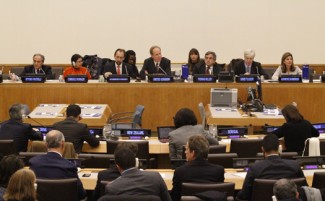
Seeking justice for victims of enforced disappearance is crucial to building peace and preventing recurrence of violence in societies emerging from conflict, ICTJ President David Tolbert told members of the United Nations Security Council and other diplomats last week.

Kaneleng are women who cannot bear children or whose children died at an early age. At a two-day summit held in December 2018, 25 kaneleng received training on transitional justice concepts. They worked to develop songs, comedy, and dramas that they will use to present justice messages through their work as traditional communicators.

In the span of only one month, Tunisia has witnessed the historic passing of a transitional justice law and adoption of a new constitution. A key actor in the country's transition is the media.

Transitional Justice is often pursued in contexts where people have been forced from their homes by human rights violations and have suffered additional abuses while displaced. Little attention has been paid, however, to how transitional justice measures can respond to the injustices ...

This chapter examines the largely overlooked relationship between female ex-combatants, DDR, and transitional justice, with a particular focus on truth commissions. The potential of truth commissions to recognize women’s multiple and contradictory roles during armed conflict and to pu...

To mark International Women’s Day, we invite you to read about four countries at the top of our gender justice priorities in the coming year, each with its own history, context, and complex sets of challenges.

This study explores a transitional justice approach to the dilemma of foreign fighters in violent conflict. Such an approach can help center human rights in comprehensive responses to foreign fighters, and shift the current focus from security and punishment to justice and long-term p...

Image of Children looking through holes in a tent at al-Hol displacement camp in Hasaka governorate, Syria, on April 2, 2019.