



255 results

This report assesses the gender sensitivity of the African Union Transitional Justice Policy (AUTJP). Drawing on continental practice and scholarship, it identifies opportunities for AU member states, civil society, and donors to strengthen the policy’s implementation and its responsi...

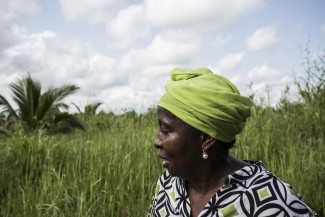
A woman stands in the profile position in a field of green plants on a sunny day with a clear blue sky

Displacement is one of the most widespread and tangible consequences of conflict, and has been chronically high in Africa’s Great Lakes region by any standard. This paper focuses on three salient gender-specific dynamics of conflict and displacement in the region that need to be incor...

For the second consecutive year, ICTJ has been named among the world’s Top 100 NGOs by The Global Journal. ICTJ was also listed among the top three NGOs in the “Law and Justice” sector, acknowledging its unique role in assisting societies to strengthen the rule of law at the national level.

In most cases, to be imprisoned in Syria is to disappear. Tens of thousands of people, if not more, have been unlawfully taken prisoner or held incommunicado in the context of the Syrian conflict. This policy paper examines the dark reality of detentions in Syria, its impact...

A major new report from ICTJ canvasses 31 countries to see how the crime of enforced disappearance affects women, as both the disappeared and the female relatives of the disappeared. It finds that across cultures, women face serious barriers to seeking relief due to discriminatory laws and practices.

Enforced disappearance and arbitrary detention devastate victims and all those who love them. This guide takes an unsparing look at the harsh realities that Syrian victims of these crimes face and offers guidance on what they and others can do to help. It is the product of the Bridges...

A drawing of a woman holding a young child. In the background are numerous eyes of different colors watching them.

More than six years after the war in Uganda came to a formal end, the country has taken a landmark first step by unanimously adopting a resolution to establish a reparations fund informed by the experiences of both men and women.

In 2021, the Central African Republic created the Truth, Justice, Reparation and Reconciliation Commission (CVJRR) to establish the truth, pursue justice, and restore victims’ dignity, with a view to ultimately achieving national reconciliation. In this fragile country, battered by successive episodes of violence, justice, in its broadest sense, has always been and remains a lifelong demand of victims. After a lengthy operationalization phase, the CVJRR is now finally getting ready to start registering and hearing victims’ testimonies. The first step in this process is statement taking, which requires taking several key factors into account to be successful.

Indigenous peoples are still some of the most marginalized and vulnerable communities around the world. In a conflict, they are often some of the most affected as their resource-rich territories are coveted by powerful and violent groups, their identity and loyalty perceived with mistrust, and their...

Join President David Tolbert as we celebrate ICTJ at 15 years, during which there have been many pivotal moments, both for our organization and the struggle for justice globally.