637 results

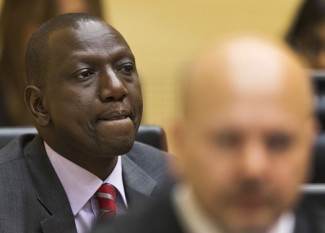
ICTJ welcomes the decision by the Special Court for Sierra Leone to uphold the guilty verdict against former Liberian President Charles Taylor for war crimes and crimes against humanity. The court dismissed challenges from Taylor’s defense, and the prosecution’s request for the sentence to be increased to 80 years, and affirmed his 50-year sentence with immediate effect.

ICTJ has expressed concern over the Bangladesh Supreme Court’s sentencing to death of Abdul Quader Mollah, a senior leader in Bangladesh’s largest Islamic party, for crimes against humanity committed during the country’s 1971 war of independence with Pakistan. The decision retroactively increased Mollah’s original penalty from life imprisonment to capital punishment, in breach of international legal conventions.

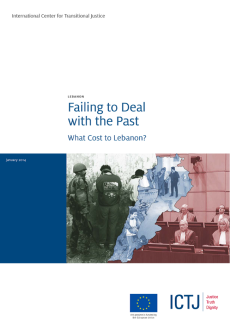
Despite the overwhelming number of Lebanon's civilians killed, injured, displaced or otherwise harmed by decades of violence, there remains a near-total lack of official acknowledgment, reparation, truth about serious crimes or accountability for the perpetrators. ICTJ is pleased to release the first in a series of publications that aim to bring the crimes of the past in Lebanon to light.

ICTJ is launching a new multimedia page featuring projects that highlight the human perspective of issues in transitional justice and seek to engage a wide variety of audiences in a discussion on accountability for massive human rights abuses. Here's why we think multimedia can play a key role in deepening public understanding of transitional justice, and convey the guiding principles of ICTJ.

The International Center for Transitional Justice publishes a selection of excerpts from the Supreme Court's rulings and judgments regarding the Justice and Peace process.

This paper examines the crime of forced displacement from the perspective of both international and national legal frameworks. The crime of forced displacement is a notion that comes from international law. Indeed, an international legal framework has developed with the instruments an...

On International Justice Day, July 17th, ICTJ looks at the legacy of the Special Court for Sierra Leone through the voices of those to whom its work was most important: the citizens of Sierra Leone. Our new multimedia project, “Seeds of Justice: Sierra Leone,” presents five portraits of Sierra Leoneans whose lives were impacted by this court.

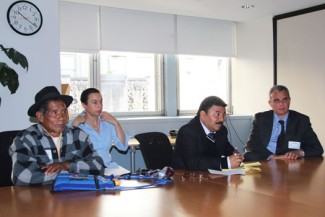
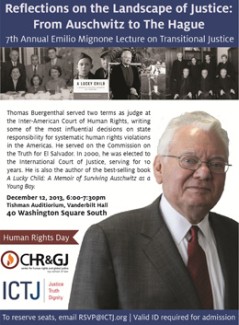
Thomas Buergenthal, Holocaust survivor and former judge of the International Court of Justice, is one of the world's most distinguished jurists. In conversation with ICTJ President David Tolbert, Judge Buergenthal shares his own personal story of surviving the Holocaust as a young boy, and reflects on the changing landscape of transitional justice around the world

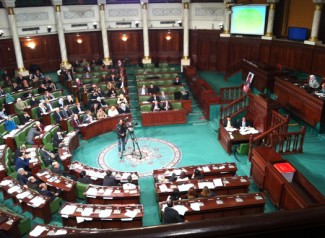
Cote d’Ivoire has embarked on a process of addressing the legacy of internal strife that culminated in the post-election violence of 2010. On June 12, 2013, ICTJ will co-host high-level talks on strengthening Cote d’Ivoire’s judicial capacity to prosecute serious crimes proscribed by the Rome Statute of the International Criminal Court (ICC).

The International Center for Transitional Justice (ICTJ) welcomes today’s verdict in Guatemala by the High Risk Court in the trial of former military dictator José Efrain Ríos Montt. The 86-year-old ex-general was convicted of genocide and crimes against humanity against the indigenous Mayan Ixil population during Guatemala’s Civil War. He was sentenced to a total of 80 years in prison. José Mauricio Rodríguez Sánchez, the co-accused, who headed military intelligence under Ríos Montt, was found innocent.