746 results

Haiti is currently confronting several challenges regarding stability, the rule of law, and corruption. The establishment of the United Nations Mission for Justice Support in Haiti (MINUJUSTH) in April 2017 is aimed at contributing to state and civil society efforts to effectively add...

During the past month, over 400,000 members of Myanmar’s Rohingya Muslim community have been driven from their homes as part of an ethnic cleansing campaign led by the military. What lies at the root of the current violence, how is it connected to political transition, and does transitional justice have a role to play? ICTJ's Anna Myriam Roccatello answers those questions and more.

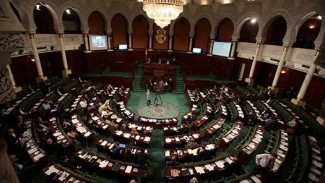
The International Center for Transitional Justice denounces the passage of Tunisia’s deeply flawed “Administrative Reconciliation” law, which grants amnesty to public officials who were involved in corruption during the dictatorship but who claim they did not personally gain from it.

With enforced disappearances on the rise, ICTJ President David Tolbert says the path to prevention is clear: the international community must reorder its priorities and change its approach. The disproportionate attention on counterterrorism takes us further away from accountability and prevention, Tolbert writes. He urges the international community to lead the way in unequivocally censoring governments that use enforced disappearance as a political tactic — and ensuring there can be no impunity for this crime.

Kenya is just days away from the 2017 general election, but challenges dot the horizon, including the recent assassination of an election official. ICTJ's Chris Gitari calls for a strong, accountable security sector and the implementation of the Truth, Justice and Reconciliation Commission Report.

Where does transitional justice stand in Sri Lanka? Kelli Muddell, Director of ICTJ's Gender Justice Program, explores the country's contested historical narratives.

Bring General Rios Montt and other high ranking members of the military to trial in the Guatemalan courts for genocide? In 1999 it was a noble dream for justice, but one with little apparent possibility of ever coming true. On International Justice Day, walk the long path to justice that led to this historic trial.

As grassroots efforts to confront the legacy of racial injustice in the United States take hold from New Orleans to Maine and beyond, how can transitional justice experiences around the world inform their work? That was a major focus of a recent conference ICTJ co-convened, hosted by Kean University.

Chile has shown slow but steady progress on ​criminal justice​​. Two recent court decisions convicted a total of 139 ​state ​agents for their roles in the enforced disappearances of 21 Chileans. The rulings – one handed down by the Supreme Court, the other by a first instance judge – highlight the growing momentum towards obtaining justice for victims of the 1973-1990 dictatorship​.​

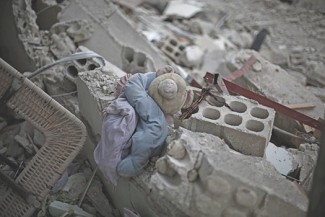
A new ICTJ report argues that discussions about a future return of refugees and coexistence among groups currently at war in Syria must begin now, even in the face of ongoing violence and displacement.