

781 results

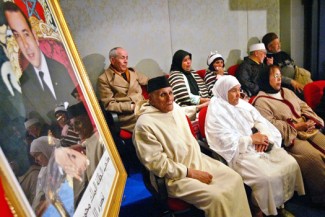
What makes a public apology for human rights abuses meaningful? How best can a public apology recognize the dignity of victims, while paving the way for a more just and peaceful future? According to a new report released today by ICTJ, the best apologies clearly acknowledge responsibility for the violations, recognize the continuing pain of survivors and victims’ families, and are linked with efforts to compensate and assist victims materially and through other justice measures.

Official public apologies are an important element of a transitional justice policy. As a form of symbolic reparation, an apology is a formal, solemn and, in most cases, public acknowledgement that human rights violations were committed in the past, that they caused serious and often ...

Ugandan victims of the LRA have waited over a decade to see the group’s leadership held accountable for crimes committed during the armed conflict with Uganda’s government. They saw it happen last week, when former LRA commander Dominic Ongwen appeared in court for an important hearing at the International Criminal Court.

ICTJ welcomes the recent agreement announced by the Colombian Government and the Revolutionary Armed Forces of Colombia (FARC) to address issues of truth, justice, reparations and non-recurrence and hopes that it will pave the way for the successful completion of the negotiations to end the decades-long armed conflict in Colombia.

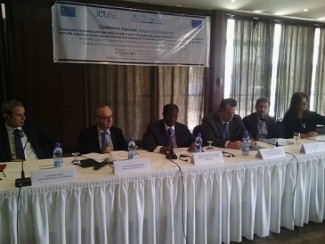
In meeting spaces in Goma, Bukavu, and Bunia, activists and magistrates are discussing ways that they can work together to improve the prosecution of international crimes in the region and address the concerns of local communities.

With hopes running high after the National League for Democracy’s landslide victory in November, a new ICTJ paper calls on the soon-to-be-established Burmese government to seriously consider taking steps to deal with Myanmar’s troubled past as a way to help end the cycle of violence and human rights violations in the conflict-torn country.

This briefing paper calls on the soon-to-be-established NLD-led Burmese government to seriously consider taking steps to deal with Myanmar’s troubled past as a way to help end the cycle of violence and human rights violations in the conflict-torn country.

After years of waiting for the government to take action by implementing the recommendations of Kenya’s Truth, Justice, and Reconciliation Commission, victims of past human rights violations and mass violence are demanding that something be done.

ICTJ held a series of workshops in Goma, Bukavu, and Bunia, Eastern DRC, from November 13 until November 20 to discuss opportunities for greater interaction and collaboration between civil society and criminal justice officials to advance the prosecution of international crimes in the Congo, in order to better address the concerns of affected communities.

This report, part of a joint research project by ICTJ and UNICEF on the intersections of education, transitional justice, and peacebuilding, explores how a transitional justice framework can help to identify educational deficits relating to the logic of past conflict and/or repression...