781 results

This Wednesday saw the beginning of formal peace talks between the Colombian Government of Juan Manuel Santos and the leadership of the left-wing FARC guerrillas. This op-ed from ICTJ Vice President Paul Seils argues that a successful outcome will not be measured simply in the effective demobilization of roughly 8,000 militants. Durable peace will require a reimagining of the Colombian state, which has become both victim and perpetrator in a conflict now over half a century old.

An end could be in sight for the longest-running armed conflict in the Western Hemisphere. Peace negotiations between the government and the Revolutionary Armed Forces of Colombia (FARC) rebels have begun on 17 October in Oslo, Norway, and will continue in Havana, Cuba.

The International Center for Transitional Justice strongly welcomes the decision of the UK High Court ordering the British government to pay damages to a group of Kenyans who were imprisoned and tortured by colonial authorities following the Mau Mau Rebellion of the 1950s.

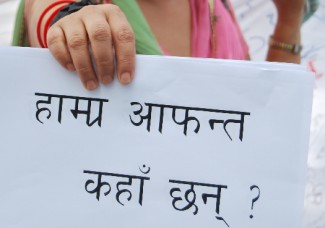
Six years after a peace agreement formally ended the conflict in Nepal, the slow, painstaking process of building the country’s new democracy has yet to provide comprehensive reparation to victims. To fully acknowledge the experience of victims of the conflict, Nepal’s government should not mistake the issuance of relief through material benefits for the implementation of a comprehensive reparation program. This is one of the central recommendations of "Relief, Reparations, and the Root Causes of Conflict in Nepal," a major new report from ICTJ, and authored by Ruben Carranza.

The report examines the measures taken in Nepal to redress victims following the 2006 peace agreement, which formally ended the ten-year civil war between the government and Maoist rebels. It looks closely at the Interim Relief Program (IRP) — a compensation scheme instituted in 2008 ...

The latest ICTJ Program Report explores transitional justice issues in Colombia and charts our work in the country with the longest running armed conflict in the world. In this interview, head of ICTJ's Colombia office Maria Camila Moreno answers questions on the ongoing transitional justice mechanisms in the country, and describes ICTJ's work with the government and civil society groups on issues of criminal justice, reparations and memory. She provides a look ahead to the new peace negotiations between the Colombian government and the FARC, and identifies key transitional justice issues at stake for the talks.

Since independence Ugandans have endured episodes of violence and human rights abuses across successive political regimes and transitions with devastating consequences. During two decades of conflict in the northern Uganda involving the Lord’s Resistance Army (LRA) and the government ...

In an address to the UN Security Council, ICTJ President David Tolbert urged States to prioritize transitional justice as an integrated approach to seeking accountability for crimes against children in armed conflict.

Accountability for violations against children in armed conflict is best achieved through a comprehensive approach to justice that addresses the responsibility of perpetrators and the rights of victims within a broader process of social change. This is the key message to be delivered by the International Center for Transitional Justice (ICTJ) on September 19, 2012, during the UN Security Council’s Open Debate on Children and Armed Conflict.

Transitional Justice is often pursued in contexts where people have been forced from their homes by human rights violations and have suffered additional abuses while displaced. Little attention has been paid, however, to how transitional justice measures can respond to the injustices ...