

781 results

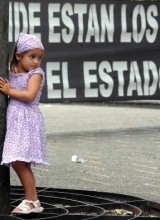
Colombia marked the country’s first National Day of Memory and Solidarity with the Victims April 9. For the millions who have suffered human rights violations in Colombia’s entrenched armed conflict, this was a day for their voices to be heard and their suffering to be acknowledged by the state; a nationwide call for accountability and reconciliation in a highly divided society.

The search for justice in Guatemala continues, more than 15 years after the end of its long and brutal civil war. Claudia Paz, Guatemala’s prosecutor general and head of the Public Prosecutor’s Office, spoke with ICTJ about the struggle of victims and survivors to obtain justice for the crimes they suffered.

NEW YORK, March 22, 2011—The International Center for Transitional Justice (ICTJ) congratulates Pablo de Greiff, director of ICTJ’s Research Unit, on the nomination as the first UN Special Rapporteur on the promotion of truth, justice, reparation and guarantees of non-recurrence of serious crimes and gross violations of human rights.

After three years on trial and a total of seven in detention, Thomas Lubanga gained the dubious notoriety of becoming the first person to be convicted by the International Criminal Court (ICC) in The Hague. It would be encouraging if the court, including the prosecution, indicated it saw Lubanga’s judgment as an opportunity to learn critical lessons as well as celebrate a historic day in international justice.

NEW YORK, March 15, 2012—Brazilian federal prosecutors announced yesterday that they have opened a criminal investigation against a military officer accused of the enforced disappearance of civilians during the 1964–1985 military dictatorship. This is a welcome blow against the use of a 1979 amnesty law to shelter government agents who committed horrific crimes against civilians from accountability.

For the millions of victims of the country’s successive wars, Lubanga is just one of many who are responsible for crimes on an astonishing scale. Congolese authorities must end the widespread impunity enjoyed by those who remain in positions of power in the government and military or violence and instability are likely to continue for years to come.

The Spanish Supreme Court has ruled the judiciary has no place investigating the deaths and disappearances of the Franco era. The verdict is a disappointment for the victims of Francoism and confirms Spain remains unwilling to deliver justice for the crimes of the past, writes Eduardo González, director of ICTJ's Truth and Memory program

In the latest ICTJ podcast, Heidy Rombouts, Kenya project leader with the German development agency GIZ, discusses how understanding the links between development, security, and transitional justice will help inform and strengthen policies for implementing complementarity on the ground. [Download](/sites/default/files/Rombouts_ICTJ_Podcast_03052012.mp3) | Duration: 11:42mins | File size: 6.69MB

Five years since the end of Nepal's brutal civil war, victims are losing patience waiting for truth, justice, and reparation. Last year ICTJ completed a six month research project to analyze the effects of the the government's Interim Relief Program and determine the steps still required for Nepal to fulfill its obligation to provide reparations to victims. The findings have been published in a report titled “ From Relief to Reparations: Listening to the Voices of Victims.”

The War Crimes Chamber of Bosnia’s State Court is one of the most successful undertakings to address the legacy of mass atrocities in national courts. As this important institution finds itself under serious threat, the European Union must act quickly to put a stop to attempts of the Bosnian Serb political leadership to undermine Bosnia’s capacity to prosecute war crimes at state level.