

699 results

In an unprecedented act of unity, youth activists from across Bosnia and Herzegovina united to visit sites of former detention camps and pay respect to victims from all ethnic groups and sides of the conflict. Some 50 activists of the initiative “Because It Matters” from Prijedor, Banja Luka, Mostar, Tuzla, Sarajevo, Ljubuski, Gradiska, Konjic and other cities visited locations in Hadzici, Celebici, Jablanica, and Dretelj, where crimes were committed against civilians of Bosniak, Serb, and Croat ethnicities.

Elementary and high school teachers and students in the Montréal area gathered today for “Education Day,” an event convened by the Truth and Reconciliation Commission of Canada (TRC) to kick off the TRC’s historic Québec National Event, scheduled from April 24 to 27, 2013.

Four international legal and human rights groups are together urging all concerned to ensure that the current trial in Guatemala of former president Efrain Rios Montt on charges of genocide and crimes against humanity proceeds with due respect for judicial independence. The four are: the Open Society Justice Initiative, the International Center for Transitional Justice (ICTJ), the Center for Justice and International Law (CEJIL), and the Washington Office on Latin America (WOLA).

The world has turned its eyes to Guatemala, where the trial of retired generals Efraín Ríos Montt and José Mauricio Rodríguez Sánchez is drawing to a dramatic close. With a verdict expected soon, ICTJ spoke with Francisco Soto, executive director of the Center for Legal Action on Human Rights in Guatemala (CALDH). In this Q&A, Mr. Soto describes how civil society in Guatemala has been a crucial force in the long struggle for justice, and reflects on the historic significance of this trial, for both Guatemala and the world.

On April 10, the UN General Assembly is holding a thematic debate on the role of international justice in reconciliation processes. The debate was called by UN GA President Vuk Jeremic, of Serbia, in the wake of the recent acquittal of Croatian General Ante Gotovina by the International Criminal Tribunal for the Former Yugoslavia. Unfortunately, it has become clear that the real purpose of this debate is directed at undermining the ICTY, rather than to discuss an important issue, not only in the Balkans, but in a growing number of countries.

In this opinion piece, ICTJ's Sharanjeet Parmar asks: why do international efforts to tackle impunity for sexual violence in the DRC continue to miss the mark? High-level diplomatic visits are important in underscoring the responses needed for sexual violence survivors. However, without a strong political commitment from top Congolese authorities to address rampant impunity for sexual violence, no amount of attention or media coverage will reduce the violence or put an end to the cycles of suffering.

In this op-ed, ICTJ's Marcie Mersky argues that the significance of the genocide trial for José Efraín Ríos Montt stretches far beyond Guatemala: it is the first time that a former head of state is being tried for genocide in a credible national court, by the national authorities, in the country where the alleged crimes took place.

On Tuesday, March 19, the genocide trial of General Efraín Ríos Montt began at the High Risk Tribunal in Guatemala. To talk about this historic development in Guatemala’s pursuit of accountability we talk with us one of the key players: Guatemalan Attorney General Claudia Paz y Paz Bailey

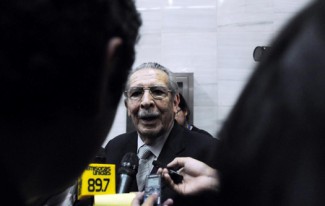
On a historic day for justice in Guatemala and the world, the trial for Guatemala’s former military dictator José Efraín Ríos Montt began this morning in Guatemala City. Ríos Montt and his co-accused, José Mauricio Rodríguez Sánchez – are standing trial on charges of genocide and crimes against humanity during the civil war in Guatemala, in which some 200,000 people were killed or disappeared, a majority of them indigenous Maya.

The Italy-based research center Osservatorio Balcani e Caucaso is hosting an online debate on the ICTY's contribution to reconciliation. The debate, featuring Refik Hodzic of ICTJ and Dr. Janine Clark of the University of Sheffield, who will present arguments for and against the notion that ICTY has contributed to reconciliation. Outside audiences are invited to participate online.