

269 results

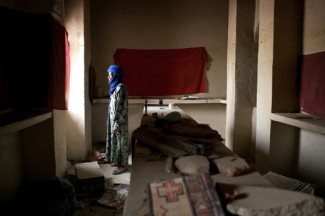
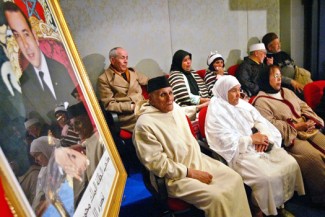
The month of January has a particular significance in the Middle East and North Africa. It was the month when the Arab uprisings were sparked five years ago. It was also the month when the transitional justice process was inaugurated in Morocco, 12 years ago. What can be learned from Morocco’s experience?

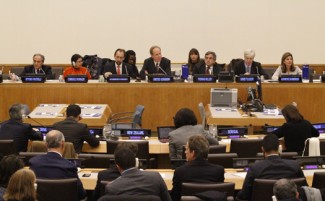
Seeking justice for victims of enforced disappearance is crucial to building peace and preventing recurrence of violence in societies emerging from conflict, ICTJ President David Tolbert told members of the United Nations Security Council and other diplomats last week.

Ugandan victims of the LRA have waited over a decade to see the group’s leadership held accountable for crimes committed during the armed conflict with Uganda’s government. They saw it happen last week, when former LRA commander Dominic Ongwen appeared in court for an important hearing at the International Criminal Court.

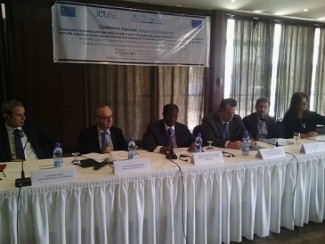
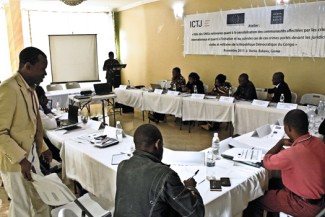
In meeting spaces in Goma, Bukavu, and Bunia, activists and magistrates are discussing ways that they can work together to improve the prosecution of international crimes in the region and address the concerns of local communities.

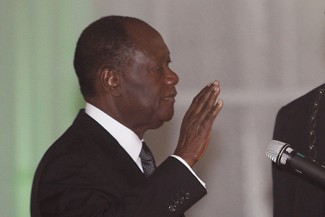
In this op-ed, ICTJ President David Tolbert argues that President Alassane Ouattara should use his second term as president to address widespread atrocities committed in Cote d'Ivoire's recent past.

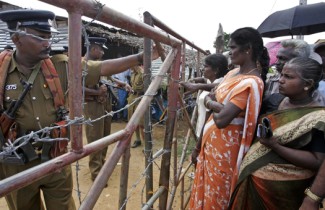
Sri Lanka may be undertaking a change of course towards accountability for atrocities committed during its 26-year civil war.

In this op-ed, Rim El Gantri, head of ICTJ's Tunisian office, discusses the challenges facing Tunisia's transitional justice process and argues that the government's failure to provide accountability for crimes committed under past regimes threatens the country's transition to democracy.

In this op-ed, ICTJ Vice President Paul Seils analyzes the criminal justice agreement announced by the Government of Colombia and the FARC and discusses what aspects of the deal need clarification to ensure that it is capable of delivering the kind of truth and justice that victims of Colombia's armed conflict deserve.

After toppling Hosni Mubarak’s dictatorship in February 2011, Egyptians were eager for a reckoning with past injustices. But after years of political turmoil, the possibility of a genuine transitional justice process in Egypt is uncertain. We turned to three leading Egyptian activists to examine if there really is a chance for justice and reform in Egypt in the near future.

The resignation and indictment of President Otto Pérez Molina for corruption was a significant victory over impunity in Guatemala. In an interview with journalist Carlos Dada, we discussed how recent developments in Guatemala could impact other countries in Central America, such as Honduras and El Salvador.