

605 results

This report assesses the gender sensitivity of the African Union Transitional Justice Policy (AUTJP). Drawing on continental practice and scholarship, it identifies opportunities for AU member states, civil society, and donors to strengthen the policy’s implementation and its responsi...

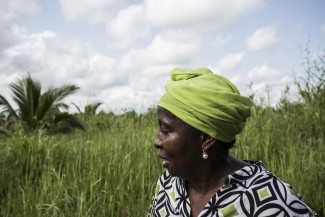
A woman stands in the profile position in a field of green plants on a sunny day with a clear blue sky

The arrest of Ratko Mladic reignited debates on a wide spectrum of related issues, from its implications on the prospects for true reckoning with the past in the countries of the former Yugoslavia to the possible jolt it will give to Serbia’s hopes of joining the European Union. Beyond the immediate impact on the region, the strongest reverberations of Mladic’s transfer to the International Criminal Tribunal for the former Yugoslavia (ICTY) will be felt in the discourse on international justice.

On Tuesday, March 19, the genocide trial of General Efraín Ríos Montt began at the High Risk Tribunal in Guatemala. To talk about this historic development in Guatemala’s pursuit of accountability we talk with us one of the key players: Guatemalan Attorney General Claudia Paz y Paz Bailey

On a historic day for justice in Guatemala and the world, the trial for Guatemala’s former military dictator José Efraín Ríos Montt began this morning in Guatemala City. Ríos Montt and his co-accused, José Mauricio Rodríguez Sánchez – are standing trial on charges of genocide and crimes against humanity during the civil war in Guatemala, in which some 200,000 people were killed or disappeared, a majority of them indigenous Maya.

The International Criminal Court (ICC) opened its second trial against Germain Katanga and Mathieu Ngudjolo Chui on November 24, 2009. The men are former leaders of armed rebel movements from the Ituri district in the Democratic Republic of Congo (DRC).

For the second consecutive year, ICTJ has been named among the world’s Top 100 NGOs by The Global Journal. ICTJ was also listed among the top three NGOs in the “Law and Justice” sector, acknowledging its unique role in assisting societies to strengthen the rule of law at the national level.

In most cases, to be imprisoned in Syria is to disappear. Tens of thousands of people, if not more, have been unlawfully taken prisoner or held incommunicado in the context of the Syrian conflict. This policy paper examines the dark reality of detentions in Syria, its impact...

The International Center for Transitional Justice (ICTJ) and the UN Joint Office for Human Rights (UNJHRO), in collaboration with the Office of the UN Special Envoy on the Great Lakes Region and with the financial support of the European Commission, held a conference on March 15-16 to strengthen judicial cooperation in the fight against impunity for international crimes in the Great Lakes Region.

As ICTJ co-hosts a discussion on complementarity on the margins of the Assembly of State Parties (ASP) of the International Criminal Court (ICC), the principle of ensuring accountability for serious crimes has seen a major breakthrough at a recent high-level meeting at Greentree. The meeting brought together international justice actors, development practitioners, UN representatives, and national rule of law actors to discuss the practical implementation of complementarity and how to strengthen domestic systems seeking to investigate serious crimes.

In Guatemala, it has taken years of relentless organizing by civil society and cooperation with international partners to begin to prosecute the most responsible, but progress has been made. Claudia Paz y Paz Bailey, currently the prosecutor general and head of the Public Prosecutor’s Office, has played an instrumental role in the struggle for accountability. In this recent interview, ICTJ spoke with Ms. Paz about confronting the legacy of the past at the national level within an international system of global criminal justice.