

616 results

As we approach International Justice Day on July 17, calls for accountability for human rights abuses resound across the globe, from Cairo to Washington, from Bogotá to Kinshasa, from Srebrenica to Colombo. The demands for justice are today a driving force of social change and popular revolutions, and their reach now extends to those at the highest levels of power.

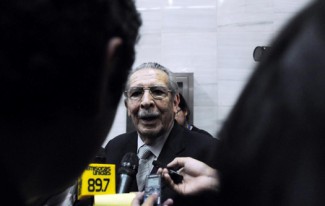
Nine international human rights and legal groups have welcomed the resumption of the Guatemalan trial of Efraín Ríos Montt, the former military dictator, for genocide and crimes against humanity. The trial has taken another step towards its conclusion with the hearing of final arguments from the prosecution and victims’ representatives today and yesterday.

Today the trial begins in the “Sepur Zarco” case of acts of sexual violence and domestic and sexual slavery committed from 1982 to 1986 by members of the Guatemalan army against Maya Q’eqchi’ women and the forced disappearance of several men. This will be the first time in the world that a national court has tried a case of wartime sexual slavery case.

The international organizations who have signed this statement are appalled at the illegal raid which occurred on August 15, 2016 at the residence of Guatemalan lawyer and human rights defender Ramón Cadena, Central America Director of the International Commission of Jurists.

On May 12, the Council of Europe’s Committee of Ministers agreed to create a mechanism to receive claims for damages caused by the Russian crime of aggression in Ukraine. The new registry is intended to receive information on claims of damage, loss, or injury caused by Russia’s invasion of Ukraine since February 24, 2022 and assess their eligibility for future adjudication or compensation. Many of the register’s chief proponents are hailing its creation as a key step toward accountability for the many violations of international law that Russia has committed in or against Ukraine. However, the register alone will not be sufficient to address the multitude of harms caused by the war.

ICTJ interview with Pablo Parenti, of the Attorney General’s Unit for coordination and monitoring cases involving violations of human rights during the Argentine dictatorship.

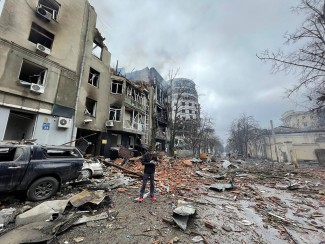
The numerous atrocities committed by Russia in Ukraine have been part of the former's aggression since its initial invasion of the Crimea and Donbas regions in 2014, though they have skyrocketed in number and severity since the full-scale invasion in 2022. Among these crimes are enforced disappearances, which serve as the means by which the Kremlin more broadly intends to subjugate Ukrainians and eliminate any traces of the Ukrainian national identity.

NEW YORK, Mar. 18, 2011—“Those responsible for the shelling of a market in Abidjan must be identified and held accountable,” said ICTJ president David Tolbert referring to yesterday’s attack on a food market in Abobo, a suburb of the Ivory Coast’s capital, in which 100 people were killed or wounded...

Situation brief on the International Criminal Court's upcoming pretrial hearings on whether to pursue charges against Jean-Pierre Bemba for crimes his troops allegedly committed in the Central African Republic (CAR) in 2002-03. The ICC prosecutor opened an investigation in May 2007 in...

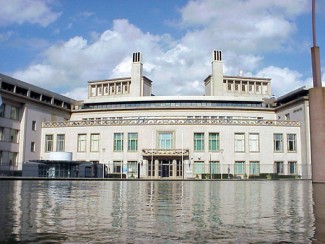
The Italy-based research center Osservatorio Balcani e Caucaso is hosting an online debate on the ICTY's contribution to reconciliation. The debate, featuring Refik Hodzic of ICTJ and Dr. Janine Clark of the University of Sheffield, who will present arguments for and against the notion that ICTY has contributed to reconciliation. Outside audiences are invited to participate online.