


605 results

This paper analyzes the serious crimes process the UN established in Timor-Leste to try serious violations of human rights perpetrated in 1999. The main difficulty facing this process is that the vast majority of suspects are in Indonesia, and the Timorese government has not been able...

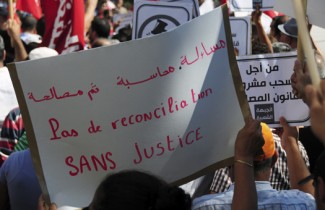
In this op-ed, Rim El Gantri, head of ICTJ's Tunisian office, discusses the challenges facing Tunisia's transitional justice process and argues that the government's failure to provide accountability for crimes committed under past regimes threatens the country's transition to democracy.

This case study provides basic information and policy analysis on the Special Court for Sierra Leone. It aims to help guide policymakers establishing and implementing similar mechanisms. The Court broke new ground in terms of narrowly focusing on those bearing the greatest responsibi...

This report describes the Special Court for Sierra Leone’s accomplishments in the first 18 months of its mandate. The Court was established to try "those bearing the greatest responsibility" for serious violations of international law and certain provisions of domestic law since Nove...

On September 18, the trial of Dominic Ongwen resumed at the ICC. Ongwen is on trial for 70 counts of war crimes and crimes against humanity – including various forms of sexual violence and the recruitment of child soldiers – committed in the former IDP camps of Lukodi, Odek, Abok, and Pajule during the 20-year insurgency in Northern Uganda. Ongwen is the first former child soldier who is facing trial at the ICC for crimes in which he was also a victim.

This week, the International Criminal Court heard closing arguments in the trial of Dominic Ongwen, a top commander of the Lord’s Resistance Army in Northern Uganda. Among the 70 counts of war crimes and crimes against humanity he faces are 19 counts of sexual and gender-based crimes, including rape, sexual slavery, and forced marriage—the widest range of such crimes ever to be brought to trial before the court. The case thus marks a milestone in the jurisprudence of these international crimes.

This briefing paper examines the Tunisian Truth and Dignity Commission’s approach to investigating Ben Ali dictatorship-era corruption crimes and identifying responsible institutions and individuals, and whether it laid the foundation for accountability and reparation. While it fell s...

First page of the briefing paper The Truth About Corruption

The War Crimes Chamber of the Court of Bosnia and Herzegovina, which began its work 9 March 2005, has been the most significant national effort in Bosnia and Herzegovina to investigate and prosecute persons allegedly involved in serious violations of international law during the 1992–...

On February 14, Kenyans once again confronted their painful relationship with law enforcement and revisited the deep mistrust born of historical abuses. In an unprecedented ruling, a court found five senior police officers potentially culpable in gruesome murder during the police response to the 2017 post-election protests. On the same day, a senior police officer was convicted of murder and jailed for life.

Thirty years after the 1994 genocide against the Tutsi in Rwanda, painful memories of those gruesome 100 days, during which almost one million Rwandan citizens lost their lives, still haunt the people of Rwanda, the rest of Africa, and the world. It is a solemn occasion to remember and honor the victims and survivors of the genocide and to acknowledge the tremendous strength and resilience they have shown in the wake of unspeakable tragedy. However, it is also a time for candid introspection on the African continent, and around the world, about the policies and mechanisms in place to prevent such atrocities.