616 results

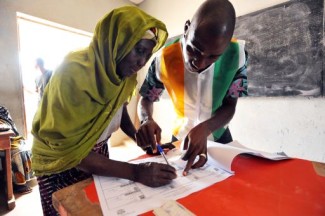
Though not a state party to the Rome Statute, Cote d’Ivoire accepted the jurisdiction of the ICC through an ad hoc declaration in April 2003, and in December of 2010—in the wake of the post-election crisis—reaffirmed that declaration. It has been more than one year since Cote d’Ivoire began a critical transition from a decade-long civil war that divided the country and led to widespread human rights violations, forced displacement, and loss of civilian lives and property.

On January 15, 2019, victims of the 2010-2011 post-election violence in Côte d'Ivoire were shocked, yet again, to learn that the Trial Chamber I of the International Criminal Court in The Hague had acquitted former President Laurent Gbagbo and the former Youth Minister Charles Blé Goudé of crimes against humanity allegedly committed during the crisis.

As the United States and Colombia near the signing of a free-trade agreement and resolve differences over labor rights and other issues, the problematic extraditions of paramilitaries accused of savage crimes committed during the years of counter-insurgency remain far from the spotlight.

This Brief of Amici Curiae is respectfully submitted by several human rights and torture treatment organizations pursuant to Federal Rule of Appellate Procedure 29 and District of Columbia Circuit Rule 29. The Brief is filed in support of the Plaintiffs-Appellants and seeks the revers...

In the quest to bring perpetrators of massive crimes to justice, international courts should be considered only as a last resort. Efforts to establish rule of law require the development of national capacity to prosecute the most serious crimes. On 25 and 26 October 2012, leading international actors from the judicial, rule of law, and development sectors will convene at the Greentree Estate in Manhasset, New York for the third Greentree Conference on Complementarity. The meeting aims to examine the needs of and challenges to national prosecutions for the most serious crimes in four countries: Ivory Coast, the DRC, Colombia, and Guatemala.

This paper discusses the significance of the trials of Saddam Hussein and his close associates held by the Supreme Iraqi Criminal Tribunal. It examines the challenges faced by the Tribunal - including concerns that the process was dominated by the U.S. government (hence undermining t...

This paper examines the crime of forced displacement from the perspective of both international and national legal frameworks. The crime of forced displacement is a notion that comes from international law. Indeed, an international legal framework has developed with the instruments an...

The crime of forced displacement has been a widespread practice in Colombia’s internal armed conflict for several decades. However, forced displacement cannot be reduced to an inherent or unintended effect of the conflict. The armed actors in the Colombian armed conflict—the army and ...

This paper is concerned with the relationship between criminal justice and displacement that has taken place as a result of serious violations of international humanitarian law, and considers these issues within the context of justice efforts in the former Yugoslavia. It argues that i...

The report documents that practices that included slamming detainees into walls, extended sleep deprivation, suspending them by the arms, forced nudity, threats, prolonged shackling in uncomfortable positions and disrespect of the Qur'an, were the result of officially sanctioned polic...