479 results

Last month, the United Nations established a new mission in Haiti, focused on strengthening rule of law institutions and human rights reporting. Can it work with activists to challenge impunity? We sat down with Isabelle Clérié, a Haitian civil society organizer, about the mission, what it can accomplish, and how the past is understood in the country.

Haiti is currently confronting several challenges regarding stability, the rule of law, and corruption. The establishment of the United Nations Mission for Justice Support in Haiti (MINUJUSTH) in April 2017 is aimed at contributing to state and civil society efforts to effectively add...

A new, photo-filled publication from the International Center for Transitional Justice details how photos taken by Lebanese young people across the country helped to spark discussion about the disturbing, often-overlooked legacy of the Lebanese civil war.

Lebanon’s civil war continues to impact the Lebanese people, both those who lived through the war and those born after it. While the widespread harms it caused are still visible today, the official denial of both the war and its lasting consequences has left a hole in Lebanon’s histor...

During the past month, over 400,000 members of Myanmar’s Rohingya Muslim community have been driven from their homes as part of an ethnic cleansing campaign led by the military. What lies at the root of the current violence, how is it connected to political transition, and does transitional justice have a role to play? ICTJ's Anna Myriam Roccatello answers those questions and more.

ICTJ and its partners will hosted a national dialogue in Kampala, Uganda on the aftermath of sexual violence. The aim: to shift stigma from victims to perpetrators and end the culture of silence. Sarah Kihika Kasande, head of ICTJ's Uganda office, explains why such efforts are essential to ending impunity and securing a lasting peace in the country.

The International Center for Transitional Justice denounces the passage of Tunisia’s deeply flawed “Administrative Reconciliation” law, which grants amnesty to public officials who were involved in corruption during the dictatorship but who claim they did not personally gain from it.

Kenya is just days away from the 2017 general election, but challenges dot the horizon, including the recent assassination of an election official. ICTJ's Chris Gitari calls for a strong, accountable security sector and the implementation of the Truth, Justice and Reconciliation Commission Report.

Where does transitional justice stand in Sri Lanka? Kelli Muddell, Director of ICTJ's Gender Justice Program, explores the country's contested historical narratives.

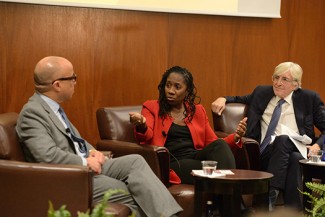
As grassroots efforts to confront the legacy of racial injustice in the United States take hold from New Orleans to Maine and beyond, how can transitional justice experiences around the world inform their work? That was a major focus of a recent conference ICTJ co-convened, hosted by Kean University.