



390 results

Last month, the United Nations established a new mission in Haiti, focused on strengthening rule of law institutions and human rights reporting. Can it work with activists to challenge impunity? We sat down with Isabelle Clérié, a Haitian civil society organizer, about the mission, what it can accomplish, and how the past is understood in the country.

This report presents findings from a study conducted by ICTJ, the Women’s Advocacy Network, and the Global Survivors Fund to assess the reparative justice needs of victims of conflict-related sexual violence (CRSV) in Uganda. The study is based on interviews and focus group discussion...

graphically designed report cover

The resignation and indictment of President Otto Pérez Molina for corruption was a significant victory over impunity in Guatemala. In an interview with journalist Carlos Dada, we discussed how recent developments in Guatemala could impact other countries in Central America, such as Honduras and El Salvador.

Although youth are key political and social stakeholders who have much to contribute to—and gain from—transitional justice processes, they often remain marginalized from such processes or are given only a limited and predetermined space in which to engage. In recent years, the peacebu...

For many years now, the International Center for Transitional Justice and other organizations have supported young activists and artists as they harness the power of art, culture, and new media to advance truth, justice, reform, and redress, not only where they live, but across borders and in collaboration with others. This innovative and inspiring work offers lessons about how to increase civic engagement and help societies know the truth about their country’s past and actively shape the national narrative.

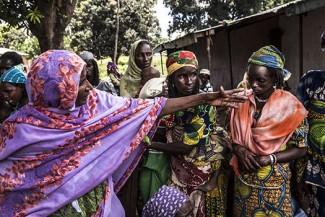
In recent months, the crisis in the Central African Republic (CAR) that erupted five years ago has seemed farther than ever from resolution. A new report by ICTJ, I Am 100% Central African: Identity and Inclusion in the Experience of Central African Muslim Refugees in Chad and Cameroon, offers important insights on how a higher political commitment to inclusion could help transform a volatile rebuilding process into a sustainable peace.

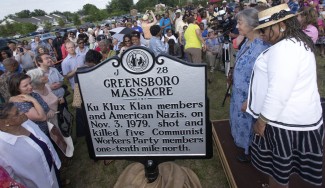
At a time when truth-seeking and reparations initiatives are taking hold across the United States, this report offers reflections from various civil society-led truth-seeking processes. Drawing on case studies from the United States, Colombia, Scotland, and West Papua, the report iden...

People gather around a plaque marking the Greenboro Massacre outside during an inaugural ceremony

Colombia marked the country’s first National Day of Memory and Solidarity with the Victims April 9. For the millions who have suffered human rights violations in Colombia’s entrenched armed conflict, this was a day for their voices to be heard and their suffering to be acknowledged by the state; a nationwide call for accountability and reconciliation in a highly divided society.

Colombia’s new president Gustavo Petro was elected to office on a progressive campaign to strengthen democracy, implement social reforms, and bring “total peace” to the country. His approach to peace encompasses political negotiations with all remaining insurgent groups and simultaneous dialogues with criminal organizations geared toward their voluntary submission to justice in exchange for punitive leniency. But eight months into his administration, Petro’s efforts to deliver on his campaign promise are facing numerous challenges.

In the dynamic political landscape that has emerged following 50 years of conflict, Colombia is taking steps toward truth and accountability. The Commission for the Clarification of Truth, Coexistence, and Non-Repetition (the “Commission”) is scheduled to begin taking statements in November 2018. As part of its mandate, it will hear the stories of victims now living throughout the Diaspora.