

521 results

In this analysis piece, ICTJ's Cristián Correa expresses concern about a decision by the Inter-American Court of Human Rights leaving room for interpretations that condone the use of methods for combating subversion and terrorism forbidden by international human rights law.

In this op-ed, ICTJ's President David Tolbert expresses concern about the new "Reconciliation Bill" proposed by the Tunisian government, which would grant amnesty to corrupt business people and Ben Ali-era officials in the guise of "reconciliation." "Massive corruption and violent human rights violations are mutually reinforcing, and unless this linkage is exposed and broken, it can lead to mutually reinforcing impunity," writes Tolbert.

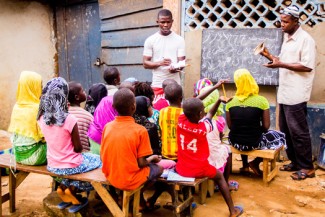
ICTJ talked to Kenyan youth leader Carine Umutoniwase to know how learning from a violent past inspires youth in countries recovering from conflict and repression to avoid past mistakes and to come up with solutions that contribute towards a more just and accountable society.

On International Youth Day, ICTJ reaffirms the importance of engaging youth in efforts to reckon with the past in societies grappling with repressive and violent histories.

For the last three years, a group of young activists gather on the night of the 5th of August at the site of Trnopolje camp, out in the open, to reenact the way prisoners spent their night and through dialogue explore alternative ways of dealing with the past.

In this op-ed, ICTJ's President David Tolbert urges President Uhuru Kenyatta and Kenyan institutions to take concrete actions without further delay to provide reparations for victims, tackle the struggling police vetting reform, and prosecute the serious crimes that were committed during the post-election violence.

On 26 June each year, the world marks the International Day in Support of the Victims of Torture. The day was instituted in 1997 by the General Assembly of the United Nations, in an effort to build up the unanimity of condemnation required to abolish torture effectively in our time. In the effort to...

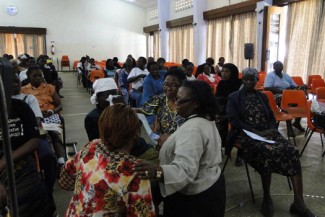
ICTJ recently facilitated consultations on reparations policy between victims of the Ivorian crisis and the National Commission for Reconciliation and Compensation for Victims in Abidjan, Côte d’Ivoire.

ICTJ's Virginie Ladisch explores the consequences of social stigmatization and other problems facing children born of war in Uganda, Nigeria and beyond in this new op-ed.

A new paper by ICTJ identifies several factors impeding Uganda's efforts to acknowledge violations and hold perpetrators accountable.