4 results

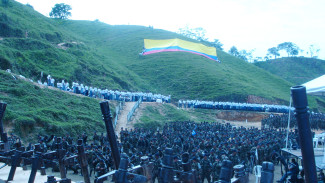
To commemorate the 20th anniversary of the Justice and Peace Law—which created Colombia's first transitional justice system—media outlet Verdad Abierta, the Friedrich Ebert Stiftung, and ICTJ partnered to produce an investigative four-part series in Spanish that critically assesses its legacy. Now translated into English, this first installment provides an overview of the process.

In this era of technological transformation, it is critically important to develop digital strategies for documenting human rights violations, analyzing data for accountability or reparations purposes, and safely advocating for human rights online. This is particularly true in contexts where victims, human rights actors, and members of the media live in fear. To this end, ICTJ has recently led trainings for human rights activists in conflict-affected countries on open-source investigation tools to help them do their work more effectively.

The field of transitional justice is increasingly recognizing the relevance of mental health and psychosocial support (MHPSS) in contexts of massive human rights violations. Despite growing advocacy and awareness at the global policy level, however, the field lacks a systematic approa...

an image of colorful painting featuring a young girl

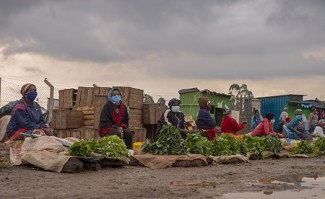
Sparing almost no corner of the world from its wrath, the COVID-19 pandemic has now spread to every country. In an effort to slow the contagion, governments in most countries have been taking drastic measures requiring all residents other than essential workers to confine themselves in their homes, and shutting down vast sectors of their economies. The impact has been crushing. COVID-19 has profoundly affected every country where ICTJ currently works: Armenia, Colombia, Cote d’Ivoire, Ethiopia, Gambia, Kenya, Lebanon, Libya, Sudan, Syria, Tunisia, and Uganda. We recently caught up with ICTJ’s heads of country programs to learn more about the impact the pandemic is having on transitional justice and society more broadly.